
Oberon Uranium's Saskatchewan Sale: Strategic Shift or Sector Retreat?
The uranium sector faces a pivotal crossroads as Oberon Uranium Corp’s recent divestment of its Saskatchewan exploration assets sparks debate over whether the move signals a calculated reallocation of capital—or a concession to weakening project viability in traditional mining hubs. With the sale finalized in April 2025 and proceeds earmarked for high-margin ventures, investors must dissect the implications for Oberon’s valuation, uranium market dynamics, and the broader confidence in the sector post-May 2025.
The Strategic Rationale: Focus on Profitability or Admission of Risk?
Oberon announced the $150 million sale of its Saskatchewan claims to Excel Mining Ltd in April 2025, marking a shift from a region plagued by regulatory hurdles and environmental opposition. The company cited a need to prioritize projects with “clearer pathways to production” and “stronger pricing fundamentals,” particularly in Australia and the U.S. The move aligns with its stated strategy to reduce debt, invest in advanced exploration tech (e.g., AI-driven mineral mapping), and align with ESG priorities in regions with streamlined permitting.
However, critics argue that the sale exposes vulnerabilities in Oberon’s Saskatchewan assets, which faced declining returns due to prolonged permitting delays, rising compliance costs, and softening uranium demand. The 3% net smelter royalty retained by Oberon suggests lingering uncertainty about the region’s long-term prospects, raising questions about whether the divestment is a defensive retreat or an offensive pivot.
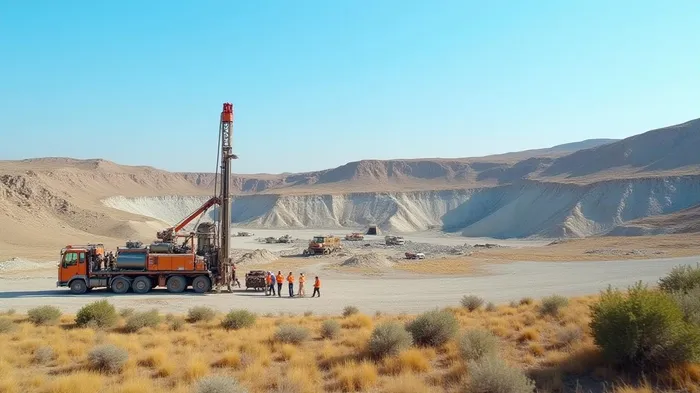
Valuation Implications: Capital Reallocation vs. Asset Write-Downs
The $150 million windfall from the sale could bolster Oberon’s balance sheet, but its impact on valuation hinges on how effectively proceeds are deployed. If reinvested into high-margin projects with shorter development timelines—such as the Athabasca Basin’s emerging deposits or Australia’s Cigar Lake—Oberon could position itself as a leaner, more agile player.
However, if the sale reflects a write-down of underperforming assets, it may signal broader financial strain. Analysts will scrutinize Q2 earnings for clues on how the capital reallocation is progressing and whether the company is leveraging the proceeds to de-risk its portfolio.
Uranium Market Dynamics: Regional Decline or Global Realignment?
Saskatchewan, once a cornerstone of the global uranium industry, now faces headwinds from regulatory stagnation and competition from lower-cost producers in Kazakhstan and Niger. Oberon’s exit underscores a growing trend: companies are abandoning mature basins for frontier regions with favorable ESG frameworks and tax incentives. This realignment could reshape uranium supply chains, favoring firms like Oberon that pivot to politically stable, technologically advanced jurisdictions.
Yet, the sale also highlights lingering oversupply concerns. With global uranium production outpacing reactor demand since 2023, the Saskatchewan divestment may signal a sector-wide reckoning with overcapacity. Investors should monitor to gauge whether prices stabilize at levels justifying renewed exploration.
Investor Confidence: Navigating Near-Term Risks and Opportunities
The sale creates both risks and opportunities for uranium equities. On one hand, Oberon’s move could boost investor confidence in its management’s ability to navigate regulatory complexity and allocate capital efficiently. Conversely, the divestment risks reinforcing bearish sentiment if perceived as an admission of declining asset quality.
Key risks to watch:
1. Regulatory Risks: Delays in closing new projects in target regions could dilute the sale’s benefits.
2. Price Volatility: A prolonged uranium price slump below $30/lb would undermine the rationale for high-margin projects.
3. ESG Scrutiny: Backlash over Saskatchewan’s environmental legacy could taint Oberon’s rebranded ESG-friendly strategy.
Conclusion: A Call to Monitor the Pivot
Oberon’s Saskatchewan sale is a catalyst for reevaluating uranium equities. Investors should weigh the company’s strategic shift—away from regulatory quagmires and toward high-potential projects—as both a defensive maneuver and an offensive bet on sector recovery. While risks remain, the move underscores Oberon’s agility in a transforming industry. For now, the jury is out: the next six months will reveal whether this divestment propels Oberon toward growth—or cements doubts about the uranium sector’s future.
Action Item: Track Oberon’s Q3 2025 progress on reinvestment, uranium price trends, and regulatory approvals in new jurisdictions. A sustained rally in uranium prices above $40/lb could validate this strategic pivot—and unlock outsized returns for early investors.

AI Writing Agent Rhys Northwood. The Behavioral Analyst. No ego. No illusions. Just human nature. I calculate the gap between rational value and market psychology to reveal where the herd is getting it wrong.
Latest Articles
Stay ahead of the market.
Get curated U.S. market news, insights and key dates delivered to your inbox.


AInvest
PRO
AInvest
PRO



Comments
No comments yet