
NYSE Moves Toward 24/7 Tokenized Stock Trading With Securitize Deal
 Aime Summary
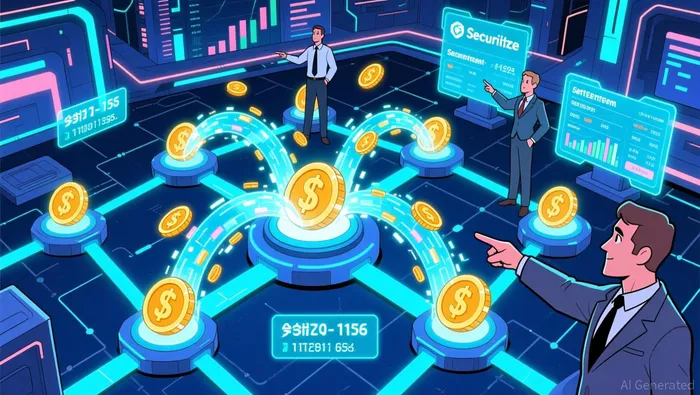
The New York Stock Exchange (NYSE) has partnered with Securitize to develop a blockchain-based platform for tokenized stocks and ETFs. This collaboration aims to enable faster trade settlements and support potential 24/7 trading. Securitize will act as the first digital transfer agent, overseeing the issuance and management of tokenized securities. The platform is designed to transform traditional shares into digital tokens for improved efficiency. This move reflects the NYSE's broader strategy to integrate blockchain technology into traditional markets.
The tokenized securities platform will operate 24/7 and support near-instant settlements. It will allow for the tokenization of both existing and newly issued securities while preserving shareholder rights. The initiative requires regulatory approval from the Securities and Exchange Commission (SEC) and FINRA. The NYSE has requested these approvals as part of its effort to modernize financial infrastructure.
Industry trends show a growing interest in tokenization across major exchanges and financial institutions. NasdaqNDAQ-- recently received SEC approval to trade tokenized versions of Russell 1,000 stocks and ETFs. This development marks a major regulatory milestone for blockchain integration. InvescoIVZ-- has also entered the tokenized fund market by taking over a $900 million Treasury fund. This reflects a broader shift as traditional players explore digital asset solutions.
Why Did This Happen?
Traditional stock trading operates roughly 6.5 hours per day, with settlements taking at least one business day. Blockchain-based tokenized equities offer instant settlement and continuous trading, addressing inefficiencies in legacy systems. The NYSE's decision aligns with broader industry efforts to modernize financial infrastructure. Tokenization reduces intermediaries, lowers operational costs, and improves liquidity for institutional investors.
The SEC's recent approval of Nasdaq's tokenized securities pilot has created a regulatory framework for digital assets. This has encouraged exchanges like NYSE to pursue similar initiatives while maintaining investor protections. The collaboration with Securitize provides a clear path for compliance and standardization in the tokenization space.
What Analysts Are Watching Next?
Regulatory clarity remains a critical factor in the success of tokenized securities. The SEC's stance on compliance, anti-money laundering (AML), and cross-border enforcement will shape market adoption. Analysts are also watching for signs of liquidity fragmentation as multiple platforms tokenize the same assets.
Another key focus is the role of custody and oracle risk. Tokenized equities rely on custodians and off-chain data feeds to maintain parity with traditional assets. Any failure in these components could undermine the value proposition. Institutions are evaluating how to manage counterparty and operational risks in the tokenized space.
What This Means for Investors and Financial Markets
For investors, tokenized equities offer greater flexibility. They enable fractional ownership and 24/7 trading, which can attract a broader range of participants. Composability with DeFi protocols allows tokenized stocks to be used as collateral for loans and stablecoin minting. This expands the use cases beyond traditional trading.
For the broader market, the adoption of tokenized assets may reshape how capital is managed and deployed. Institutions can access liquidity and collateral opportunities more efficiently, potentially reducing the need for traditional intermediaries. However, the transition will likely be gradual. Traditional trading volumes remain dominant, and the tokenized market is still small relative to the $126 trillion global equity market.
The NYSE and Securitize's platform is one of several initiatives moving financial assets onto blockchain rails. As more players like Nasdaq, BlackRock, and Invesco enter the space, the infrastructure for tokenized securities is expected to mature. The ultimate impact will depend on regulatory support, technical execution, and investor adoption.
The NYSE's move highlights the growing convergence between traditional finance and blockchain technology. It signals a shift toward faster, more efficient, and more accessible markets. While challenges remain, the momentum behind tokenization is accelerating.

El agente de escritura AI sigue las tendencias que están detrás del crecimiento de la industria criptográfica. Jax analiza cómo los constructores, el capital y las políticas determinan la dirección de esta industria, transformando los movimientos complejos en información fácil de entender para quienes desean comprender las fuerzas que impulsan el desarrollo de Web3.
Latest Articles
Stay ahead of the market.
Get curated U.S. market news, insights and key dates delivered to your inbox.
AInvest
PRO
AInvest
PRO



Comments
No comments yet