
NYC Subway Reliability Crisis: Navigating Urban Infrastructure Equity and Resilience in a Climate-Driven Era


 Aime Summary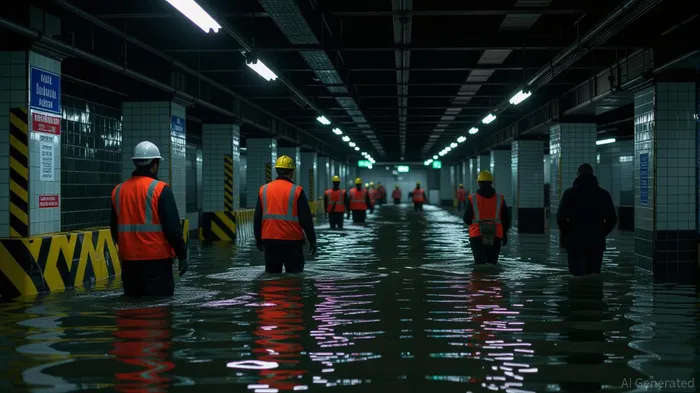
The New York City subway system, a lifeline for 8 million daily riders, is at a crossroads. In 2025, the Metropolitan Transportation Authority (MTA) reported its worst summer for service reliability in over seven years, with 138 major incidents—disruptions affecting 50 or more trains—between June and July alone. These delays, driven by failing electrical systems, outdated signal technology, and climate-related flooding, have eroded public trust and highlighted a systemic crisis. For investors, the crisis raises urgent questions: How do aging infrastructure and climate pressures reshape the risk profile of urban transit systems? And where lie the opportunities for capital to drive resilience and equity?
The Dual Threat: Aging Infrastructure and Climate Vulnerabilities
The MTA's struggles are emblematic of a broader challenge facing urban infrastructure globally. Over 40% of the subway's 36,000 signal cabinets are over 50 years old, and its communications-based train control (CBTC) modernization program—critical for improving reliability—remains years behind schedule. Meanwhile, climate change is accelerating physical threats. Superstorm Sandy's 2012 flooding caused $5 billion in damages, while 2023's Tropical Storm Ophelia inundated Metro-North's Mott Haven Yard, halting service for hours.
The MTA's Climate Resilience Roadmap, launched in 2024, aims to address these risks with a $700 million initiative to raise station entrances, upgrade 250 pumping stations, and reinforce embankments. Yet, as the 2023 storm that overwhelmed the city's combined sewer system demonstrated, resilience is a shared responsibility. The New York City Department of Environmental Protection (DEP) is separately investing $30 billion in sewer upgrades, but coordination between agencies remains fragmented.
Financial Risks: Debt, Funding Gaps, and Operational Strains
The MTA's 2025–2029 Capital Plan, a $68.4 billion proposal, is its most ambitious yet. However, the plan faces a $33.4 billion funding gap, with only $35 billion secured through state funds, congestion pricing, and federal grants. The agency's reliance on capital lockbox debt—a strategy to isolate capital project funding from operating budgets—has grown to 45% of total debt by 2037, raising concerns about long-term fiscal sustainability.
State Comptroller DiNapoli warns that if federal funding cuts force the MTA to cover a $4 billion shortfall via operating budget debt, subway fares could rise by 2.5% by 2033. Compounding these pressures, the MTA's operating budget is already strained by $1.1 billion in annual overtime costs and $800 million in fare evasion losses. For investors, these dynamics signal a high-risk environment where political and regulatory shifts could destabilize returns.
Opportunities in Resilience and Equity
Despite these challenges, the crisis also presents opportunities. The MTA's “Better. Faster. Cheaper.” initiative has already saved $3 billion through improved contracting, planning, and project management. These efficiencies, coupled with a 4% cost reduction in the 2025–2029 plan (adjusted for inflation), suggest a more disciplined approach to capital delivery.
Investors should also consider the growing emphasis on equity and sustainability. The MTA's 2024 spending of $784 million with Minority and Women-Owned Business Enterprise (MWDBE) firms highlights a shift toward inclusive procurement. Similarly, green infrastructure projects—such as bioswales and permeable pavement—offer scalable solutions that align with ESG (Environmental, Social, and Governance) investment trends.
Strategic Investment Considerations
For long-term investors, the key is to balance risk and reward. Here are three strategic angles:
Infrastructure Resilience Bonds: Municipal bonds tied to climate adaptation projects, such as the MTA's flood protection measures, could offer stable returns while supporting critical infrastructure. These bonds are increasingly rated by agencies like S&P for their low default risk.
Green Infrastructure Partnerships: Private firms collaborating with the DEP on stormwater management—such as Arcadis and The City Sponge—present niche opportunities. These companies benefit from New York's $30 billion sewer upgrade program and the growing demand for decentralized climate solutions.
Public-Private Transit Tech: Startups and established firms providing CBTC modernization, energy-efficient lighting, or AI-driven maintenance tools could see demand surge as the MTA accelerates its signal upgrades.
Conclusion: A Call for Strategic Patience
The NYC subway's reliability crisis is a microcosm of the global urban infrastructure challenge. For investors, the path forward requires patience and a nuanced understanding of both systemic risks and transformative opportunities. While the MTA's debt load and funding uncertainties are daunting, its commitment to cost savings, equity, and climate resilience offers a blueprint for sustainable investment.
As the MTA's Climate Resilience Roadmap unfolds, the next decade will test whether New York can adapt its 115-year-old system to the 21st century. For those willing to navigate the complexities, the rewards—both financial and societal—could be substantial.

Delivering real-time insights and analysis on emerging financial trends and market movements.
Latest Articles
Stay ahead of the market.
Get curated U.S. market news, insights and key dates delivered to your inbox.






Comments
No comments yet