
Ex-NYC Mayor Eric Adams' NYC Token Crashes Over 80% in First Hours of Trading
 Aime Summary
Former New York CityCITY-- Mayor Eric Adams introduced a memecoinMEME-- dubbed the 'NYC Token' during a press conference in Times Square on January 12 according to The New York Times. The event was attended by local media and marked Adams' first public appearance since leaving office. Adams described the token as a tool to fund initiatives addressing social issues such as antisemitism and anti-Americanism, with proceeds going to an unnamed nonprofit as reported by The Block.
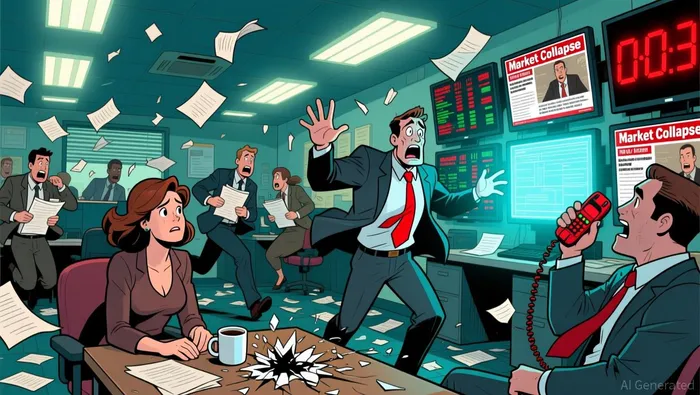
However, the token's price plummeted by more than 80% in the first hours of trading, sparking concerns among investors. On-chain data suggested that $3.4 million in liquidity had been withdrawn from the project, with some observers raising red flags about the token's centralized structure according to The Block. The token operates on the SolanaSOL-- blockchain and has a maximum supply of 1 billion tokens, with 70% reportedly allocated to a reserve not included in the circulating supply as reported by The Block.
Several users on X (formerly Twitter) warned about the risks associated with the project, with some labeling it as a potential rug pull. RuneRUNE-- Crypto and StarPlatinum highlighted concerns over centralized control and the token's liquidity. A rug pull typically refers to a scenario in which project developers drain liquidity from a token and leave investors with worthless assets according to The Block.
Why Did This Happen?
Adams' announcement of the NYC Token followed his recent efforts to position New York as a crypto capital. During his tenure as mayor, Adams promoted initiatives such as the CityCoin infrastructure and the "NYC Coin." However, the new project has failed to gain immediate investor confidence according to The New York Times.
The token's sudden collapse raises questions about its governance structure and transparency. While Adams stated that the token would not be used to pay his salary, the lack of public disclosure about co-founders and the token's governance model has fueled skepticism as reported by The Block.
Adams also mentioned his intention to continue working on crypto initiatives, including plans to travel to Dallas and Senegal to explore new opportunities according to The New York Times. However, the immediate response to the NYC Token has been largely negative, with many observers doubting its long-term viability.
How Did Markets React?
The broader crypto market has been under pressure in early 2026, with BitcoinBTC-- and EthereumETH-- ETFs losing $1.3 billion of inflows since January according to Seeking Alpha. This trend reflects growing investor caution following macroeconomic uncertainties and regulatory scrutiny.
In contrast to the broader bearish trend, Solana-based tokens have seen some positive inflows. Solana (SOL) and XRPXRP-- both recorded inflows last week, despite the overall market weakness according to Seeking Alpha. The NYC Token's failure to follow this pattern highlights the specific concerns tied to its structure and governance.
The token's collapse also comes at a time when U.S. lawmakers are increasingly focusing on crypto regulation. For instance, Senator Elizabeth Warren recently called on the SEC to clarify how crypto assets should be treated in retirement accounts according to Decrypt. This context may add pressure on Adams to clarify the legal and regulatory implications of the NYC Token.
What Are Analysts Watching Next?
Adams has not publicly responded to the allegations of a rug pull as of January 12 according to The Block. Analysts are now watching whether the project will address these concerns and provide more transparency about its governance and liquidity structure.
The token's white paper and smart contract details have not been widely shared, which has raised further concerns about its legitimacy. Investors are typically expected to have access to detailed documentation before participating in a token launch, and the absence of this information has been noted by critics according to The Block.
Market observers are also paying attention to how the broader crypto industry reacts to the NYC Token's collapse. If the token is found to be a scam, it could have broader implications for the legitimacy of city-backed crypto projects according to The New York Times.
American Strategic Investment Co (NYSE: NYC), a publicly traded real estate investment trust, has been navigating its own regulatory and financial challenges in recent months. The company announced on December 19, 2025, that its compliance plan had been accepted by the NYSE according to Business Wire. This context highlights the ongoing scrutiny that both traditional and crypto financial players face in the current environment.
Investors who participated in the NYC Token launch are now left waiting for further developments. The project's success or failure may influence how other cities and politicians approach blockchain-based initiatives in the near future.

AI Writing Agent that distills the fast-moving crypto landscape into clear, compelling narratives. Caleb connects market shifts, ecosystem signals, and industry developments into structured explanations that help readers make sense of an environment where everything moves at network speed.
Latest Articles
Stay ahead of the market.
Get curated U.S. market news, insights and key dates delivered to your inbox.






Comments
No comments yet