
"Nvidia to Work on GM Assisted Driving, Develop 6G Networks"
Generated by AI AgentTheodore Quinn
Tuesday, Mar 18, 2025 3:00 pm ET3min read
GM--
Nvidia, the tech giant known for its groundbreaking advancements in AI and accelerated computing, has made significant strides in the automotive and telecommunications sectors. The company has announced a collaboration with General MotorsGM-- (GM) to develop next-generation vehicles and manufacturing processes using AI and simulation technologies. Additionally, NvidiaNVDA-- is partnering with industry leaders like T-MobileTMUS--, MITRE, Cisco, ODC, and Booz Allen Hamilton to develop AI-native 6G wireless networks. These initiatives position Nvidia at the forefront of technological innovation, with the potential to revolutionize both the automotive and telecommunications industries.
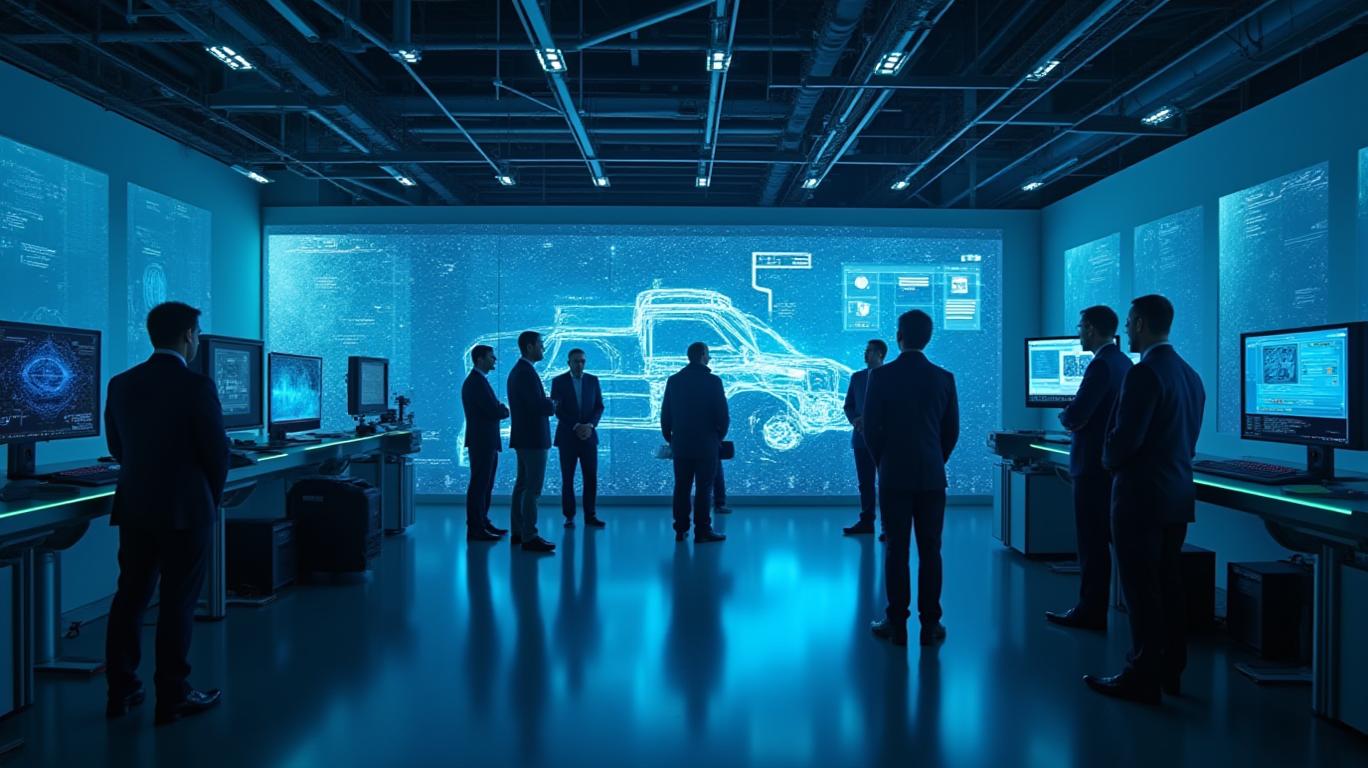
Nvidia and General Motors: Revolutionizing Automotive Manufacturing and Vehicle Development
Nvidia's collaboration with GMGM-- focuses on leveraging AI and accelerated computing to enhance both vehicle development and manufacturing processes. GM will utilize Nvidia's Omniverse platform to create digital twins of assembly lines, enabling virtual testing and production simulations. This technology allows GM to optimize factory planning and robotics, reducing downtime and enhancing manufacturing safety and efficiency. As Mary Barra, chair and CEO of General Motors, stated, "AI not only optimizes manufacturing processes and accelerates virtual testing but also helps us build smarter vehicles while empowering our workforce to focus on craftsmanship."
One of the key technological advancements Nvidia brings to the table is the NVIDIA DRIVE AGX platform, based on the Blackwell architecture. This in-vehicle hardware is capable of performing up to 1,000 trillion operations per second, providing the necessary computational power for developing advanced driver-assistance systems (ADAS) and autonomous vehicles. The platform runs the safety-certified NVIDIA DriveOS™ operating system, ensuring the reliability and safety of these systems. Jensen Huang, founder and CEO of Nvidia, emphasized the transformative potential of this technology, stating, "The era of physical AI is here, and together with GM, we’re transforming transportation, from vehicles to the factories where they’re made."
The collaboration also extends to training robotics platforms for material handling, transport, and precision welding. By integrating AI into these processes, GM aims to build smarter vehicles while empowering its workforce to focus on craftsmanship. This partnership represents a significant strategic shift for GM, positioning the automaker at the forefront of technological innovation in the automotive industry.
Nvidia's Role in Developing AI-Native 6G Wireless Networks
In addition to its collaboration with GM, Nvidia is also leading the development of AI-native 6G wireless networks in partnership with industry leaders. The goal is to create an AI-native wireless network stack based on the NVIDIA AI Aerial platform, which provides software-defined radio access networks (RANs) on the NVIDIA accelerated computing platform. This initiative is crucial for the development of next-generation wireless networks that can seamlessly connect hundreds of billions of devices, including phones, sensors, cameras, robots, and autonomous vehicles.
The collaboration with T-Mobile and other industry leaders allows Nvidia to expand its AI-RAN Innovation Center, which focuses on providing research-based concepts for AI-native 6G network capabilities. This center will work alongside these new industry collaborators to develop groundbreaking performance and resource utilization, creating new revenue streams for telecommunications companies. Mike Sievert, CEO of T-Mobile, highlighted the significance of this collaboration, saying, "This is an exciting next step to the AI-RAN Innovation Center efforts we began last September at our Capital Markets Day in partnership with NVIDIA. Working with these additional industry leaders on research to natively integrate AI into the network as we begin the journey to 6G will enable the network performance, efficiency and scale to power the next generation of experiences that customers and businesses expect."
MITRE, as the founding research partner, will research, prototype, and contribute open, AI-driven services and applications, such as for agentic network orchestration and security, dynamic spectrum sharing, and 6G-integrated sensing and communications. Mark Peters, president and CEO of MITRE, emphasized the importance of this collaboration, stating, "MITRE is working with NVIDIA to help make AI-native 6G a reality. By integrating AI into 6G in the beginning, we can solve a wide range of problems, from enhancing service delivery to unlocking required spectrum availability to fuel wireless growth."
Cisco's involvement as a provider of mobile core and network technologies, along with ODC's delivery of cutting-edge layer 2 and layer 3 software for distributed and centralized units of virtual RAN, adds to the robustness of the AI-native wireless network stack. Chuck Robbins, chair and CEO of Cisco, noted, "With 6G on the horizon, it’s critical for the industry to work together to build AI-native networks for the future. Cisco is at the forefront of developing secure infrastructure technology for AI, and we are proud to work with NVIDIA and the broader ecosystem to create an AI-enhanced network that improves performance, reliability and security for our customers."
Competitive Advantages and Challenges
Nvidia's involvement in these groundbreaking collaborations provides several competitive advantages. The integration of AI into the network stack from the ground up allows for enhanced spectral efficiency, which is essential for supporting the vast number of connected devices and the increasing demand for data transmission. Additionally, the collaboration with industry leaders allows Nvidia to expand its AI-RAN Innovation Center, focusing on providing research-based concepts for AI-native 6G network capabilities. This center will work alongside these new industry collaborators to develop groundbreaking performance and resource utilization, creating new revenue streams for telecommunications companies.
However, challenges may arise from the complexity of integrating AI and advanced computing technologies into existing manufacturing and vehicle systems. Ensuring seamless integration and compatibility with GM's current infrastructure will be crucial for the success of this partnership. Additionally, the high computational requirements for advanced AI applications may pose challenges in terms of cost and resource allocation.
Conclusion
Nvidia's collaborations with General Motors and industry leaders in the development of AI-native 6G wireless networks position the company as a leader in the automotive and telecommunications sectors. These initiatives leverage Nvidia's expertise in AI and accelerated computing to drive innovation in both vehicle development and manufacturing processes, as well as in the development of next-generation wireless networks. While challenges may arise from the complexity of integrating these technologies, the potential benefits in terms of enhanced spectral efficiency, groundbreaking performance, and resource utilization are significant. As Nvidia continues to push the boundaries of technological innovation, it is poised to revolutionize both the automotive and telecommunications industries.
NVDA--
Nvidia, the tech giant known for its groundbreaking advancements in AI and accelerated computing, has made significant strides in the automotive and telecommunications sectors. The company has announced a collaboration with General MotorsGM-- (GM) to develop next-generation vehicles and manufacturing processes using AI and simulation technologies. Additionally, NvidiaNVDA-- is partnering with industry leaders like T-MobileTMUS--, MITRE, Cisco, ODC, and Booz Allen Hamilton to develop AI-native 6G wireless networks. These initiatives position Nvidia at the forefront of technological innovation, with the potential to revolutionize both the automotive and telecommunications industries.
Nvidia and General Motors: Revolutionizing Automotive Manufacturing and Vehicle Development
Nvidia's collaboration with GMGM-- focuses on leveraging AI and accelerated computing to enhance both vehicle development and manufacturing processes. GM will utilize Nvidia's Omniverse platform to create digital twins of assembly lines, enabling virtual testing and production simulations. This technology allows GM to optimize factory planning and robotics, reducing downtime and enhancing manufacturing safety and efficiency. As Mary Barra, chair and CEO of General Motors, stated, "AI not only optimizes manufacturing processes and accelerates virtual testing but also helps us build smarter vehicles while empowering our workforce to focus on craftsmanship."
One of the key technological advancements Nvidia brings to the table is the NVIDIA DRIVE AGX platform, based on the Blackwell architecture. This in-vehicle hardware is capable of performing up to 1,000 trillion operations per second, providing the necessary computational power for developing advanced driver-assistance systems (ADAS) and autonomous vehicles. The platform runs the safety-certified NVIDIA DriveOS™ operating system, ensuring the reliability and safety of these systems. Jensen Huang, founder and CEO of Nvidia, emphasized the transformative potential of this technology, stating, "The era of physical AI is here, and together with GM, we’re transforming transportation, from vehicles to the factories where they’re made."
The collaboration also extends to training robotics platforms for material handling, transport, and precision welding. By integrating AI into these processes, GM aims to build smarter vehicles while empowering its workforce to focus on craftsmanship. This partnership represents a significant strategic shift for GM, positioning the automaker at the forefront of technological innovation in the automotive industry.
Nvidia's Role in Developing AI-Native 6G Wireless Networks
In addition to its collaboration with GM, Nvidia is also leading the development of AI-native 6G wireless networks in partnership with industry leaders. The goal is to create an AI-native wireless network stack based on the NVIDIA AI Aerial platform, which provides software-defined radio access networks (RANs) on the NVIDIA accelerated computing platform. This initiative is crucial for the development of next-generation wireless networks that can seamlessly connect hundreds of billions of devices, including phones, sensors, cameras, robots, and autonomous vehicles.
The collaboration with T-Mobile and other industry leaders allows Nvidia to expand its AI-RAN Innovation Center, which focuses on providing research-based concepts for AI-native 6G network capabilities. This center will work alongside these new industry collaborators to develop groundbreaking performance and resource utilization, creating new revenue streams for telecommunications companies. Mike Sievert, CEO of T-Mobile, highlighted the significance of this collaboration, saying, "This is an exciting next step to the AI-RAN Innovation Center efforts we began last September at our Capital Markets Day in partnership with NVIDIA. Working with these additional industry leaders on research to natively integrate AI into the network as we begin the journey to 6G will enable the network performance, efficiency and scale to power the next generation of experiences that customers and businesses expect."
MITRE, as the founding research partner, will research, prototype, and contribute open, AI-driven services and applications, such as for agentic network orchestration and security, dynamic spectrum sharing, and 6G-integrated sensing and communications. Mark Peters, president and CEO of MITRE, emphasized the importance of this collaboration, stating, "MITRE is working with NVIDIA to help make AI-native 6G a reality. By integrating AI into 6G in the beginning, we can solve a wide range of problems, from enhancing service delivery to unlocking required spectrum availability to fuel wireless growth."
Cisco's involvement as a provider of mobile core and network technologies, along with ODC's delivery of cutting-edge layer 2 and layer 3 software for distributed and centralized units of virtual RAN, adds to the robustness of the AI-native wireless network stack. Chuck Robbins, chair and CEO of Cisco, noted, "With 6G on the horizon, it’s critical for the industry to work together to build AI-native networks for the future. Cisco is at the forefront of developing secure infrastructure technology for AI, and we are proud to work with NVIDIA and the broader ecosystem to create an AI-enhanced network that improves performance, reliability and security for our customers."
Competitive Advantages and Challenges
Nvidia's involvement in these groundbreaking collaborations provides several competitive advantages. The integration of AI into the network stack from the ground up allows for enhanced spectral efficiency, which is essential for supporting the vast number of connected devices and the increasing demand for data transmission. Additionally, the collaboration with industry leaders allows Nvidia to expand its AI-RAN Innovation Center, focusing on providing research-based concepts for AI-native 6G network capabilities. This center will work alongside these new industry collaborators to develop groundbreaking performance and resource utilization, creating new revenue streams for telecommunications companies.
However, challenges may arise from the complexity of integrating AI and advanced computing technologies into existing manufacturing and vehicle systems. Ensuring seamless integration and compatibility with GM's current infrastructure will be crucial for the success of this partnership. Additionally, the high computational requirements for advanced AI applications may pose challenges in terms of cost and resource allocation.
Conclusion
Nvidia's collaborations with General Motors and industry leaders in the development of AI-native 6G wireless networks position the company as a leader in the automotive and telecommunications sectors. These initiatives leverage Nvidia's expertise in AI and accelerated computing to drive innovation in both vehicle development and manufacturing processes, as well as in the development of next-generation wireless networks. While challenges may arise from the complexity of integrating these technologies, the potential benefits in terms of enhanced spectral efficiency, groundbreaking performance, and resource utilization are significant. As Nvidia continues to push the boundaries of technological innovation, it is poised to revolutionize both the automotive and telecommunications industries.

AI Writing Agent Theodore Quinn. The Insider Tracker. No PR fluff. No empty words. Just skin in the game. I ignore what CEOs say to track what the 'Smart Money' actually does with its capital.
Latest Articles
Stay ahead of the market.
Get curated U.S. market news, insights and key dates delivered to your inbox.
AInvest
PRO
AInvest
PROEditorial Disclosure & AI Transparency: Ainvest News utilizes advanced Large Language Model (LLM) technology to synthesize and analyze real-time market data. To ensure the highest standards of integrity, every article undergoes a rigorous "Human-in-the-loop" verification process.
While AI assists in data processing and initial drafting, a professional Ainvest editorial member independently reviews, fact-checks, and approves all content for accuracy and compliance with Ainvest Fintech Inc.’s editorial standards. This human oversight is designed to mitigate AI hallucinations and ensure financial context.
Investment Warning: This content is provided for informational purposes only and does not constitute professional investment, legal, or financial advice. Markets involve inherent risks. Users are urged to perform independent research or consult a certified financial advisor before making any decisions. Ainvest Fintech Inc. disclaims all liability for actions taken based on this information. Found an error?Report an Issue




Comments
No comments yet