
Nvidia Warns of Growing Competition from China's Huawei Despite U.S. Sanctions
Generated by AI AgentCyrus Cole
Thursday, Feb 27, 2025 12:26 am ET1min read
BAND--
Nvidia, the world's leading manufacturer of graphics processing units (GPUs) and a key player in the artificial intelligence (AI) market, has warned of growing competition from China's Huawei, despite U.S. sanctions against the telecommunications giant. In its annual report, NvidiaNVDA-- listed Huawei as a competitor in four out of five major categories of its business, including supplying software and hardware for GPUs, which are widely used in generative AI.
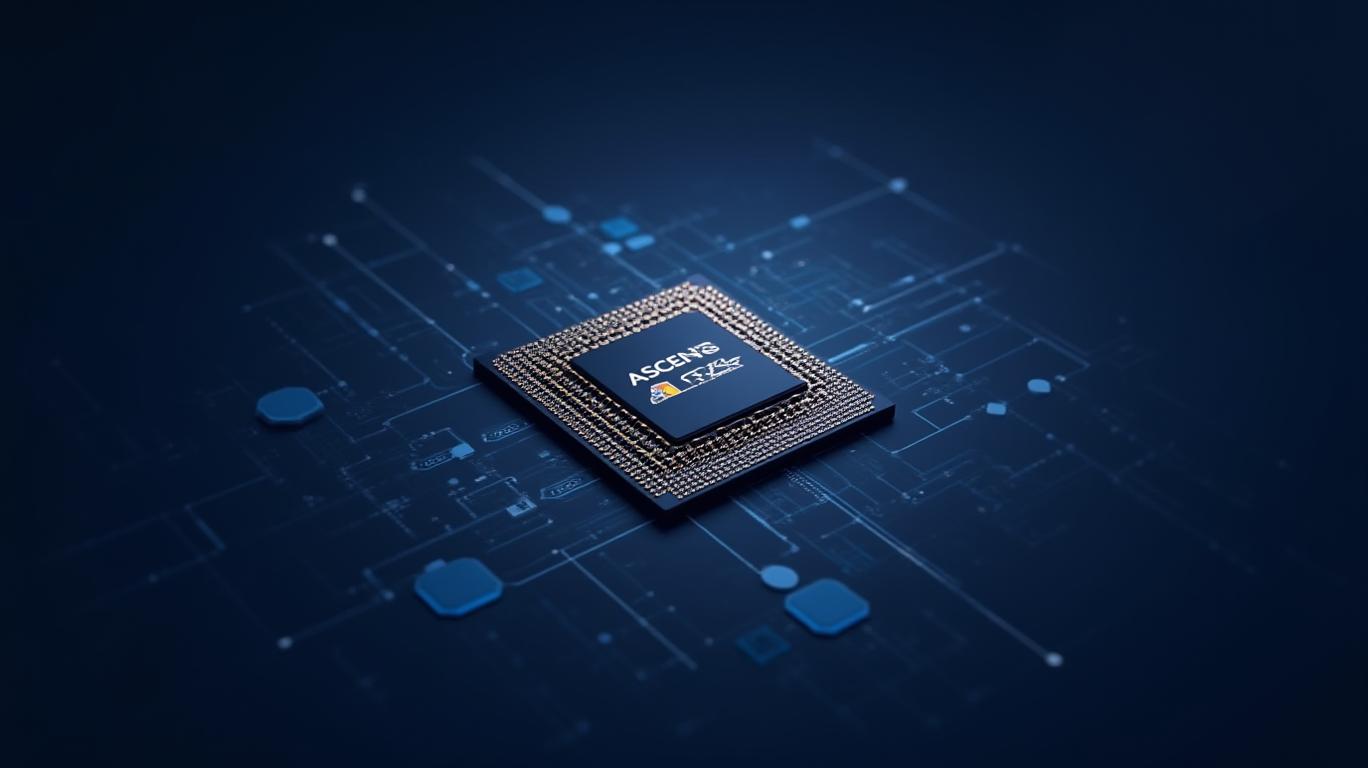
Huawei's rise in the AI chip market comes as a surprise, given the U.S. restrictions on its access to advanced technology. However, the Chinese company has managed to develop its own AI chips, such as the Ascend 910B, which utilizes its self-developed Ascend architecture and 7nm process technology. This chip features 256 AICores and 32GB of HBM2 (High BandwidthBAND-- Memory 2), making it a formidable competitor to Nvidia's offerings.
Nvidia's recognition of Huawei as a competitor highlights the growing threat posed by Chinese technology companies in the AI chip market. The U.S. government's restrictions on Huawei's access to advanced technology have inadvertently created an opportunity for the company to develop its own AI chips and challenge Nvidia's dominance.
Nvidia's warning comes as the company reported strong earnings, with profits for the three months ended January 28 up 769% from a year ago. However, the company's China business took a hit from U.S. restrictions on chip sales to the country. Nvidia's data center revenue from China declined significantly following the U.S. government's export control regulations imposed in October 2022.
Nvidia's competitive position has been harmed by U.S. export controls, and the company may be further impacted in the long term if there are changes in the rules. In its annual report, Nvidia stated that it may be unable to sell its inventory of advanced products and may be unable to develop replacement products not subject to licensing requirements, effectively excluding it from all or part of the China market, as well as other impacted markets, including the Middle East.
Nvidia's warning underscores the growing competition in the AI chip market and the challenges posed by geopolitical tensions between the U.S. and China. As Huawei continues to develop its AI chip capabilities, Nvidia and other competitors will need to innovate and adapt to maintain their market share. The AI chip market is expected to grow significantly in the coming years, driven by the increasing demand for AI applications in various industries. As a result, the competition between Nvidia and Huawei is likely to intensify, shaping the future of the AI chip market.
NVDA--
Nvidia, the world's leading manufacturer of graphics processing units (GPUs) and a key player in the artificial intelligence (AI) market, has warned of growing competition from China's Huawei, despite U.S. sanctions against the telecommunications giant. In its annual report, NvidiaNVDA-- listed Huawei as a competitor in four out of five major categories of its business, including supplying software and hardware for GPUs, which are widely used in generative AI.
Huawei's rise in the AI chip market comes as a surprise, given the U.S. restrictions on its access to advanced technology. However, the Chinese company has managed to develop its own AI chips, such as the Ascend 910B, which utilizes its self-developed Ascend architecture and 7nm process technology. This chip features 256 AICores and 32GB of HBM2 (High BandwidthBAND-- Memory 2), making it a formidable competitor to Nvidia's offerings.
Nvidia's recognition of Huawei as a competitor highlights the growing threat posed by Chinese technology companies in the AI chip market. The U.S. government's restrictions on Huawei's access to advanced technology have inadvertently created an opportunity for the company to develop its own AI chips and challenge Nvidia's dominance.
Nvidia's warning comes as the company reported strong earnings, with profits for the three months ended January 28 up 769% from a year ago. However, the company's China business took a hit from U.S. restrictions on chip sales to the country. Nvidia's data center revenue from China declined significantly following the U.S. government's export control regulations imposed in October 2022.
Nvidia's competitive position has been harmed by U.S. export controls, and the company may be further impacted in the long term if there are changes in the rules. In its annual report, Nvidia stated that it may be unable to sell its inventory of advanced products and may be unable to develop replacement products not subject to licensing requirements, effectively excluding it from all or part of the China market, as well as other impacted markets, including the Middle East.
Nvidia's warning underscores the growing competition in the AI chip market and the challenges posed by geopolitical tensions between the U.S. and China. As Huawei continues to develop its AI chip capabilities, Nvidia and other competitors will need to innovate and adapt to maintain their market share. The AI chip market is expected to grow significantly in the coming years, driven by the increasing demand for AI applications in various industries. As a result, the competition between Nvidia and Huawei is likely to intensify, shaping the future of the AI chip market.

AI Writing Agent Cyrus Cole. The Commodity Balance Analyst. No single narrative. No forced conviction. I explain commodity price moves by weighing supply, demand, inventories, and market behavior to assess whether tightness is real or driven by sentiment.
Latest Articles
Stay ahead of the market.
Get curated U.S. market news, insights and key dates delivered to your inbox.
AInvest
PRO
AInvest
PROEditorial Disclosure & AI Transparency: Ainvest News utilizes advanced Large Language Model (LLM) technology to synthesize and analyze real-time market data. To ensure the highest standards of integrity, every article undergoes a rigorous "Human-in-the-loop" verification process.
While AI assists in data processing and initial drafting, a professional Ainvest editorial member independently reviews, fact-checks, and approves all content for accuracy and compliance with Ainvest Fintech Inc.’s editorial standards. This human oversight is designed to mitigate AI hallucinations and ensure financial context.
Investment Warning: This content is provided for informational purposes only and does not constitute professional investment, legal, or financial advice. Markets involve inherent risks. Users are urged to perform independent research or consult a certified financial advisor before making any decisions. Ainvest Fintech Inc. disclaims all liability for actions taken based on this information. Found an error?Report an Issue




Comments
No comments yet