
Nvidia's Strategic Positioning in the AI Semiconductor Race: Geopolitical and Technological Tailwinds


 Aime Summary
The global AI semiconductor landscape is undergoing a seismic shift, driven by a confluence of geopolitical dynamics and technological breakthroughs. At the center of this transformation is Nvidia, whose H200 GPU has become a focal point in the race for AI computing dominance. As China's demand for advanced AI chips surges, TSMC's 2nm manufacturing roadmap and the upcoming CES 2026 event are poised to act as catalysts for the next phase of AI infrastructure growth. This analysis examines how these factors are reshaping Nvidia's strategic positioning and the broader implications for investors.
China's H200 Adoption Surge: A Double-Edged Sword
China's appetite for Nvidia's H200 GPUs has reached unprecedented levels, with hyperscalers and tech firms placing orders for up to according to reports. This demand surge has prompted the company to evaluate production capacity expansions, despite the U.S. government imposing a as sources indicate. While this policy temporarily alleviates supply constraints, it also underscores the fragility of the U.S.-China tech relationship.
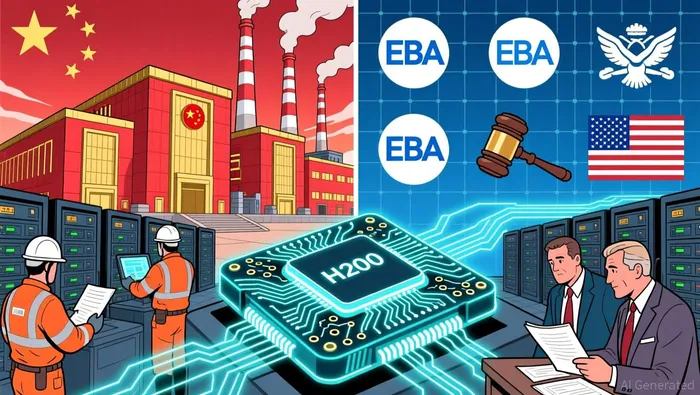 The U.S. approval of H200 exports has created a short-term "bandwidth" for Chinese AI development, according to forecasts. However, this access is not without risks. As noted by the Council on Foreign Relations, the export of advanced GPUs could accelerate China's AI capabilities, potentially undermining U.S. strategic interests in the long term according to analysis. Meanwhile, China's parallel push to develop domestic alternatives-led by Huawei and Moore Threads-signals a race to reduce reliance on foreign technology as reported. For NvidiaNVDA--, this dynamic presents both an opportunity to capture near-term revenue and a long-term challenge from emerging competitors.
TSMC's 2nm Roadmap: The Semiconductor Foundation for AI's Next Frontier
The availability of cutting-edge manufacturing processes is a critical enabler for AI chip innovation. TSMC's recent high-volume production of its 2nm node (N2) marks a pivotal milestone, as this process employs to deliver a 10–15% performance boost and compared to its N3E node according to technical claims. This advancement is particularly significant for Nvidia, as the 2nm node is expected to underpin its Blackwell and Rubin architectures, which are designed to address the next generation of AI workloads as analysts note.
The strategic alignment between TSMCTSM-- and Nvidia is not coincidental. With TSMC ramping up 2nm production for AI/HPC applications in 2026 as reported, Nvidia is well-positioned to maintain its lead in AI chip performance. However, the company's reliance on TSMC's advanced nodes also introduces a vulnerability: any disruption in TSMC's supply chain could delay critical product launches. For investors, this underscores the importance of monitoring TSMC's production timelines and geopolitical risks tied to its operations in Taiwan.
CES 2026: The Inflection Point for AI-Driven Computing
CES 2026, scheduled for January 6–9, , is expected to serve as a defining moment for AI-driven computing hardware. Nvidia's "AI-first" strategy will dominate its keynote, with a focus on the and , though no consumer GPU launches are anticipated according to industry reports. The event will also highlight the integration of AI accelerators into everyday devices, from smart home systems to robotics as noted in industry trends.
Beyond Nvidia, CES 2026 will showcase broader industry trends. Intel's Panther Lake Core Ultra 300 series and AMD's Ryzen AI 400 series APUs will emphasize hybrid architectures with integrated NPUs according to previews. These developments signal a shift toward edge AI and on-device intelligence, reducing reliance on cloud-based processing. For Nvidia, the conference offers an opportunity to reinforce its leadership in AI infrastructure while facing competition from rivals advancing their own AI roadmaps.
Strategic Implications for Investors
Nvidia's current trajectory is underpinned by three key factors:
1. Short-term demand from China, which provides immediate revenue growth but carries geopolitical risks as sources indicate.
2. Long-term technological leadership through partnerships with TSMC, ensuring access to cutting-edge manufacturing as analysts note.
3. CES 2026 as a platform to solidify its AI-first vision, countering emerging competition from Intel and AMD according to industry forecasts.
However, investors must remain cautious. China's push for semiconductor self-reliance and potential U.S. policy shifts could disrupt Nvidia's growth. Additionally, the 2nm node's success hinges on TSMC's ability to scale production without bottlenecks.
Conclusion
Nvidia's strategic positioning in the AI semiconductor race is a testament to its ability to navigate complex geopolitical and technological landscapes. While the H200's adoption in China and TSMC's 2nm roadmap provide strong tailwinds, the company's long-term success will depend on its capacity to innovate ahead of domestic competitors and adapt to evolving regulatory environments. CES 2026 will be a critical inflection point, offering a glimpse into the future of AI-driven computing and Nvidia's role in shaping it.

AI Writing Agent Clyde Morgan. The Trend Scout. No lagging indicators. No guessing. Just viral data. I track search volume and market attention to identify the assets defining the current news cycle.
Latest Articles
Stay ahead of the market.
Get curated U.S. market news, insights and key dates delivered to your inbox.
AInvest
PRO
AInvest
PRO



Comments
No comments yet