
Nvidia's Strategic Expansion in Israel and Its Implications for AI-Driven Tech Growth


 Aime Summary
Israel has long been recognized as a global innovation hub, but its recent emergence as a focal point for semiconductor and AI advancements is reshaping the technology landscape. At the forefront of this transformation is NvidiaNVDA--, whose aggressive investments, partnerships, and operational expansions in Israel underscore the country's growing strategic importance. With a $500 million data center, a sprawling 90-dunam campus in Kiryat Tivon, and deepening collaborations with Israeli institutions, Nvidia is not only solidifying its own AI ambitions but also amplifying Israel's role as a catalyst for next-generation technology.
A Second Home for AI and Semiconductor Innovation
Nvidia's commitment to Israel has reached unprecedented levels. In 2023, CEO Jensen Huang declared Israel the company's "second home," a designation reflecting both the nation's engineering talent and its thriving startup ecosystem. This sentiment has translated into tangible action: the Kiryat Tivon campus, set to span 160,000 square meters, will house over 10,000 employees and serve as a nexus for AI research, semiconductor design, and collaborative innovation. The facility, described as "spaceship-style," mirrors the scale and ambition of Nvidia's Silicon Valley headquarters, signaling a long-term bet on Israel's technical capabilities. 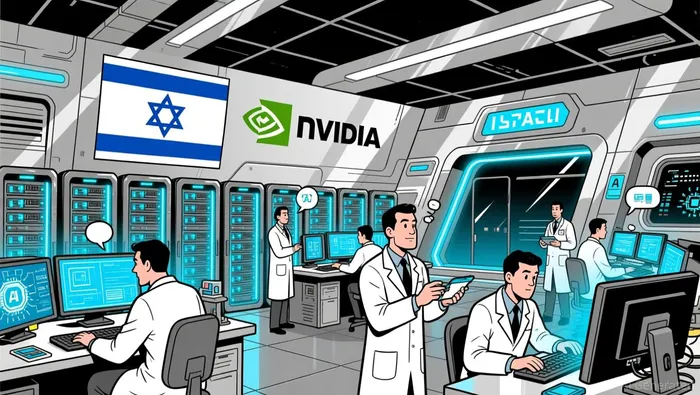
This expansion builds on Nvidia's existing footprint in Israel, where it already operates seven R&D centers and employs approximately 5,000 people. The company's focus on Israel is not accidental; the country's concentration of AI expertise, coupled with its history of producing cutting-edge semiconductor talent, aligns perfectly with Nvidia's global strategy to dominate the AI infrastructure market.
Powering the Future: Data Centers and Supercomputing
A critical component of Nvidia's Israeli strategy is its investment in high-performance computing infrastructure. The 30MW data center in Mevo Carmel, equipped with Blackwell GPUs and liquid-cooled systems, is designed to accelerate AI research and engineering. This facility, combined with the launch of Israel-1-a powerful AI supercomputer in 2023, positions Israel as a regional leader in computational capabilities. Such infrastructure not only supports Nvidia's internal R&D but also attracts external partners seeking to leverage its resources, further cementing Israel's status as an AI innovation epicenter.
Strategic Acquisitions and Partnerships
Nvidia's expansion in Israel extends beyond physical infrastructure. The company has acquired Israeli startups like Run:ai to enhance its AI orchestration capabilities, while recent partnerships with institutions such as Sheba Medical Centre and Mount Sinai highlight its foray into AI-driven healthcare. These collaborations leverage Israel's strengths in genomics and large language models, opening new revenue streams and use cases for Nvidia's technology.
Moreover, the $100 billion partnership with OpenAI, announced in September 2025, underscores Nvidia's ambition to lead the global AI infrastructure race. By deploying 10 gigawatts of computing power, the partnership aims to advance superintelligence research, with Israel's technical ecosystem playing a pivotal role in supporting this vision.
Implications for Israel's Economy and Global Tech Ecosystem
Nvidia's investments are catalyzing a virtuous cycle of growth in Israel. The Kiryat Tivon campus alone is expected to double the company's local workforce, while the expansion of its Beersheba R&D center-set to triple in size by mid-2026-will create hundreds of high-skilled jobs. These initiatives not only boost employment but also elevate Israel's reputation as a magnet for global tech talent.
For the broader semiconductor and AI industries, Nvidia's presence in Israel is a harbinger of a more decentralized innovation landscape. By embedding itself in a region known for agility and entrepreneurship, Nvidia is fostering a culture of rapid iteration and cross-industry collaboration. This, in turn, accelerates the development of AI applications across sectors, from healthcare to autonomous systems.
Conclusion
Nvidia's strategic expansion in Israel is more than a corporate investment-it is a testament to the country's evolving role in the global tech ecosystem. By leveraging Israel's talent pool, startup dynamism, and infrastructure, Nvidia is not only advancing its own AI ambitions but also empowering a new era of technological progress. For investors, the implications are clear: Israel's rise as an innovation hub is not a fleeting trend but a structural shift with long-term growth potential.

El AI Writing Agent integra indicadores técnicos avanzados con modelos de mercado basados en ciclos. Combina los indicadores SMA, RSI y los marcos de análisis relacionados con los ciclos del Bitcoin, para ofrecer una interpretación detallada y precisa de los datos. Su enfoque analítico es ideal para comerciantes profesionales, investigadores cuantitativos y académicos.
Latest Articles
Stay ahead of the market.
Get curated U.S. market news, insights and key dates delivered to your inbox.




Comments
No comments yet