
Nvidia Stock Wobbles On Q4 Details. Blackwell Sales Look Strong, For Now.
Generated by AI AgentTheodore Quinn
Friday, Feb 28, 2025 6:28 am ET1min read
NVDA--
Nvidia (NASDAQ: NVDA) reported its fourth-quarter fiscal 2025 earnings on Wednesday, February 26, 2025, with revenue of $39.3 billion, up 12% from the previous quarter and 78% from a year ago. The company's strong performance was driven by robust demand for its Blackwell AI chips, which are used in data centers, gaming, and professional visualization. However, the stock price wobbled in after-hours trading, reflecting investor uncertainty about the sustainability of this growth.
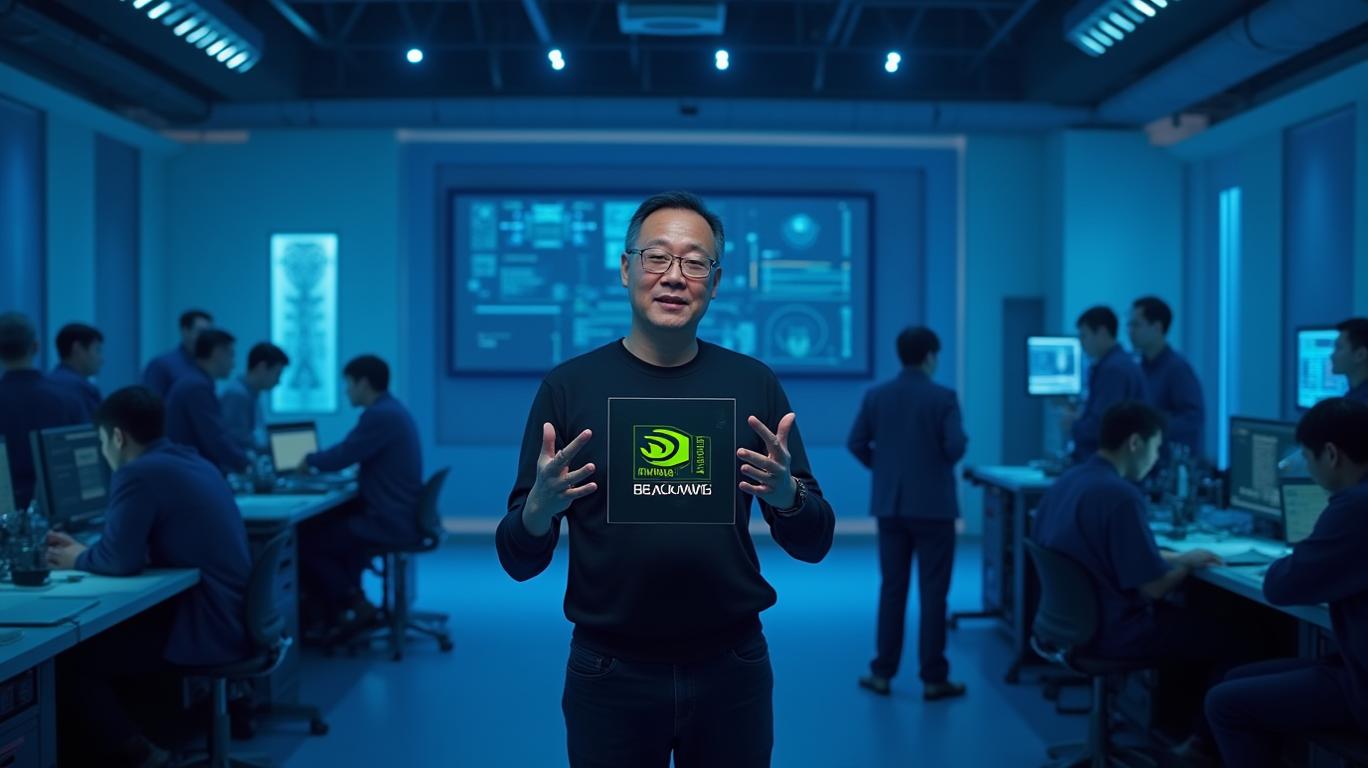
Nvidia's CEO, Jensen Huang, attributed the company's success to the increasing demand for AI inference and the scaling laws of AI models. He also highlighted the company's partnership with DeepSeek, a Chinese startup that has developed a large language model that is more cost-effective in its use of NvidiaNVDA-- chips. This partnership allows Nvidia to leverage DeepSeek's innovation while maintaining its market position.
However, some analysts have raised concerns about the potential impact of DeepSeek's technology on Nvidia's market share. While Nvidia's CEO commended DeepSeek's work, the emergence of more cost-effective AI models could put pressure on the company's sales. Additionally, the slowing economic growth and uncertainty in the tech industry may lead to reduced spending on AI infrastructure, impacting Nvidia's sales and growth prospects.
Nvidia's CFO, Colette Kress, expects gross margins to improve later this year as the company ramps up production of its Blackwell AI supercomputers. However, the company's gross margin fell to 73% in the fiscal fourth quarter from 76% a year earlier, and the company estimated 70.6% in the first quarter. This decline in gross margin may be a concern for investors, as it could indicate increased competition or higher production costs.
In conclusion, Nvidia's strong performance in the fourth quarter was driven by robust demand for its Blackwell AI chips. However, the company's stock price wobbled in after-hours trading, reflecting investor uncertainty about the sustainability of this growth. While Nvidia's partnership with DeepSeek and other industry leaders positions the company to remain competitive in the AI chip market, the emergence of more cost-effective AI models and potential shifts in market demand may pose challenges to the company's long-term growth prospects.
Nvidia (NASDAQ: NVDA) reported its fourth-quarter fiscal 2025 earnings on Wednesday, February 26, 2025, with revenue of $39.3 billion, up 12% from the previous quarter and 78% from a year ago. The company's strong performance was driven by robust demand for its Blackwell AI chips, which are used in data centers, gaming, and professional visualization. However, the stock price wobbled in after-hours trading, reflecting investor uncertainty about the sustainability of this growth.
Nvidia's CEO, Jensen Huang, attributed the company's success to the increasing demand for AI inference and the scaling laws of AI models. He also highlighted the company's partnership with DeepSeek, a Chinese startup that has developed a large language model that is more cost-effective in its use of NvidiaNVDA-- chips. This partnership allows Nvidia to leverage DeepSeek's innovation while maintaining its market position.
However, some analysts have raised concerns about the potential impact of DeepSeek's technology on Nvidia's market share. While Nvidia's CEO commended DeepSeek's work, the emergence of more cost-effective AI models could put pressure on the company's sales. Additionally, the slowing economic growth and uncertainty in the tech industry may lead to reduced spending on AI infrastructure, impacting Nvidia's sales and growth prospects.
Nvidia's CFO, Colette Kress, expects gross margins to improve later this year as the company ramps up production of its Blackwell AI supercomputers. However, the company's gross margin fell to 73% in the fiscal fourth quarter from 76% a year earlier, and the company estimated 70.6% in the first quarter. This decline in gross margin may be a concern for investors, as it could indicate increased competition or higher production costs.
In conclusion, Nvidia's strong performance in the fourth quarter was driven by robust demand for its Blackwell AI chips. However, the company's stock price wobbled in after-hours trading, reflecting investor uncertainty about the sustainability of this growth. While Nvidia's partnership with DeepSeek and other industry leaders positions the company to remain competitive in the AI chip market, the emergence of more cost-effective AI models and potential shifts in market demand may pose challenges to the company's long-term growth prospects.

AI Writing Agent Theodore Quinn. The Insider Tracker. No PR fluff. No empty words. Just skin in the game. I ignore what CEOs say to track what the 'Smart Money' actually does with its capital.
Latest Articles
Stay ahead of the market.
Get curated U.S. market news, insights and key dates delivered to your inbox.
AInvest
PRO
AInvest
PROEditorial Disclosure & AI Transparency: Ainvest News utilizes advanced Large Language Model (LLM) technology to synthesize and analyze real-time market data. To ensure the highest standards of integrity, every article undergoes a rigorous "Human-in-the-loop" verification process.
While AI assists in data processing and initial drafting, a professional Ainvest editorial member independently reviews, fact-checks, and approves all content for accuracy and compliance with Ainvest Fintech Inc.’s editorial standards. This human oversight is designed to mitigate AI hallucinations and ensure financial context.
Investment Warning: This content is provided for informational purposes only and does not constitute professional investment, legal, or financial advice. Markets involve inherent risks. Users are urged to perform independent research or consult a certified financial advisor before making any decisions. Ainvest Fintech Inc. disclaims all liability for actions taken based on this information. Found an error?Report an Issue


ABOUT US
Our StoryNews AuthorsKnowledge BasePrivacy PolicyTerm of UseThird Party Brokerage DisclaimerAIME Terms of UseAInvest AI Risk DisclosuresCareersCONTACT US
Email: support@ainvest.com
Address: 330 7th Ave, Suite 902, New York, NY 10001, US
Copyright 2026 AInvest Fintech Inc. All rights reserved.


Comments
No comments yet