
Nvidia Could Begin Shipping H200 Chips to China as Early as February, as Trump–Xi Ties Warm
 Aime Summary
Nvidia has told Chinese clients that it plans to begin shipping its second-most powerful AI chips to China as early as mid-February, ahead of the Lunar New Year holiday, according to three people familiar with the matter, Reuters reported.
The U.S. chipmaker intends to fulfill initial orders using existing inventory, with expected shipments totaling between 5,000 and 10,000 chip modules—equivalent to roughly 40,000 to 80,000 H200 AI chips, two of the sources said. NvidiaNVDA-- has also indicated it plans to add new production capacity for the H200, with orders for that capacity opening in the second quarter of 2026, a third source said.
However, significant uncertainty remains. Beijing has yet to approve any H200 purchases, and the timeline could shift depending on government decisions. "The whole plan is contingent on government approval," one source said. "Nothing is certain until we get the official go-ahead."
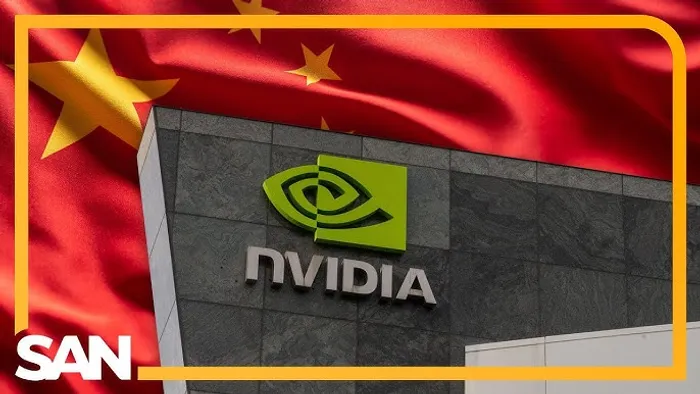
If approved, the shipments would mark the first deliveries of Nvidia's H200 chips to China since U.S. President Donald Trump said this month that Washington would allow such sales, subject to a 25% fee paid to the U.S. government. Reuters previously reported that the Trump administration has launched an inter-agency review of license applications for H200 sales to China, following Trump's public pledge to permit exports under controlled conditions.
Trump said earlier in December that he had informed Chinese President Xi the U.S. would allow Nvidia to ship H200 chips to "approved customers" in China, framing the move as a balance between commercial interests and national security. Trump added that Xi responded positively, though no formal details were disclosed.
The policy shift represents a sharp reversal from the Biden administration, which had barred exports of advanced AI chips to China over concerns they could be used for military purposes. Nvidia CEO Jensen Huang has long lobbied for easing the restrictions, arguing that allowing controlled access would keep China dependent on U.S. technology rather than accelerating domestic alternatives.
The H200, part of Nvidia's previous-generation Hopper architecture, remains widely used in AI workloads despite being superseded by the newer Blackwell chips. Nvidia has prioritized production of Blackwell and its upcoming Rubin line, making H200 supply relatively scarce. For Chinese technology groups such as Alibaba, ByteDance and Tencent, access to the H200 would provide processors roughly six times more powerful than the H20, a downgraded chip Nvidia designed specifically for China.
Chinese regulators, however, are weighing stricter scrutiny. According to people familiar with the discussions, authorities are considering an approval regime that would require buyers to submit detailed purchase justifications explaining why domestic chips cannot meet their needs. Officials have also discussed measures such as bundling H200 purchases with a required ratio of domestic chips, and potentially banning public-sector procurement of the H200 altogether.
China has used U.S. export restrictions to accelerate its domestic semiconductor ambitions. Regulators have promoted homegrown alternatives, tightened customs checks, and offered data-center energy subsidies linked to the use of domestic chips. Beijing has already restricted access to Nvidia's H20, arguing its performance is not meaningfully superior to local options.
Trump's stance still faces resistance in Washington. A bipartisan group of U.S. senators has introduced legislation that would block approvals for advanced chip exports—including the H200—to China for 30 months. U.S. officials are also considering their own vetting process that would limit sales to companies deemed "safe."
Despite the political uncertainty, Nvidia welcomed Trump's decision, saying that allowing H200 sales to vetted commercial customers "strikes a thoughtful balance that is great for America." For China's leading tech firms—many of which have been training AI models overseas to access restricted chips—the potential return of Nvidia's advanced processors would be a meaningful relief, even as regulatory scrutiny on both sides intensifies.

Crypto market researcher and content strategist with 3 years of experience in digital asset analysis and market commentary. Skilled at transforming complex blockchain data and trading signals into clear, actionable insights for investors. Experienced in covering Bitcoin, Ethereum, and emerging ecosystems including DeFi, Layer2, and AI-related projects. Passionate about bridging professional market research with accessible storytelling to empower readers and investors in the fast-evolving crypto landscape.
Latest Articles
Stay ahead of the market.
Get curated U.S. market news, insights and key dates delivered to your inbox.
AInvest
PRO
AInvest
PRO



Comments
No comments yet