
NVIDIA's Ascent and Paradoxes: The Capital Dynamics Fueling Technological Innovation
We Drive the AI Revolution.
Jensen Huang, Founder of NVIDIA
This statement might come across as somewhat bold, but it highlights NVIDIA's respected status in the tech industry. You might not be aware, but most of the major models you've heard about have been trained using NVIDIA's graphics cards. Interestingly, NVIDIA started out in the gaming industry. So, how did the company transition from gaming to the AI market, and how did it manage to surpass tech giants like Intel and AMD?
Early 21st Century: The Evolution of a Gaming Giant
In the early 2000s, NVIDIA had already established itself as a leader in the gaming industry, winning over countless gamers with its powerful graphics card technology. Founder Jensen Huang saw a new opportunity on the horizon. Unsatisfied with the status quo, he set his sights on AI. At the time, AI was like a black hole—intriguing yet intimidating, with many believing its success was still a long way off. However, Huang decided to take a bold gamble, venturing from the gaming market into the uncharted territory of AI.
The market was not optimistic, and many questioned, Why venture into AI when the gaming business is so profitable? However, Jensen Huang and his team did not back down. They understood that the future belonged to AI and began to significantly increase their R&D investments.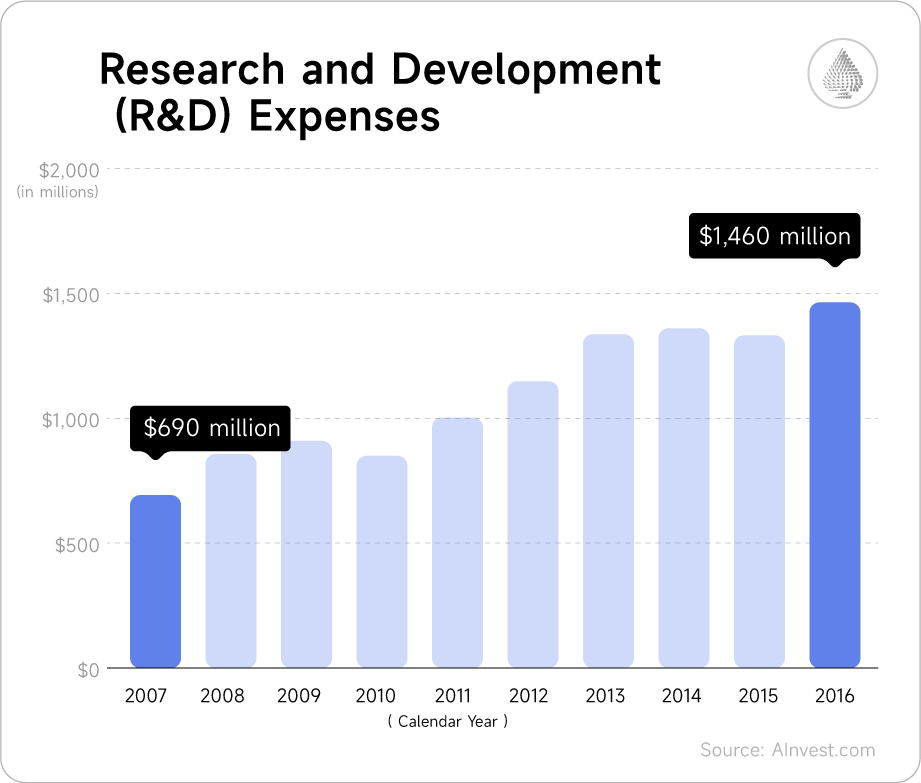
R&D Gamble Amid Financial Crisis
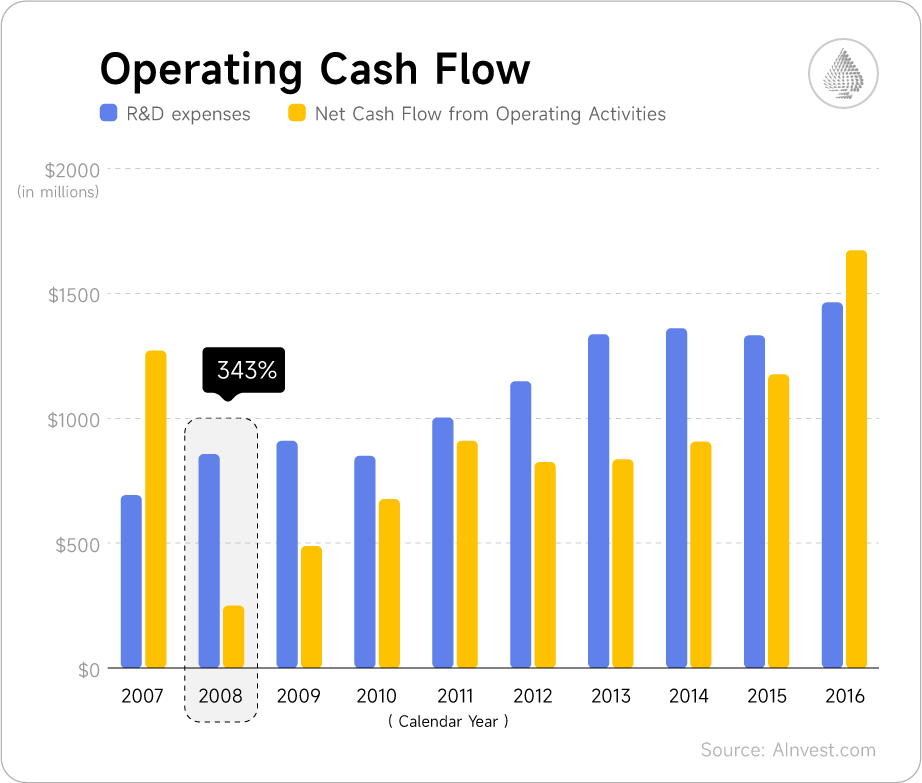
You'll find that most of the time, NVIDIA's R&D spending far exceeded its primary revenue. Even during the 2008 financial crisis, NVIDIA's R&D investment was as high as 343% of its primary revenue, showcasing its unwavering commitment to AI.
Massive Investments and Acquisitions Amidst Industry Giants
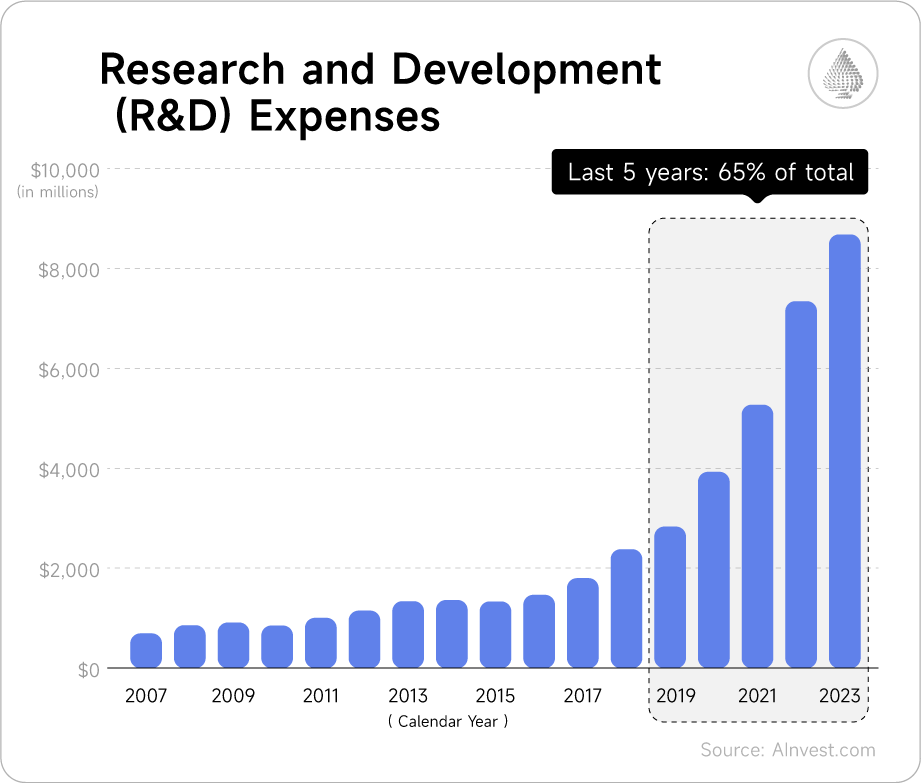
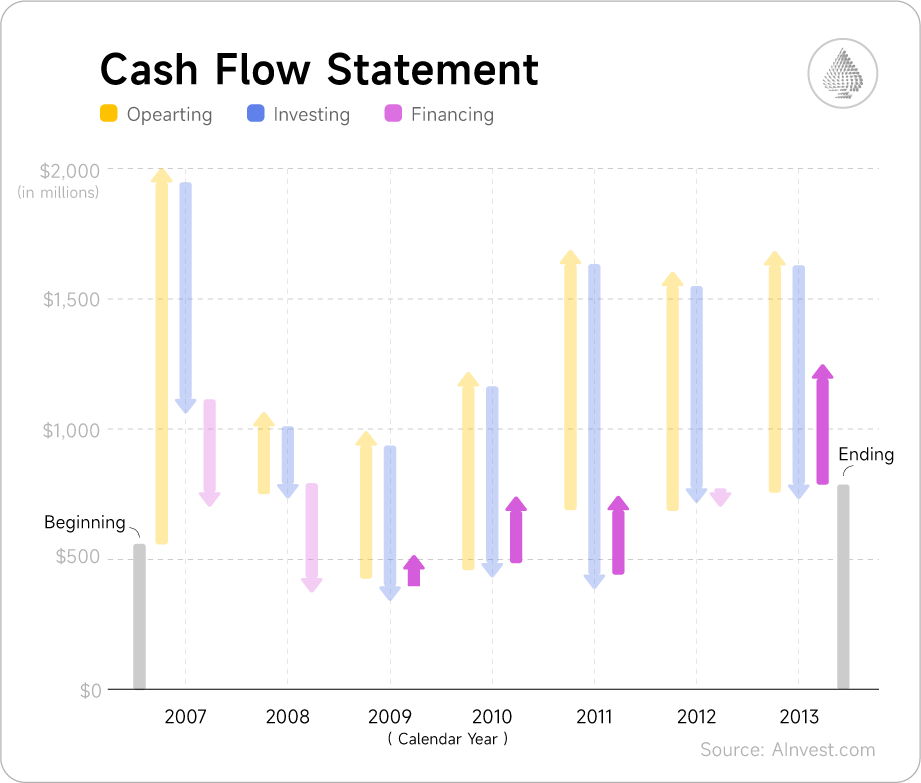
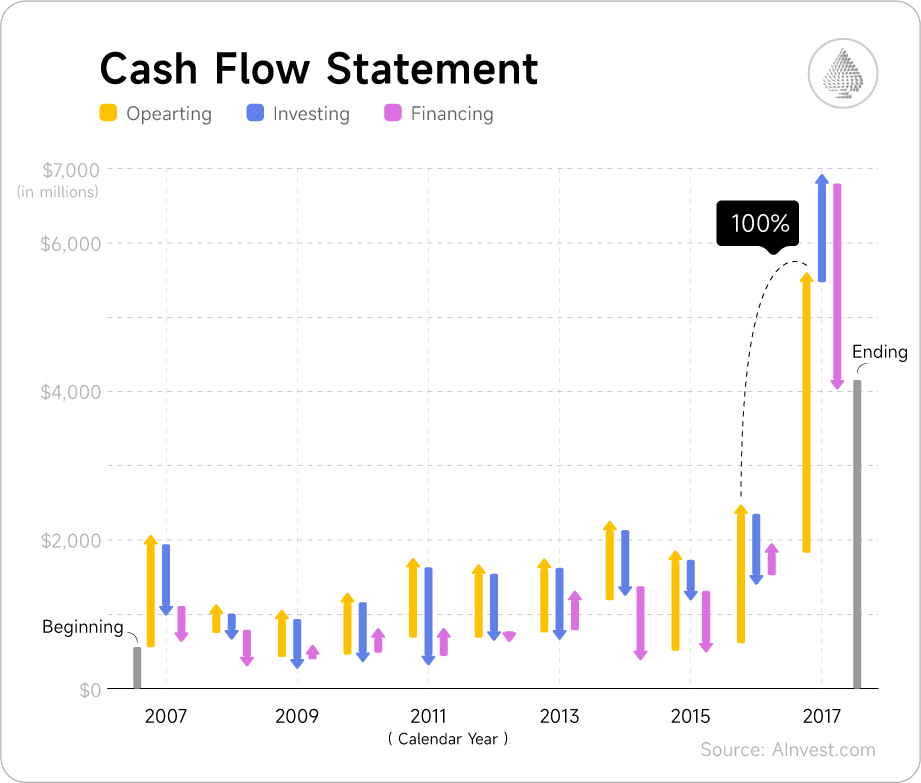
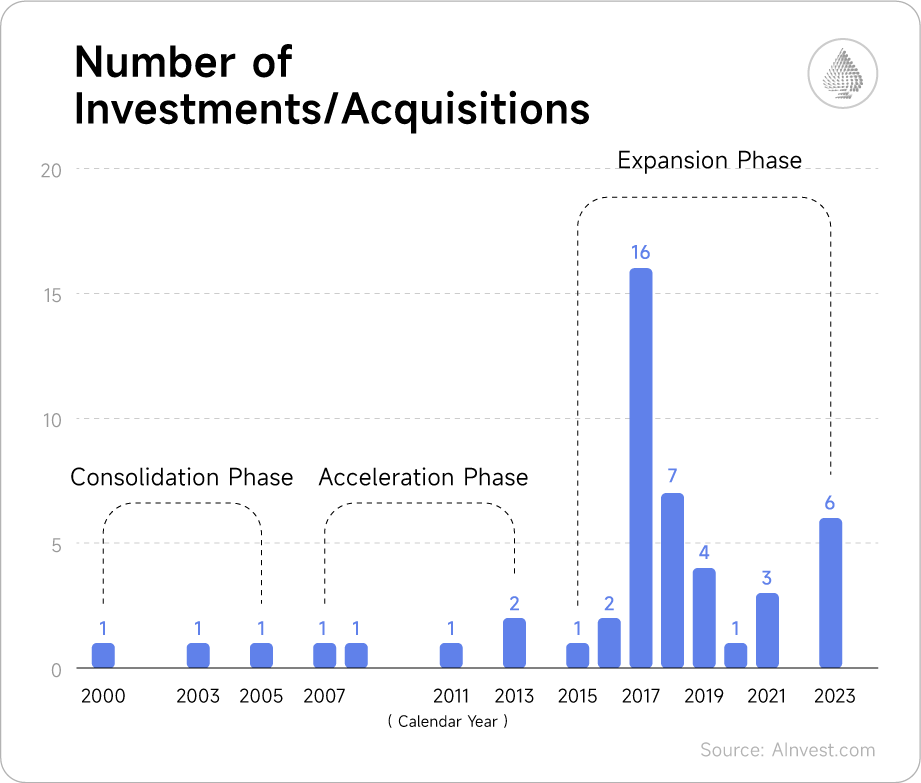 Most notably, NVIDIA acquired Israeli chip manufacturer Mellanox for $6.9 billion, directly addressing a crucial segment in the AI chip supply chain.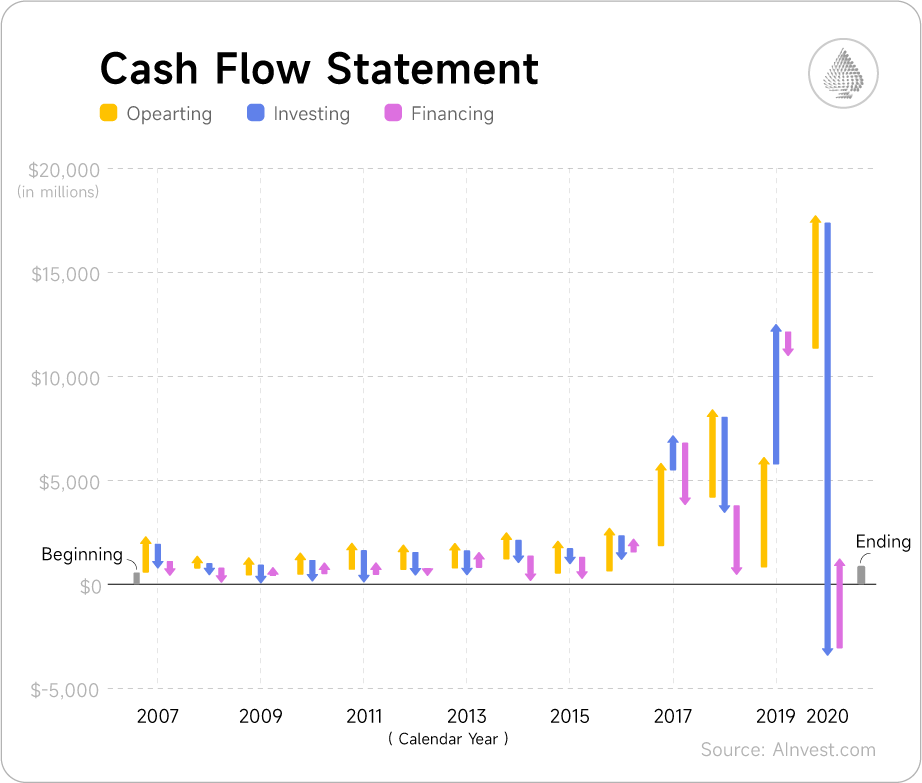
Although this acquisition created a big hole in NVIDIA's cash flow, it wasn't due to company losses; rather, it was an investment in buying the future.
Explosive Growth in 2023
Years of sustained investment finally paid off in 2023.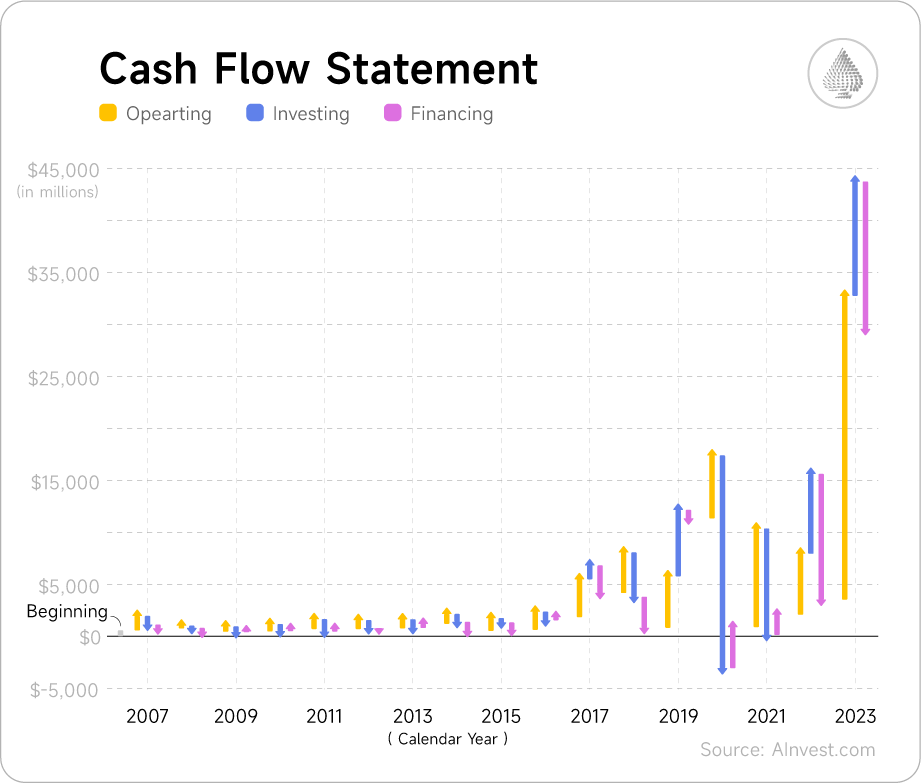
This year is hailed as the breakout year for AI technology, especially with the emergence of ChatGPT, which spurred tech companies to develop their own large language models. Leveraging its extensive experience and forward-looking strategy in the AI field, NVIDIA secured a favorable position in this wave of technological advancement. In fiscal year 2023, NVIDIA's operating cash flow reached an astonishing $28.09 billion, a remarkable increase of approximately 398% from the previous year's $5.64 billion, fully demonstrating the company's core competitiveness in the AI era.
NVIDIA's ambition map continues to expand, no longer content with just being a chip giant, but targeting more advanced application scenarios. It's like building a super engine; to make the car go further, just an engine isn't enough. It also needs a sleek body and willing drivers to buy it.
Therefore, NVIDIA doesn't just want to be the engine of AI; it's also desperately searching for the next breakout track. In other words, the key to future growth is no longer just the hardware itself, but whether it can dominate more application areas. After all, speed alone isn't enough; market support is also essential.
Today, NVIDIA is charging full speed ahead, but the road ahead is filled with unknown challenges. Do you think NVIDIA can continue to maintain its lead in future competition? The story is far from over; the suspense is just beginning!

Providing daily analysis of the latest earnings reports from US companies to help you make informed investment decisions.
Latest Articles
Stay ahead of the market.
Get curated U.S. market news, insights and key dates delivered to your inbox.
AInvest
PRO
AInvest
PRO



Comments
No comments yet