
Nvidia Requires Full Upfront Payment for H200 Chips as China May Permit Purchases as Soon as This Quarter
 Aime Summary
- Nvidia is demanding full upfront payment for H200 chips from Chinese buyers to offset regulatory risk, shifting uncertainty to customers.
- China may allow limited H200 imports for commercial use as soon as this quarter, while restricting military, government, and critical infrastructure access.
- Strong Chinese demand persists despite policy hurdles, as Nvidia's chips remain superior to domestic alternatives.
Nvidia is requiring Chinese customers to make full upfront payments for its H200 artificial intelligence chips, seeking to protect itself from regulatory uncertainty even as Beijing may approve limited imports as soon as this quarter, according to people familiar with the matter, Reuters reported.
The U.S. chipmaker has imposed unusually strict terms for H200 orders from China, mandating full payment with no option for cancellation, refunds, or post-order configuration changes. In special cases, customers may substitute cash with commercial insurance or asset collateral. While NvidiaNVDA-- has historically required advance payments from Chinese buyers, it previously allowed partial deposits. For the H200, however, enforcement has tightened significantly due to lingering uncertainty over Chinese regulatory approval.
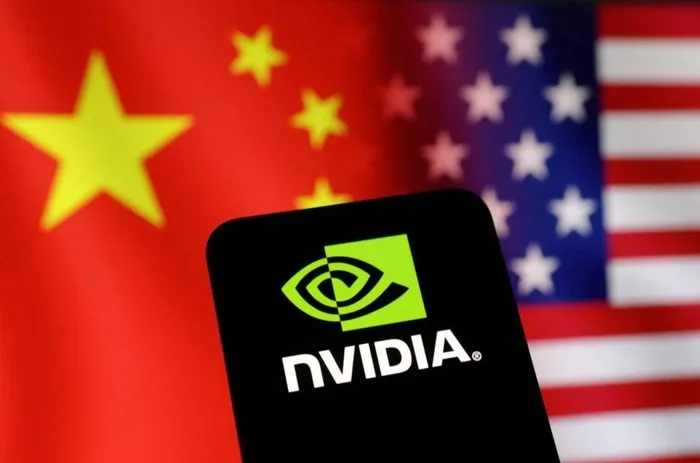
The move comes as Chinese authorities weigh allowing local companies to import the H200 for select commercial uses, while barring the chip from military applications, sensitive government agencies, critical infrastructure, and state-owned enterprises because of security concerns. Any exceptions would be reviewed on a case-by-case basis. These restrictions would mirror measures China has applied to other foreign technology products, including devices from Apple and chips from Micron.
Despite the limitations, approval would mark a major win for Nvidia. Nvidia CEO Jensen Huang has said the country's AI chip demand alone could represent a $50 billion opportunity in the coming years. Nvidia's market share in China has effectively fallen from a peak of 95% to zero following successive U.S. export controls imposed since 2022.
Chinese technology firms have shown strong interest in the H200. Alibaba and ByteDance have each privately expressed interest in ordering more than 200,000 units, according to people familiar with the discussions, while overall orders from Chinese customers are estimated to exceed 2 million chips—far above Nvidia's current inventory of roughly 700,000 units. Demand reflects rapid efforts by Chinese firms and startups, including DeepSeek, to upgrade AI models and compete with U.S. leaders such as OpenAI.
However, Beijing has recently asked some Chinese companies to temporarily pause H200 orders as regulators determine how many domestically produced chips buyers must purchase alongside each Nvidia chip. It remains unclear how broadly China will define "critical infrastructure," particularly given that private-sector firms like Alibaba and Baidu provide computing services to government-linked entities.
The H200 is part of Nvidia's Hopper generation, introduced in 2023 and positioned below the newer Blackwell line and well behind the upcoming Rubin series. Its roughly 18-month technological lag was cited by the Trump administration as justification for allowing exports to China. In early December, President Donald Trump reversed a prior ban and permitted H200 shipments in exchange for a 25% surcharge paid to the U.S. government.
Still, regulatory risks persist on both sides. Nvidia was forced last year to write down $5.5 billion in inventory after an abrupt ban on its China-specific H20 chip. Although Washington later reversed that decision, China subsequently blocked H20 shipments, underscoring the volatility of policy shifts. The full upfront payment requirement for the H200 effectively transfers much of that risk to Chinese customers, who must commit capital without certainty that imports will be approved or that the chips can be fully deployed.
Nvidia plans to fulfill initial H200 orders from existing stock, with the first batch expected to arrive before the Lunar New Year in mid-February. The company has also approached Taiwan Semiconductor Manufacturing Co. about ramping up production, with additional manufacturing capacity potentially coming online in the second quarter of 2026.
Meanwhile, Chinese rivals continue to gain ground. Huawei and partner SMIC have improved production capabilities despite U.S. restrictions, while Cambricon plans to more than triple its AI chip output in 2026. Even so, Nvidia's accelerators remain the industry benchmark, and some older Nvidia products are still considered more powerful than domestic alternatives on a chip-by-chip basis.

Crypto market researcher and content strategist with 3 years of experience in digital asset analysis and market commentary. Skilled at transforming complex blockchain data and trading signals into clear, actionable insights for investors. Experienced in covering Bitcoin, Ethereum, and emerging ecosystems including DeFi, Layer2, and AI-related projects. Passionate about bridging professional market research with accessible storytelling to empower readers and investors in the fast-evolving crypto landscape.
Latest Articles
Stay ahead of the market.
Get curated U.S. market news, insights and key dates delivered to your inbox.


AInvest
PRO
AInvest
PRO



Comments
No comments yet