
Nvidia's Regulatory Crossroads in China: Geopolitical Risk and the Future of Semiconductor Supply Chains
 Aime Summary
In 2025, the semiconductor industry stands at a critical juncture, where geopolitical tensions and regulatory scrutiny are reshaping the global tech landscape. At the center of this storm is NVIDIA's H20 chip—a product engineered to navigate U.S. export restrictions while appealing to China's insatiable demand for AI and high-performance computing. Yet, the H20's journey to market has been anything but smooth. China's Cyberspace Administration has subjected the chip to intense scrutiny, demanding assurances against backdoors, data vulnerabilities, and national security risks. This regulatory standoff is not just a technical debate but a microcosm of the broader clash between tech sovereignty and global interdependence.
The H20 Dilemma: A Case Study in Tech Sovereignty
China's demands for transparency around the H20 chip reflect a growing emphasis on data sovereignty and self-reliance. The country's regulators have summoned NVIDIANVDA-- to provide detailed documentation, a move that underscores their determination to control access to critical infrastructure. This mirrors the U.S. approach to export restrictions, which has prioritized a “small yard, high fence” strategy to limit advanced technologies to adversarial nations. While the U.S. granted a limited greenlight for H20 sales in April 2025, Chinese officials remain wary of the chip's potential to undermine their strategic autonomy.
The H20's regulatory hurdles highlight a paradox: China, the world's largest market for semiconductors, is simultaneously one of the most hostile environments for foreign chipmakers. The country's export controls on gallium and germanium—key materials for chip manufacturing—further illustrate its dual role as both a critical supplier and a strategic adversary. For investors, this tension raises a fundamental question: Can companies like NVIDIA navigate a fragmented regulatory landscape without compromising profitability or innovation?
Global Semiconductor Companies: A Comparative Analysis
The semiconductor industry's response to regulatory pressures is increasingly regionalized. In the U.S., firms are accelerating reshoring efforts, with TSMCTSM-- and IntelINTC-- expanding domestic foundries under the CHIPS Act. Europe, meanwhile, is forging the Semicon Coalition, a nine-nation alliance aimed at boosting local production and reducing reliance on Asian suppliers. Japan and South Korea are doubling down on advanced packaging technologies like TSMC's CoWoS, while India and Southeast Asia emerge as nearshoring hubs.
NVIDIA's situation in China is emblematic of the broader challenges faced by global chipmakers. Unlike ASML, which has managed to navigate U.S. export controls by limiting EUV lithography sales to compliant partners, NVIDIA must contend with a market that is both indispensable and volatile. The company's decision to order large quantities of H20 chips from TSMC, despite regulatory uncertainty, suggests a high-risk, high-reward strategy. However, this approach could backfire if China imposes further restrictions or mandates costly security audits.
Investment Implications: Diversification and Resilience
For investors, the H20 saga underscores the need to prioritize resilience over short-term gains. The semiconductor sector's beta has surged in 2025, driven by geopolitical volatility and supply chain disruptions. Companies that can balance compliance with innovation—such as TSMC's investments in advanced packaging or Infineon's Smart Power Fab in Germany—are better positioned to weather regulatory storms. Conversely, firms overly reliant on a single market or technology face heightened risks.
A diversified portfolio across regions and sectors is critical. For example, while NVIDIA's exposure to China remains a wildcard, its dominance in AI and gaming provides a buffer. Similarly, investors might consider hedging against geopolitical risks by allocating to companies in the European Industrial Alliance for Processors and Semiconductor Technologies or South Korea's DRAM producers.
The Long Game: Strategic Autonomy and Market Dynamics
The future of semiconductor investment lies in aligning with the geopolitical currents shaping the industry. As the U.S. and China vie for technological dominance, the EU's push for sovereignty and India's emergence as a manufacturing hub will redefine supply chains. Investors should monitor policy shifts, such as the U.S. Interim Final Rule on AI Technology Diffusion, and their ripple effects on chipmakers.
NVIDIA's H20 chip is a bellwether for this new era. Its success or failure in China will signal whether global collaboration is still viable or if the semiconductor industry is destined for a fractured, regionally segmented future. For now, the path forward requires a blend of strategic foresight, regulatory agility, and a willingness to embrace uncertainty.
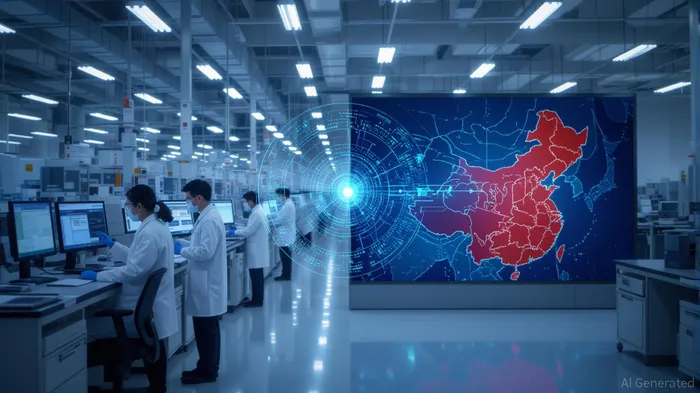
In a world where semiconductors are both a commodity and a weapon, the winners will be those who can adapt to the new normal: a landscape where geopolitical risk is not an exception but the rule.

Stay ahead of the market.
Get curated U.S. market news, insights and key dates delivered to your inbox.


AInvest
PRO
AInvest
PRO



Comments
No comments yet