
Nvidia's First Quantum Day on the Way: Which Company Will Have the Next ChatGPT Moment?
Nvidia GTC 2025 conference will finally deliver this week, during March 18-21. Jensen Huang is expected to unveil the latest B300 AI chip during Tuesday's keynote, but investors may be more excited about the first-ever QuantumQMCO-- Day, which will be held on March 21. Jensen will discuss the future path of quantum computingQUBT-- with industry leaders, including the CEOs of D-WaveQBTS--, Atom Computing, and others. Will quantum be the next ChatGPT moment, and which stocks will benefit the most as the quantum era arrives, with the potential to be the next OpenAI? Let's figure it out.
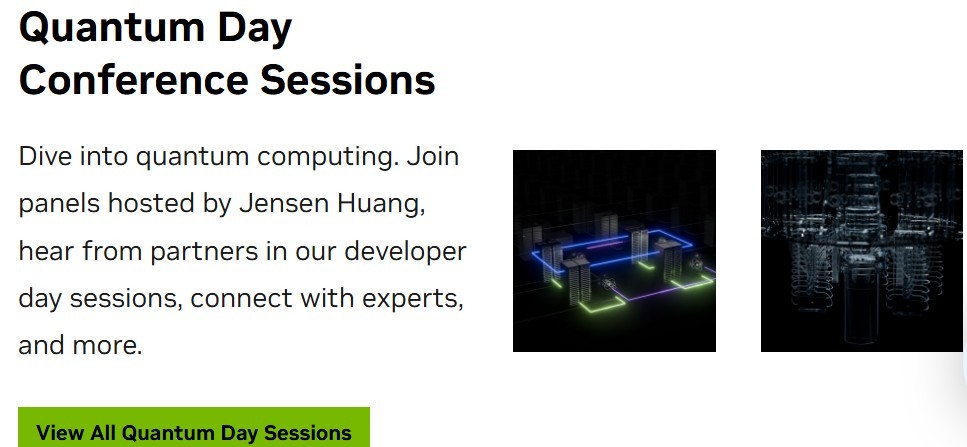
Who will attend:
Alan Baratz, CEO of D-Wave (QBTS)
Peter Chapman, Executive Chair of IonQ (IONQ)
Subodh Kulkarni, CEO of Rigetti (RGTI)
Krysta Svore, VP for Microsoft Azure Quantum (MSFT)
Simone Severine, General Manager, Quantum Technologies for AWS (AMZN)
Representatives from private companies, including Atom Computing, SEEQC, Pasqal, and others
D-Wave (QBTS)
D-Wave, founded in 1999, was the first to launch a commercial quantum system. Their latest Advantage2 prototype features 1200+ qubits and 20-way connectivity, capable of performing complex simulations in minutes with a level of accuracy much faster than classical supercomputers, particularly in theoretical physics. Last week, the company published a study in Science demonstrating that its quantum processor solved a physics problem on magnetism behavior in certain solids in just 20 minutes—something that would take the largest conventional supercomputers hundreds of thousands of years to calculate. This marks the first instance of quantum supremacy being demonstrated on a real-world problem.
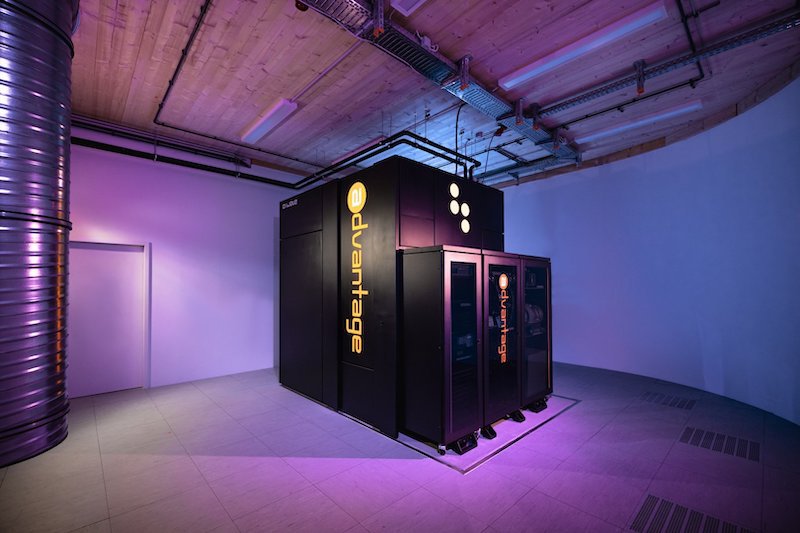
The company's revenue primarily comes from cloud-based quantum computing services, granting access to quantum computers with more than 5000 qubits to optimize solutions involving up to two million variables. Its customers include research institutions, academia, and government organizations. D-Wave believes quantum applications can extend across every major field, utilizing optimization for material development, food delivery, marketing, and more.
From a financial perspective, D-Wave posted $8.8 million in revenue for 2024, a 1% year-over-year increase, with a gross margin of 63%. However, the company's R&D and administrative expenses totaled over $67 million ($35M + $32M), making its financial situation look cumbersome. Overall, the company reported a $140 million loss in 2024, expanding losses by 74% year-over-year.
As of December 31, D-Wave held $178 million in cash and equivalents, sufficient to cover its high R&D and staffing costs. Total assets increased by 237% to $199 million, while total liabilities rose by 65% to $137 million. Despite its cash burn, the company can continue to operate without immediate additional funding. The stock was valued at $3.2 billion as of March 17, reflecting a 33% year-to-date increase following an 854% surge in 2024.
IonQ (IONQ)
IonQ, similar to D-Wave, sells quantum computing and hardware to customers, primarily offering quantum-computing-as-a-service on AWS, Azure, and Google Cloud (whereas D-Wave is available only on AWS). Its business focus is on chemistry simulation (for medical discovery), Monte Carlo simulation (to determine real distributions of business models), and optimization.
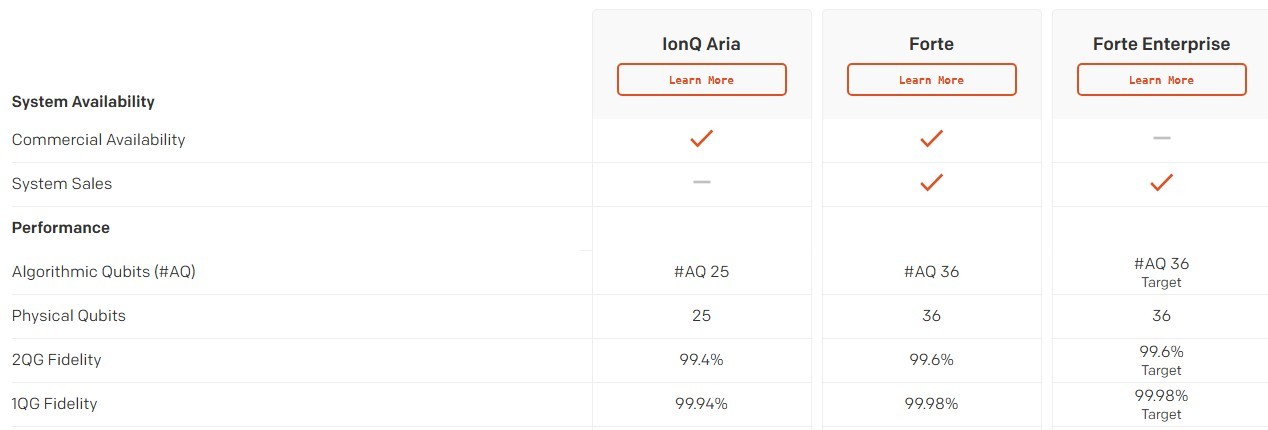
IonQ's systems deliver exceptional qubit coherence and high-fidelity gate operations (99.9% two-qubit gate fidelity), enabling them to function as fully programmable, gate-model quantum computers capable of executing a wide range of quantum algorithms. The machines demonstrate impressive quantum volumes and low error rates, positioning IonQ as a strong contender in the pursuit of scalable, general-purpose quantum computing.
The company collaborates with the University of Maryland to provide customized quantum computing hardware and is also engaged with the U.S. Defense Advanced Research Projects Agency to develop next-generation quantum computers. Notably, Bill Gates and Marc Benioff are among IonQ's investors through venture capital.
IonQ's fundamentals are much stronger, with $43 million in revenue for 2024, a 95% year-over-year increase, and a gross margin of 53%. However, R&D and administrative expenses totaled over $200 million ($136M + $73M). The company reported a $331 million loss in 2024, more than doubling year-over-year losses.
Financially, IonQ is in a better position than D-Wave, avoiding short-term share dilution. By December 31, IonQ had total assets of $509 million and total liabilities of $124 million. It held $54 million in cash and equivalents, with an additional $286 million allocated to short-term investments.
The stock was valued at $5.5 billion as of March 17, reflecting a -40% year-to-date following an 237% surge in 2024, primary driven by executive shares dump.
Overall, IonQ is more commercially focused, backed by major investors, and has potential future collaborations with Microsoft. Meanwhile, D-Wave has a strong academic background but remains immature in commercialization, requiring stronger monetization efforts.
Rigetti Computing (RGTI)
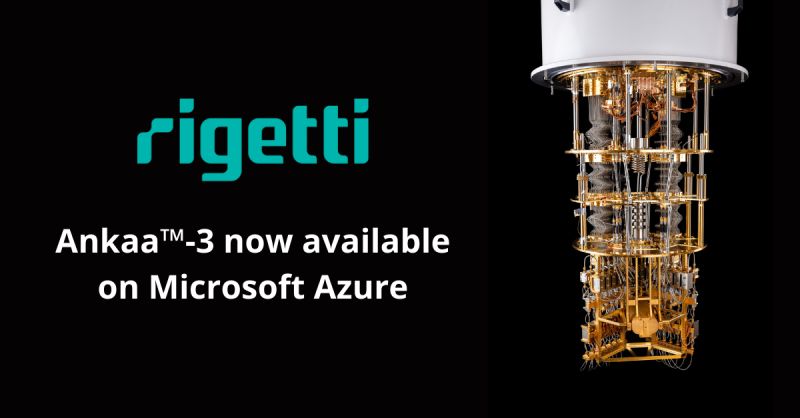
Rigetti Computing is another key player in the quantum computing landscape. Their first commercially available QPU, Novera, features 9 qubits, while their 84-qubit Ankaa-3 system, achieving 99% median two-qubit gate fidelity, is expected to be available on Amazon Braket and Azure in Q1 2025.
The Ankaa-3 system features a scalable chip architecture with 3D signal delivery, designed to accommodate an increasing number of qubits while maintaining performance, reliability, and efficient signal management. The company also owns and operates Fab-1, a wafer fabrication facility used to prototype and produce quantum processors.
Rigetti has a broader customer base than the other two companies, including commercial enterprises such as AWS, Standard Chartered Bank, and Moody's, as well as government entities like the Defense Advanced Research Projects Agency, the Department of Energy, and the Air Force Research Laboratory.
However, its fundamentals show signs of fatigue. Rigetti reported $10.79 million in revenue for 2024, down 11% year-over-year, with a gross margin of 53%. The company posted a $200 million loss, expanding losses by 167% year-over-year.
Financially, Rigetti's position is stable, with total assets of $285 million and $124 million in short-term investments. Its overall liabilities stand at $158 million.
The stock was valued at $3.19 billion as of March 17, reflecting a -27% year-to-date following an 1449% surge in 2024.
Among the three quantum stocks, IonQ has the strongest commercial growth potential, backed by Gates and Benioff, and could collaborate with Microsoft in the future. Its financials are also more solid compared to its peers, reducing dilution risks. D-Wave has a stronger academic background but remains in the early stages of commercialization, requiring stronger monetization efforts. Rigetti, on the other hand, lacks momentum in its growth trajectory.
Microsoft and Amazon will also attend the meeting, though quantum computing will not significantly impact their businesses in the short term.
In February, Microsoft introduced Majorana 1, claiming it to be the world's first quantum chip powered by a new Topological Core architecture, which it expects will enable quantum computers to solve meaningful, industrial-scale problems in the coming years.
At the same time, AWS announced its new 'Ocelot' chip, which features a scalable architecture that reduces error correction by up to 90%, accelerating the development of real-world quantum computing applications.
For investors, the key consideration may be which of these megacaps is more closely aligned with quantum computing companies, as that could indicate better long-term growth potential. Quantum commercialization still lacks a major breakthrough, but the upcoming discussions may offer insights into its future trajectory.

Independent investment research powered by a team of market strategists with 20+ years of Wall Street and global macro experience. We uncover high-conviction opportunities across equities, metals, and options through disciplined, data-driven analysis.
Latest Articles
Unlock Market-Moving Insights.
Subscribe to PRO Articles.
Already have an account? Sign in
Unlock Market-Moving Insights.
Subscribe to PRO Articles.
Already have an account? Sign in
Stay ahead of the market.
Get curated U.S. market news, insights and key dates delivered to your inbox.




