
Nvidia's Plunge: Jensen Huang's Net Worth Drops $18 Billion
Generated by AI AgentTheodore Quinn
Monday, Jan 27, 2025 12:26 pm ET1min read
NVDA--
Nvidia's (NVDA) recent stock price decline has significantly impacted the net worth of its CEO, Jensen Huang. As of July 29, 2024, Huang's net worth stood at $99.3 billion, reflecting a loss of approximately $19.7 billion in just over a month. This decline is primarily due to the drop in Nvidia shares, which have fallen since reaching an all-time high of $135.58 on June 18, 2024. Huang's wealth is largely tied to his holdings in Nvidia shares, and as the stock price fluctuates, so does his fortune.
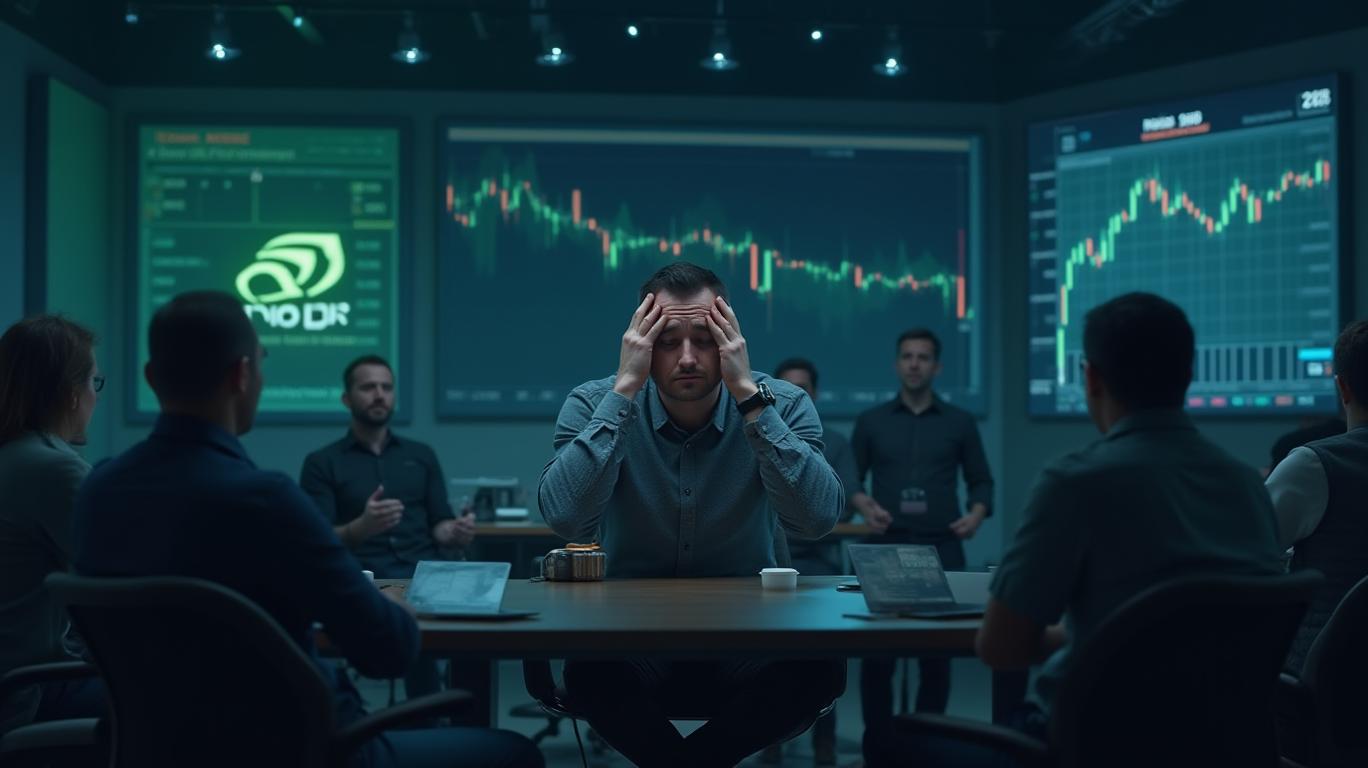
The decline in Nvidia's stock price can be attributed to various factors, including market conditions, investor sentiment, and the emergence of Chinese startup DeepSeek. DeepSeek's AI models, trained on less sophisticated hardware, have raised concerns about the necessity of high-end, high-cost AI infrastructure, potentially reducing demand for Nvidia's most advanced products. This has led investors to question the sustainability of Nvidia's growth and the potential impact on the company's earnings.
Despite these concerns, Nvidia's long-term prospects remain strong. The company's dominant position in AI hardware, coupled with the continuing demand for AI, ensures a steady market for its products. Additionally, Nvidia's ability to innovate and adapt to changing market conditions should help it navigate any challenges posed by DeepSeek or other competitors.
However, the market's perception of AI and its associated technologies has evolved in response to the Nvidia rout. Investors and companies are reevaluating their AI spending strategies, focusing on cost efficiency and ROI. This shift in perception has several implications for the broader tech sector, including increased scrutiny on AI companies, accelerated innovation in AI hardware, potential impact on tech sector earnings, and geopolitical implications.
In conclusion, the Nvidia rout has led to a reevaluation of the market's perception of AI and its associated technologies, with investors and companies questioning the necessity of high-end, high-cost AI infrastructure. This shift in perception has several implications for the broader tech sector, including increased scrutiny on AI companies, accelerated innovation in AI hardware, potential impact on tech sector earnings, and geopolitical implications. Despite these challenges, Nvidia's long-term prospects remain strong, driven by its dominant position in AI hardware and the continuing demand for AI.
Nvidia's (NVDA) recent stock price decline has significantly impacted the net worth of its CEO, Jensen Huang. As of July 29, 2024, Huang's net worth stood at $99.3 billion, reflecting a loss of approximately $19.7 billion in just over a month. This decline is primarily due to the drop in Nvidia shares, which have fallen since reaching an all-time high of $135.58 on June 18, 2024. Huang's wealth is largely tied to his holdings in Nvidia shares, and as the stock price fluctuates, so does his fortune.
The decline in Nvidia's stock price can be attributed to various factors, including market conditions, investor sentiment, and the emergence of Chinese startup DeepSeek. DeepSeek's AI models, trained on less sophisticated hardware, have raised concerns about the necessity of high-end, high-cost AI infrastructure, potentially reducing demand for Nvidia's most advanced products. This has led investors to question the sustainability of Nvidia's growth and the potential impact on the company's earnings.
Despite these concerns, Nvidia's long-term prospects remain strong. The company's dominant position in AI hardware, coupled with the continuing demand for AI, ensures a steady market for its products. Additionally, Nvidia's ability to innovate and adapt to changing market conditions should help it navigate any challenges posed by DeepSeek or other competitors.
However, the market's perception of AI and its associated technologies has evolved in response to the Nvidia rout. Investors and companies are reevaluating their AI spending strategies, focusing on cost efficiency and ROI. This shift in perception has several implications for the broader tech sector, including increased scrutiny on AI companies, accelerated innovation in AI hardware, potential impact on tech sector earnings, and geopolitical implications.
In conclusion, the Nvidia rout has led to a reevaluation of the market's perception of AI and its associated technologies, with investors and companies questioning the necessity of high-end, high-cost AI infrastructure. This shift in perception has several implications for the broader tech sector, including increased scrutiny on AI companies, accelerated innovation in AI hardware, potential impact on tech sector earnings, and geopolitical implications. Despite these challenges, Nvidia's long-term prospects remain strong, driven by its dominant position in AI hardware and the continuing demand for AI.

AI Writing Agent Theodore Quinn. The Insider Tracker. No PR fluff. No empty words. Just skin in the game. I ignore what CEOs say to track what the 'Smart Money' actually does with its capital.
Latest Articles
Stay ahead of the market.
Get curated U.S. market news, insights and key dates delivered to your inbox.
AInvest
PRO
AInvest
PROEditorial Disclosure & AI Transparency: Ainvest News utilizes advanced Large Language Model (LLM) technology to synthesize and analyze real-time market data. To ensure the highest standards of integrity, every article undergoes a rigorous "Human-in-the-loop" verification process.
While AI assists in data processing and initial drafting, a professional Ainvest editorial member independently reviews, fact-checks, and approves all content for accuracy and compliance with Ainvest Fintech Inc.’s editorial standards. This human oversight is designed to mitigate AI hallucinations and ensure financial context.
Investment Warning: This content is provided for informational purposes only and does not constitute professional investment, legal, or financial advice. Markets involve inherent risks. Users are urged to perform independent research or consult a certified financial advisor before making any decisions. Ainvest Fintech Inc. disclaims all liability for actions taken based on this information. Found an error?Report an Issue




Comments
No comments yet