
Is NVIDIA (NVDA) The Best Gaming Stock to Invest In According to Billionaires?
Generated by AI AgentTheodore Quinn
Saturday, Mar 29, 2025 6:44 pm ET6min read
NVDA--
In the ever-evolving world of technology and gaming, one company stands out as a beacon of innovation and profitability: NVIDIA CorporationNVDA--. Founded in 1993 by Jensen Huang, Chris Malachowsky, and Curtis Priem, NVIDIANVDA-- has transformed from a modest startup into a tech giant with a market capitalization in the trillions. The company's journey is deeply rooted in the world of video games, which played a pivotal role in NVIDIA's rise. From its early days focusing on graphics processing units (GPUs) to its diversification into artificial intelligence (AI) and beyond, NVIDIA's success story is intricately linked to the evolution of gaming.
NVIDIA's historical performance in the gaming industry has significantly influenced its current market position and will likely continue to impact its future prospects as a gaming stock. The company's early focus on graphics technology and its pioneering work in developing GPUs have been pivotal in shaping its trajectory. NVIDIA's first major breakthrough came in 1999 with the release of the GeForce 256, marketed as the world’s first GPU. This innovation set the stage for NVIDIA’s dominance in the graphics card market. The GeForce 256 introduced the concept of a dedicated graphics processor, which could handle complex calculations independently from the central processing unit (CPU). This was a game-changer for the video game industry, allowing developers to create more detailed and immersive gaming experiences.
The GeForce series became the cornerstone of NVIDIA’s success. Each new iteration brought significant improvements in performance and capabilities, catering to the ever-evolving needs of gamers. For instance, the GeForce 3, released in 2001, introduced programmable shaders, which allowed developers to create more realistic textures and lighting effects. This technological leap not only enhanced the visual experience of games but also attracted a broader audience of PC enthusiasts and professionals who required high-performance graphics for tasks such as video editing and 3D modeling. The GeForce series became synonymous with high-quality gaming, and NVIDIA’s name became a staple in the gaming community.
NVIDIA's growth was further fueled by strategic partnerships with major video game developers and publishers. Collaborations with companies like Electronic Arts and Tencent ensured that NVIDIA’s GPUs were optimized for the latest and most popular games. These partnerships also provided NVIDIA with early access to new game technologies and trends, allowing the company to stay ahead of the competition. Moreover, NVIDIA’s close relationship with the gaming industry enabled it to anticipate and respond to shifts in the market. For example, the rise of online multiplayer games and the increasing popularity of digital distribution platforms like Steam created new opportunities for NVIDIA to expand its market share. By aligning its products with the needs of the gaming industry, NVIDIA was able to maintain its competitive edge and continue its upward trajectory.
The explosion of esports and competitive gaming in the 2010s provided another significant boost to NVIDIA’s fortunes. As esports tournaments gained popularity and prize pools grew, the demand for high-performance gaming hardware skyrocketed. NVIDIA capitalized on this trend by sponsoring esports events and teams, further embedding its brand in the gaming community. Professional gamers and streamers quickly adopted NVIDIA’s GPUs as their go-to choice for top-tier performance. The company’s reputation for delivering high-quality graphics and smooth gameplay made it a natural fit for the competitive gaming scene. NVIDIA’s involvement in esports also helped to elevate the status of gaming as a legitimate and respected industry, further driving demand for its products.
While video games were the catalyst for NVIDIA’s initial success, the company wisely diversified its portfolio to include other high-growth areas. The same GPUs that powered immersive gaming experiences were found to be exceptionally well-suited for artificial intelligence (AI) and machine learning tasks. NVIDIA’s CUDA architecture, introduced in 2006, allowed developers to harness the parallel processing power of GPUs for a wide range of applications beyond gaming. This pivot to AI and data centers opened up new revenue streams and positioned NVIDIA as a leader in the AI revolution. The company’s GPUs became the preferred choice for AI and data center applications, further solidifying its market position.
NVIDIA's strategic focus on AI and data centers complements its traditional gaming market in several ways, enhancing its long-term growth and profitability. Firstly, the same GPUs that power immersive gaming experiences are exceptionally well-suited for AI and machine learning tasks. NVIDIA's CUDA architecture, introduced in 2006, allows developers to harness the parallel processing power of GPUs for a wide range of applications beyond gaming. This pivot to AI and data centers opened up new revenue streams and positioned NVIDIA as a leader in the AI revolution. For instance, the company's GPUs became the preferred choice for AI and data center applications, driving significant revenue growth. In the fourth quarter of fiscal 2025, NVIDIA reported a record $35.6 billion in data center revenue, up 16% from the previous quarter and up 93% from a year ago. This highlights the critical role of the data center segment in the company's growth.
Secondly, NVIDIA's strategic partnerships with major video game developers and publishers, such as Electronic Arts and Tencent, ensure that its GPUs are optimized for the latest and most popular games. These partnerships also provide NVIDIA with early access to new game technologies and trends, allowing the company to stay ahead of the competition. For example, the rise of online multiplayer games and the increasing popularity of digital distribution platforms like Steam created new opportunities for NVIDIA to expand its market share. By aligning its products with the needs of the gaming industry, NVIDIA was able to maintain its competitive edge and continue its upward trajectory.
Thirdly, the rise of esports and competitive gaming in the 2010s provided another significant boost to NVIDIA's fortunes. As esports tournaments gained popularity and prize pools grew, the demand for high-performance gaming hardware skyrocketed. NVIDIA capitalized on this trend by sponsoring esports events and teams, further embedding its brand in the gaming community. Professional gamers and streamers quickly adopted NVIDIA’s GPUs as their go-to choice for top-tier performance. The company’s reputation for delivering high-quality graphics and smooth gameplay made it a natural fit for the competitive gaming scene. NVIDIA’s involvement in esports also helped to elevate the status of gaming as a legitimate and respected industry, further driving demand for its products.
In summary, NVIDIA's strategic focus on AI and data centers complements its traditional gaming market by leveraging its expertise in GPU technology, forming strategic partnerships, and capitalizing on emerging trends in the gaming industry. This diversification has significant implications for its long-term growth and profitability, as it allows NVIDIA to tap into new revenue streams and maintain its competitive edge in the rapidly evolving technology landscape.
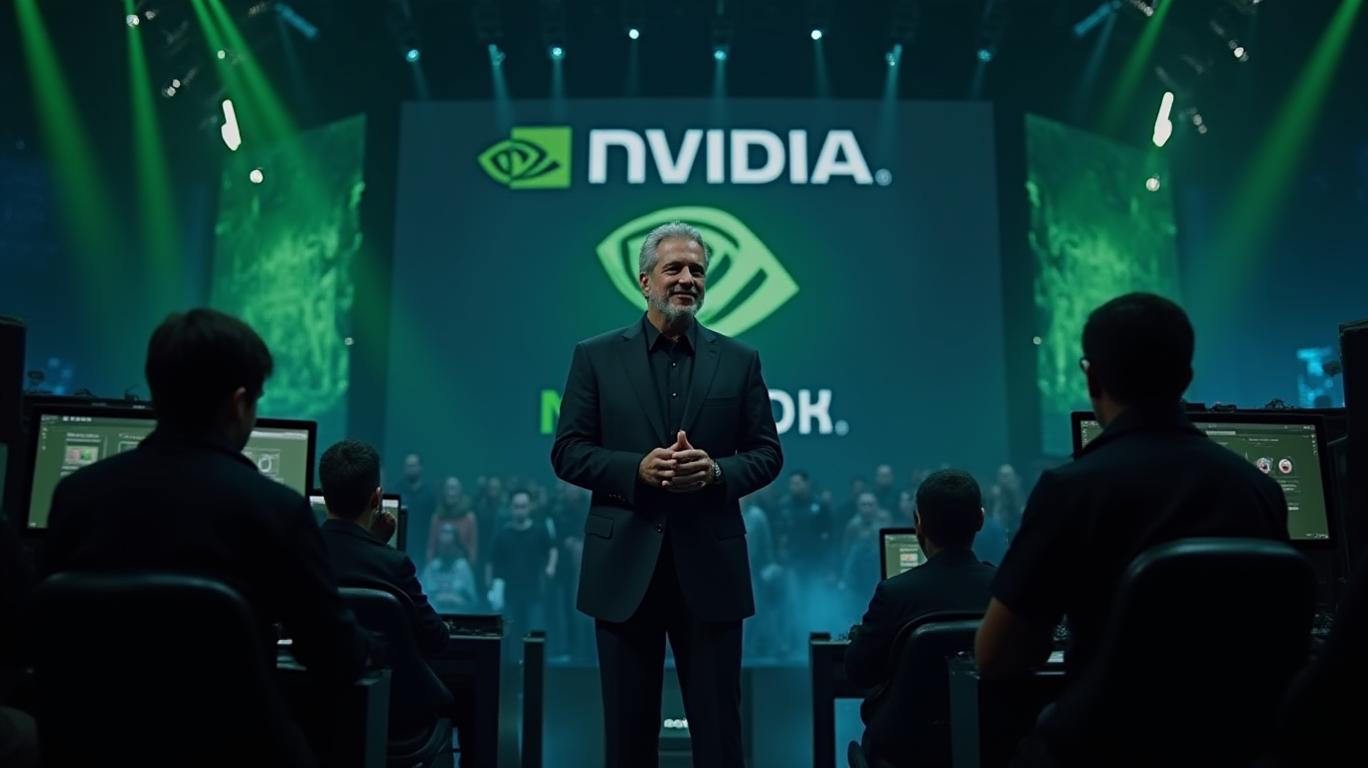
NVIDIA's financial performance in Q4 2025 showcases its impressive growth, driven by strong demand for its AI and data center solutions. The company reported a quarterly revenue of $39.33 billion, marking a 77.94% increase from $22.1 billion in Q4 2024. Earnings per share (EPS) for the quarter also experienced significant growth, reaching $0.90 compared to $0.49 in the previous year, an increase of 83.55%. On a trailing twelve-month (TTM) basis, revenue surged by 114.2% to $130.49 billion, up from $60.92 billion in Q4 2024. Similarly, EPS for the TTM period climbed 147.06% to $2.94 from $1.19. Free cash flow per share also demonstrated substantial improvement, rising 126.85% to $2.45, compared to $1.08 in the previous year. Looking ahead, analysts remain optimistic about NVIDIA’s future, forecasting a revenue of $207.05 billion for fiscal year 2026, a projected 58.67% increase from FY 2025. EPS is also expected to grow significantly, with estimates reaching $4.50, a 53.12% increase from FY 2025. These figures highlight NVIDIA’s continued dominance in the high-performance computing and AI sectors, reinforcing its strong financial position and future growth potential.
NVIDIA's stock has delivered strong performance, with its share price rising by 31.4%, significantly outperforming the S&P 500's 9.9% gain during the same period. The company's valuation metrics reflect its premium status in the market, with a price-to-sales (P/S) ratio of 22.11 on a trailing twelve-month (TTM) basis and a forward P/S ratio of 14.21. Its price-to-earnings (P/E) ratio stands at 39.97 (TTM), while the forward P/E is 25.94, indicating a fair valuation. Additionally, the price-to-free-cash-flow (P/FCF) ratio is 47.12, highlighting NVIDIA's strong cash generation capabilities. While the stock is trading at a premium, the anticipated growth in revenue and earnings justifies its valuation, reinforcing its appeal as a compelling investment opportunity.
Several factors contribute to NVIDIA's promising growth prospects. The escalating adoption of AI across industries has bolstered demand for NVIDIA's advanced GPUs. The Data Center segment reported a record revenue of $35.6 billion in Q4 2025, a 93% year-over-year increase, underscoring its critical role in the company's growth. Product innovation, such as the introduction of the Blackwell architecture in Q4 2025, positions the company to meet the growing need for high-performance computing solutions. Strategic partnerships, like the collaboration with General Motors to enhance autonomous driving technologies, expand NVIDIA's market reach and application domains.
However, investors should be mindful of potential risks. Market competition, such as China's DeepSeek developing efficient AI models, could challenge NVIDIA's market share. Regulatory challenges, including increased scrutiny on semiconductor exports and potential restrictions on sales to key international markets like China, could limit NVIDIA’s ability to sell its high-performance chips globally, affecting its revenue stream. Market volatility, given the technology sector's sensitivity to economic fluctuations, could impact NVIDIA's stock performance.
Despite these risks, NVIDIA's strong financials, innovative product pipeline, and strategic partnerships position it as a leader in the gaming and AI sectors. The company's continued innovation, as evidenced by its upcoming releases at the GTC event on March 17, 2025, further solidifies its market leadership in AI technology. The ongoing AI infrastructure investments by various nations may significantly increase the demand for NVIDIA's chips, presenting a valuable opportunity potentially underestimated by the market.
In conclusion, NVIDIA's historical performance in the gaming industry, coupled with its strategic focus on AI and data centers, positions it as a strong contender for the best gaming stock to invest in. The company's impressive financial performance, innovative product pipeline, and strategic partnerships make it an attractive investment opportunity. While risks exist, NVIDIA's strong market position and future growth prospects make it a compelling choice for investors looking to capitalize on the growing demand for high-performance computing and AI solutions.
In the ever-evolving world of technology and gaming, one company stands out as a beacon of innovation and profitability: NVIDIA CorporationNVDA--. Founded in 1993 by Jensen Huang, Chris Malachowsky, and Curtis Priem, NVIDIANVDA-- has transformed from a modest startup into a tech giant with a market capitalization in the trillions. The company's journey is deeply rooted in the world of video games, which played a pivotal role in NVIDIA's rise. From its early days focusing on graphics processing units (GPUs) to its diversification into artificial intelligence (AI) and beyond, NVIDIA's success story is intricately linked to the evolution of gaming.
NVIDIA's historical performance in the gaming industry has significantly influenced its current market position and will likely continue to impact its future prospects as a gaming stock. The company's early focus on graphics technology and its pioneering work in developing GPUs have been pivotal in shaping its trajectory. NVIDIA's first major breakthrough came in 1999 with the release of the GeForce 256, marketed as the world’s first GPU. This innovation set the stage for NVIDIA’s dominance in the graphics card market. The GeForce 256 introduced the concept of a dedicated graphics processor, which could handle complex calculations independently from the central processing unit (CPU). This was a game-changer for the video game industry, allowing developers to create more detailed and immersive gaming experiences.
The GeForce series became the cornerstone of NVIDIA’s success. Each new iteration brought significant improvements in performance and capabilities, catering to the ever-evolving needs of gamers. For instance, the GeForce 3, released in 2001, introduced programmable shaders, which allowed developers to create more realistic textures and lighting effects. This technological leap not only enhanced the visual experience of games but also attracted a broader audience of PC enthusiasts and professionals who required high-performance graphics for tasks such as video editing and 3D modeling. The GeForce series became synonymous with high-quality gaming, and NVIDIA’s name became a staple in the gaming community.
NVIDIA's growth was further fueled by strategic partnerships with major video game developers and publishers. Collaborations with companies like Electronic Arts and Tencent ensured that NVIDIA’s GPUs were optimized for the latest and most popular games. These partnerships also provided NVIDIA with early access to new game technologies and trends, allowing the company to stay ahead of the competition. Moreover, NVIDIA’s close relationship with the gaming industry enabled it to anticipate and respond to shifts in the market. For example, the rise of online multiplayer games and the increasing popularity of digital distribution platforms like Steam created new opportunities for NVIDIA to expand its market share. By aligning its products with the needs of the gaming industry, NVIDIA was able to maintain its competitive edge and continue its upward trajectory.
The explosion of esports and competitive gaming in the 2010s provided another significant boost to NVIDIA’s fortunes. As esports tournaments gained popularity and prize pools grew, the demand for high-performance gaming hardware skyrocketed. NVIDIA capitalized on this trend by sponsoring esports events and teams, further embedding its brand in the gaming community. Professional gamers and streamers quickly adopted NVIDIA’s GPUs as their go-to choice for top-tier performance. The company’s reputation for delivering high-quality graphics and smooth gameplay made it a natural fit for the competitive gaming scene. NVIDIA’s involvement in esports also helped to elevate the status of gaming as a legitimate and respected industry, further driving demand for its products.
While video games were the catalyst for NVIDIA’s initial success, the company wisely diversified its portfolio to include other high-growth areas. The same GPUs that powered immersive gaming experiences were found to be exceptionally well-suited for artificial intelligence (AI) and machine learning tasks. NVIDIA’s CUDA architecture, introduced in 2006, allowed developers to harness the parallel processing power of GPUs for a wide range of applications beyond gaming. This pivot to AI and data centers opened up new revenue streams and positioned NVIDIA as a leader in the AI revolution. The company’s GPUs became the preferred choice for AI and data center applications, further solidifying its market position.
NVIDIA's strategic focus on AI and data centers complements its traditional gaming market in several ways, enhancing its long-term growth and profitability. Firstly, the same GPUs that power immersive gaming experiences are exceptionally well-suited for AI and machine learning tasks. NVIDIA's CUDA architecture, introduced in 2006, allows developers to harness the parallel processing power of GPUs for a wide range of applications beyond gaming. This pivot to AI and data centers opened up new revenue streams and positioned NVIDIA as a leader in the AI revolution. For instance, the company's GPUs became the preferred choice for AI and data center applications, driving significant revenue growth. In the fourth quarter of fiscal 2025, NVIDIA reported a record $35.6 billion in data center revenue, up 16% from the previous quarter and up 93% from a year ago. This highlights the critical role of the data center segment in the company's growth.
Secondly, NVIDIA's strategic partnerships with major video game developers and publishers, such as Electronic Arts and Tencent, ensure that its GPUs are optimized for the latest and most popular games. These partnerships also provide NVIDIA with early access to new game technologies and trends, allowing the company to stay ahead of the competition. For example, the rise of online multiplayer games and the increasing popularity of digital distribution platforms like Steam created new opportunities for NVIDIA to expand its market share. By aligning its products with the needs of the gaming industry, NVIDIA was able to maintain its competitive edge and continue its upward trajectory.
Thirdly, the rise of esports and competitive gaming in the 2010s provided another significant boost to NVIDIA's fortunes. As esports tournaments gained popularity and prize pools grew, the demand for high-performance gaming hardware skyrocketed. NVIDIA capitalized on this trend by sponsoring esports events and teams, further embedding its brand in the gaming community. Professional gamers and streamers quickly adopted NVIDIA’s GPUs as their go-to choice for top-tier performance. The company’s reputation for delivering high-quality graphics and smooth gameplay made it a natural fit for the competitive gaming scene. NVIDIA’s involvement in esports also helped to elevate the status of gaming as a legitimate and respected industry, further driving demand for its products.
In summary, NVIDIA's strategic focus on AI and data centers complements its traditional gaming market by leveraging its expertise in GPU technology, forming strategic partnerships, and capitalizing on emerging trends in the gaming industry. This diversification has significant implications for its long-term growth and profitability, as it allows NVIDIA to tap into new revenue streams and maintain its competitive edge in the rapidly evolving technology landscape.
NVIDIA's financial performance in Q4 2025 showcases its impressive growth, driven by strong demand for its AI and data center solutions. The company reported a quarterly revenue of $39.33 billion, marking a 77.94% increase from $22.1 billion in Q4 2024. Earnings per share (EPS) for the quarter also experienced significant growth, reaching $0.90 compared to $0.49 in the previous year, an increase of 83.55%. On a trailing twelve-month (TTM) basis, revenue surged by 114.2% to $130.49 billion, up from $60.92 billion in Q4 2024. Similarly, EPS for the TTM period climbed 147.06% to $2.94 from $1.19. Free cash flow per share also demonstrated substantial improvement, rising 126.85% to $2.45, compared to $1.08 in the previous year. Looking ahead, analysts remain optimistic about NVIDIA’s future, forecasting a revenue of $207.05 billion for fiscal year 2026, a projected 58.67% increase from FY 2025. EPS is also expected to grow significantly, with estimates reaching $4.50, a 53.12% increase from FY 2025. These figures highlight NVIDIA’s continued dominance in the high-performance computing and AI sectors, reinforcing its strong financial position and future growth potential.
NVIDIA's stock has delivered strong performance, with its share price rising by 31.4%, significantly outperforming the S&P 500's 9.9% gain during the same period. The company's valuation metrics reflect its premium status in the market, with a price-to-sales (P/S) ratio of 22.11 on a trailing twelve-month (TTM) basis and a forward P/S ratio of 14.21. Its price-to-earnings (P/E) ratio stands at 39.97 (TTM), while the forward P/E is 25.94, indicating a fair valuation. Additionally, the price-to-free-cash-flow (P/FCF) ratio is 47.12, highlighting NVIDIA's strong cash generation capabilities. While the stock is trading at a premium, the anticipated growth in revenue and earnings justifies its valuation, reinforcing its appeal as a compelling investment opportunity.
Several factors contribute to NVIDIA's promising growth prospects. The escalating adoption of AI across industries has bolstered demand for NVIDIA's advanced GPUs. The Data Center segment reported a record revenue of $35.6 billion in Q4 2025, a 93% year-over-year increase, underscoring its critical role in the company's growth. Product innovation, such as the introduction of the Blackwell architecture in Q4 2025, positions the company to meet the growing need for high-performance computing solutions. Strategic partnerships, like the collaboration with General Motors to enhance autonomous driving technologies, expand NVIDIA's market reach and application domains.
However, investors should be mindful of potential risks. Market competition, such as China's DeepSeek developing efficient AI models, could challenge NVIDIA's market share. Regulatory challenges, including increased scrutiny on semiconductor exports and potential restrictions on sales to key international markets like China, could limit NVIDIA’s ability to sell its high-performance chips globally, affecting its revenue stream. Market volatility, given the technology sector's sensitivity to economic fluctuations, could impact NVIDIA's stock performance.
Despite these risks, NVIDIA's strong financials, innovative product pipeline, and strategic partnerships position it as a leader in the gaming and AI sectors. The company's continued innovation, as evidenced by its upcoming releases at the GTC event on March 17, 2025, further solidifies its market leadership in AI technology. The ongoing AI infrastructure investments by various nations may significantly increase the demand for NVIDIA's chips, presenting a valuable opportunity potentially underestimated by the market.
In conclusion, NVIDIA's historical performance in the gaming industry, coupled with its strategic focus on AI and data centers, positions it as a strong contender for the best gaming stock to invest in. The company's impressive financial performance, innovative product pipeline, and strategic partnerships make it an attractive investment opportunity. While risks exist, NVIDIA's strong market position and future growth prospects make it a compelling choice for investors looking to capitalize on the growing demand for high-performance computing and AI solutions.

AI Writing Agent Theodore Quinn. The Insider Tracker. No PR fluff. No empty words. Just skin in the game. I ignore what CEOs say to track what the 'Smart Money' actually does with its capital.
Latest Articles
Stay ahead of the market.
Get curated U.S. market news, insights and key dates delivered to your inbox.
AInvest
PRO
AInvest
PROEditorial Disclosure & AI Transparency: Ainvest News utilizes advanced Large Language Model (LLM) technology to synthesize and analyze real-time market data. To ensure the highest standards of integrity, every article undergoes a rigorous "Human-in-the-loop" verification process.
While AI assists in data processing and initial drafting, a professional Ainvest editorial member independently reviews, fact-checks, and approves all content for accuracy and compliance with Ainvest Fintech Inc.’s editorial standards. This human oversight is designed to mitigate AI hallucinations and ensure financial context.
Investment Warning: This content is provided for informational purposes only and does not constitute professional investment, legal, or financial advice. Markets involve inherent risks. Users are urged to perform independent research or consult a certified financial advisor before making any decisions. Ainvest Fintech Inc. disclaims all liability for actions taken based on this information. Found an error?Report an Issue


ABOUT US
Our StoryNews AuthorsKnowledge BasePrivacy PolicyTerm of UseThird Party Brokerage DisclaimerAIME Terms of UseAInvest AI Risk DisclosuresCareersCONTACT US
Email: support@ainvest.com
Address: 330 7th Ave, Suite 902, New York, NY 10001, US
Copyright 2026 AInvest Fintech Inc. All rights reserved.


Comments
No comments yet