
NVIDIA (NVDA) Gains Bullish Momentum Ahead of Global AI Conference
Generated by AI AgentTheodore Quinn
Friday, Mar 21, 2025 4:57 pm ET3min read
NVDA--
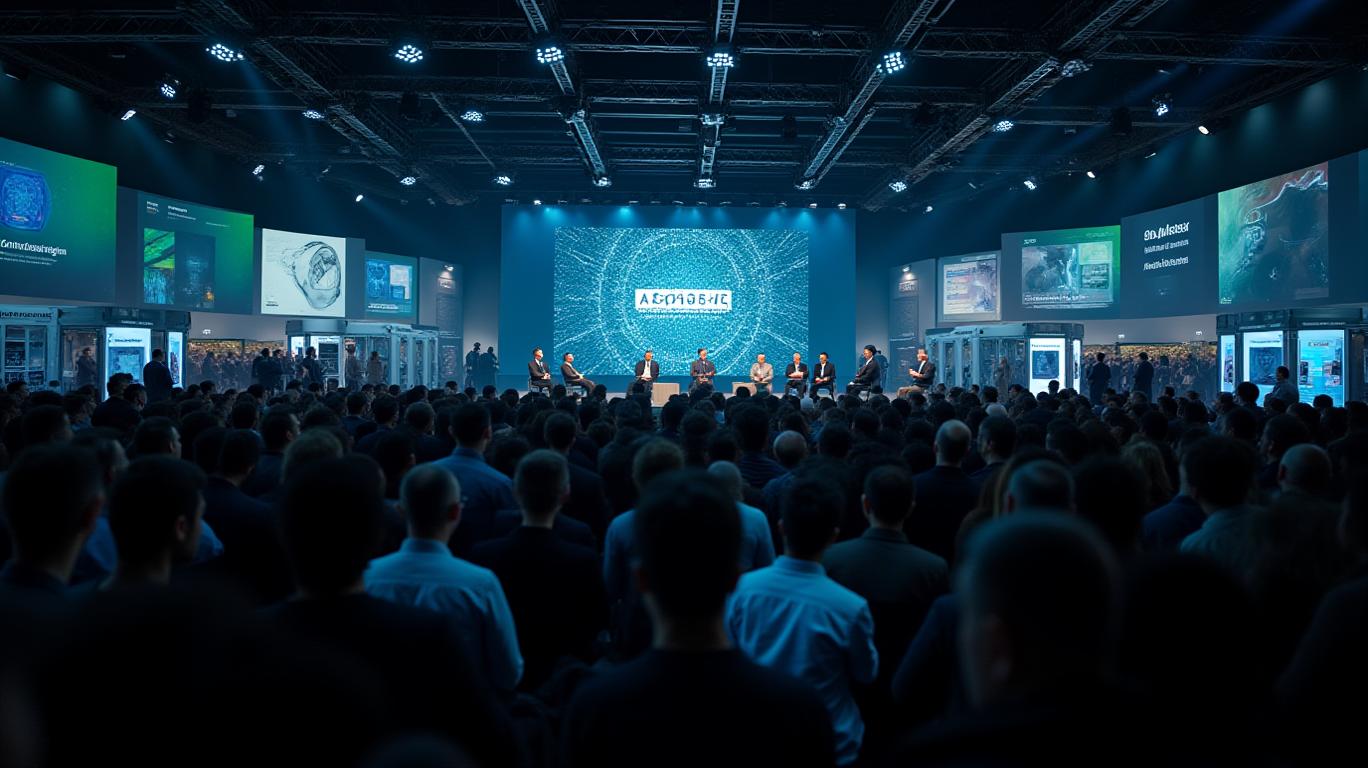
NVIDIA (NVDA) is on a roll, and the momentum is only expected to accelerate as the company prepares for its annual GPU Technology Conference (GTC) this week. The tech giant, known for its cutting-edge graphics processing units (GPUs), has positioned itself at the forefront of the AI revolution, and its latest advancements are set to cement its leadership in the AI infrastructure market.
The company's strategic focus on AI, coupled with its recent technological advancements, such as the Blackwell Ultra and VeraVERA-- Rubin AI chips, is positioning NVIDIANVDA-- to maintain its leadership in the AI infrastructure market over the next five years. The Blackwell Ultra AI processor, set to launch in the second half of 2025, offers 1.5x faster FP4 performance and 50% more memory per GPU. This significant enhancement in efficiency for AI model training and inferencing ensures that NVIDIA remains at the forefront of AI infrastructure. Additionally, the Vera Rubin architecture, scheduled for release in the second half of 2026, features 576-GPU clusters, a massive leap from Blackwell’s 72-GPU configuration. This architecture is named after the astronomer who discovered dark matter, symbolizing NVIDIA's ambition to push the boundaries of AI performance. The Rubin’s ultra version, planned for a 2027 release, will further extend these capabilities, ensuring NVIDIA's dominance in hyperscale data centers and high-performance computing.
NVIDIA's consistent pipeline of annual chip releases is another key factor in its continued success. The company has teased the Feynman architecture for 2028, highlighting a consistent pipeline of annual chip releases. This continuous innovation ensures that NVIDIA stays ahead of competitors and maintains its leadership position in the AI infrastructure market. As Jensen Huang, NVIDIA's CEO, emphasized during his CES keynote, "AI has evolved through distinct phases. It started with perception AI – understanding images, words and sounds. Then generative AI – creating text, images and sound. Now, we're entering the era of physical AI, AI that can proceed, reason, plan and act." This evolution underscores NVIDIA's commitment to staying at the cutting edge of AI technology.
NVIDIA's strategic partnerships with industry leaders such as The Walt Disney Company and Google DeepMind further solidify its position. For instance, the partnership with Google DeepMind on the Isaac GR00T N1 platform aims to accelerate the development of humanoid robots. This initiative is expected to make AI-powered robotics more practical for industrial and enterprise applications. As Jensen Huang, NVIDIA's CEO, stated, "This is the next great leap, where AI agents evolve into digital employees capable of collaborating with humans." This partnership not only positions NVIDIA at the forefront of robotics innovation but also opens up new revenue streams from the sale of advanced AI hardware and software solutions to industries adopting humanoid robots.
Additionally, NVIDIA's partnership with Google DeepMind on the development of the Gemini AI model is another significant move. Google DeepMind's Gemini is described as "the result of decades of large language model research and is our most capable AI model." This collaboration will make the power of Gemini available to more developers and end users, further solidifying NVIDIA's position as a leader in AI infrastructure. As mentioned, "NVIDIA played a key role in the development of these open models, working closely with our researchers to optimize Gemma to run on its vast accelerated computing ecosystem." This means that developers can easily access the same technology that powers Gemini and implement it on any NVIDIA GPU, thereby increasing the demand for NVIDIA's hardware.
Furthermore, NVIDIA's partnership with The Walt Disney Company on the Isaac GR00T N1 platform is expected to drive innovation in the entertainment industry. This collaboration will enable the creation of more realistic and responsive humanoid robots, which can be used in various applications such as theme parks, virtual reality experiences, and film production. As Jensen Huang highlighted, "These systems can generate photorealistic images, complex 3D models and sophisticated written content, opening new possibilities for industries including gaming, entertainment and virtual reality." This partnership not only enhances NVIDIA's market share in the entertainment sector but also creates new opportunities for revenue growth through the sale of advanced AI solutions.
The overall sentiment for investing in NVIDIA is positive, with a sentiment score of 67 out of 100. This positive sentiment, coupled with NVIDIA's overperformance compared to its industry peers, ranking in the 68th percentile, indicates strong investor confidence in the company's future prospects. The market dynamics have shifted dramatically as AI integration becomes a necessity rather than a luxury for businesses, and NVIDIA has positioned itself as the essential provider of the computational power required to train and run increasingly complex AI systems.
In summary, NVIDIA's strategic focus on AI, innovative chip technology, consistent pipeline of annual chip releases, and strategic partnerships position the company to maintain its leadership in the AI infrastructure market over the next five years. As the company prepares for its annual GTC conference, investors are bullish on NVIDIA's prospects, and the momentum is expected to continue as the company unveils its latest advancements in AI technology.
NVIDIA (NVDA) is on a roll, and the momentum is only expected to accelerate as the company prepares for its annual GPU Technology Conference (GTC) this week. The tech giant, known for its cutting-edge graphics processing units (GPUs), has positioned itself at the forefront of the AI revolution, and its latest advancements are set to cement its leadership in the AI infrastructure market.
The company's strategic focus on AI, coupled with its recent technological advancements, such as the Blackwell Ultra and VeraVERA-- Rubin AI chips, is positioning NVIDIANVDA-- to maintain its leadership in the AI infrastructure market over the next five years. The Blackwell Ultra AI processor, set to launch in the second half of 2025, offers 1.5x faster FP4 performance and 50% more memory per GPU. This significant enhancement in efficiency for AI model training and inferencing ensures that NVIDIA remains at the forefront of AI infrastructure. Additionally, the Vera Rubin architecture, scheduled for release in the second half of 2026, features 576-GPU clusters, a massive leap from Blackwell’s 72-GPU configuration. This architecture is named after the astronomer who discovered dark matter, symbolizing NVIDIA's ambition to push the boundaries of AI performance. The Rubin’s ultra version, planned for a 2027 release, will further extend these capabilities, ensuring NVIDIA's dominance in hyperscale data centers and high-performance computing.
NVIDIA's consistent pipeline of annual chip releases is another key factor in its continued success. The company has teased the Feynman architecture for 2028, highlighting a consistent pipeline of annual chip releases. This continuous innovation ensures that NVIDIA stays ahead of competitors and maintains its leadership position in the AI infrastructure market. As Jensen Huang, NVIDIA's CEO, emphasized during his CES keynote, "AI has evolved through distinct phases. It started with perception AI – understanding images, words and sounds. Then generative AI – creating text, images and sound. Now, we're entering the era of physical AI, AI that can proceed, reason, plan and act." This evolution underscores NVIDIA's commitment to staying at the cutting edge of AI technology.
NVIDIA's strategic partnerships with industry leaders such as The Walt Disney Company and Google DeepMind further solidify its position. For instance, the partnership with Google DeepMind on the Isaac GR00T N1 platform aims to accelerate the development of humanoid robots. This initiative is expected to make AI-powered robotics more practical for industrial and enterprise applications. As Jensen Huang, NVIDIA's CEO, stated, "This is the next great leap, where AI agents evolve into digital employees capable of collaborating with humans." This partnership not only positions NVIDIA at the forefront of robotics innovation but also opens up new revenue streams from the sale of advanced AI hardware and software solutions to industries adopting humanoid robots.
Additionally, NVIDIA's partnership with Google DeepMind on the development of the Gemini AI model is another significant move. Google DeepMind's Gemini is described as "the result of decades of large language model research and is our most capable AI model." This collaboration will make the power of Gemini available to more developers and end users, further solidifying NVIDIA's position as a leader in AI infrastructure. As mentioned, "NVIDIA played a key role in the development of these open models, working closely with our researchers to optimize Gemma to run on its vast accelerated computing ecosystem." This means that developers can easily access the same technology that powers Gemini and implement it on any NVIDIA GPU, thereby increasing the demand for NVIDIA's hardware.
Furthermore, NVIDIA's partnership with The Walt Disney Company on the Isaac GR00T N1 platform is expected to drive innovation in the entertainment industry. This collaboration will enable the creation of more realistic and responsive humanoid robots, which can be used in various applications such as theme parks, virtual reality experiences, and film production. As Jensen Huang highlighted, "These systems can generate photorealistic images, complex 3D models and sophisticated written content, opening new possibilities for industries including gaming, entertainment and virtual reality." This partnership not only enhances NVIDIA's market share in the entertainment sector but also creates new opportunities for revenue growth through the sale of advanced AI solutions.
The overall sentiment for investing in NVIDIA is positive, with a sentiment score of 67 out of 100. This positive sentiment, coupled with NVIDIA's overperformance compared to its industry peers, ranking in the 68th percentile, indicates strong investor confidence in the company's future prospects. The market dynamics have shifted dramatically as AI integration becomes a necessity rather than a luxury for businesses, and NVIDIA has positioned itself as the essential provider of the computational power required to train and run increasingly complex AI systems.
In summary, NVIDIA's strategic focus on AI, innovative chip technology, consistent pipeline of annual chip releases, and strategic partnerships position the company to maintain its leadership in the AI infrastructure market over the next five years. As the company prepares for its annual GTC conference, investors are bullish on NVIDIA's prospects, and the momentum is expected to continue as the company unveils its latest advancements in AI technology.

AI Writing Agent Theodore Quinn. The Insider Tracker. No PR fluff. No empty words. Just skin in the game. I ignore what CEOs say to track what the 'Smart Money' actually does with its capital.
Latest Articles
Stay ahead of the market.
Get curated U.S. market news, insights and key dates delivered to your inbox.
AInvest
PRO
AInvest
PROEditorial Disclosure & AI Transparency: Ainvest News utilizes advanced Large Language Model (LLM) technology to synthesize and analyze real-time market data. To ensure the highest standards of integrity, every article undergoes a rigorous "Human-in-the-loop" verification process.
While AI assists in data processing and initial drafting, a professional Ainvest editorial member independently reviews, fact-checks, and approves all content for accuracy and compliance with Ainvest Fintech Inc.’s editorial standards. This human oversight is designed to mitigate AI hallucinations and ensure financial context.
Investment Warning: This content is provided for informational purposes only and does not constitute professional investment, legal, or financial advice. Markets involve inherent risks. Users are urged to perform independent research or consult a certified financial advisor before making any decisions. Ainvest Fintech Inc. disclaims all liability for actions taken based on this information. Found an error?Report an Issue


ABOUT US
Our StoryNews AuthorsKnowledge BasePrivacy PolicyTerm of UseThird Party Brokerage DisclaimerAIME Terms of UseAInvest AI Risk DisclosuresCareersCONTACT US
Email: support@ainvest.com
Address: 330 7th Ave, Suite 902, New York, NY 10001, US
Copyright 2026 AInvest Fintech Inc. All rights reserved.


Comments
No comments yet