
Nvidia NVDA Acquires Groq Assets in $20B Deal to Expand AI Chip Dominance
 Aime Summary
- Nvidia agreed to license Groq's AI inference technology and acquire key assets for $20 billion. According to the report
- The deal brings Groq's low-latency LPU architecture to enhance Nvidia's real-time AI capabilities. As reported
- Analysts view the transaction as neutralizing competitive threats in the inference chip market. According to financial analysis
- Regulatory scrutiny may follow due to the licensing structure avoiding traditional antitrust review. As noted by CNBC
Nvidia NVDANVDA-- has made a strategic $20 billion move to license technology and acquire assets from AI chip startup Groq. This transaction accelerates Nvidia's expansion into low-latency inference workloads amid surging demand for specialized AI chips. Groq founder Jonathan Ross and key executives will join NvidiaNVDA-- to integrate their LPU technology. The deal demonstrates Nvidia leveraging its $60.6 billion cash reserves to maintain dominance while addressing competitive gaps in its AI portfolio. According to the report
How Will Groq Acquisition Impact Nvidia Stock Price?
Nvidia stock could see positive momentum from this expansion into high-growth inference markets. Groq's LPU technology delivers 2x faster AI model performance for real-time applications compared to GPUs. This addresses Nvidia's vulnerability in latency-sensitive workloads. According to analysis The premium paid reflects strategic urgency; Nvidia offered nearly triple Groq's recent $6.9 billion valuation. As reported by CNBC Investors may reward this defensive play against rising inference chip competition.
Market reaction hinges on successful technology integration and revenue potential. Inference workloads represent a massive growth frontier as AI shifts from training to deployment. As financial analysts note LPU adoption could capture significant market share within Nvidia's AI factory ecosystem. Still, the $20 billion cash outlay warrants monitoring for near-term financial impacts. According to the report
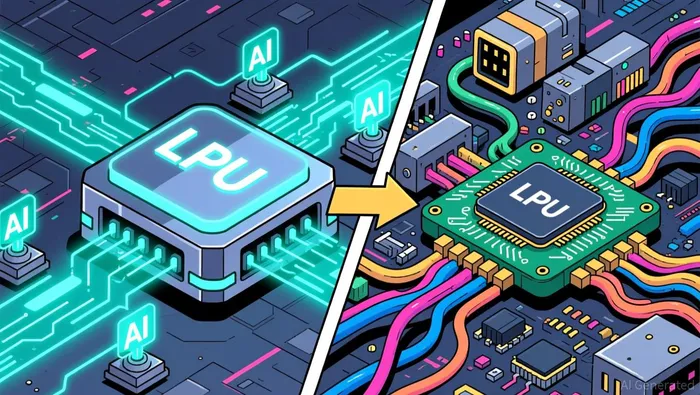
What Does Groq Stock Technology Offer Nvidia's AI Strategy?
Groq's deterministic LPU architecture provides unique advantages for AI inference tasks. Its single-core design with 80TB/s on-chip SRAM bandwidth enables predictable low-latency performance. As detailed in the article This technology excels in applications requiring instant responses, such as autonomous systems and real-time analytics. Integration expands Nvidia's capabilities beyond GPU-optimized training workloads. According to business coverage
The acquisition eliminates a rising competitor whose user base grew 5.6x annually. As reported by CNBC LPUs complement rather than replace Nvidia's existing GPU infrastructure. Combining both architectures creates a comprehensive solution for diverse AI workloads. This strategic technology absorption strengthens Nvidia's position against rivals developing custom AI chips. According to financial analysis
What Regulatory Risks Could Challenge NVDA Stock Growth?
Regulatory scrutiny presents the most significant risk following this unconventional deal structure. The licensing agreement intentionally avoids formal merger procedures to circumvent antitrust review. As CNBC reports Bernstein analysts note this approach keeps "the fiction of competition alive" despite Nvidia effectively absorbing core technology. As CNBC reports
Similar transactions by Microsoft and Meta face active Federal Trade Commission investigations. As CNBC reports Any enforcement action could create headwinds for NVDA stock performance. Nvidia's 90% market share in AI accelerators makes regulators particularly watchful. According to financial analysis That said, the preserved independence of Groq's remaining operations provides some buffer against immediate challenges. According to the report

Stay ahead of the market.
Get curated U.S. market news, insights and key dates delivered to your inbox.
AInvest
PRO
AInvest
PRO



Comments
No comments yet