
Nvidia and Intel's Semiconductor Megadeal and Its Implications for AI-Driven Growth
 Aime Summary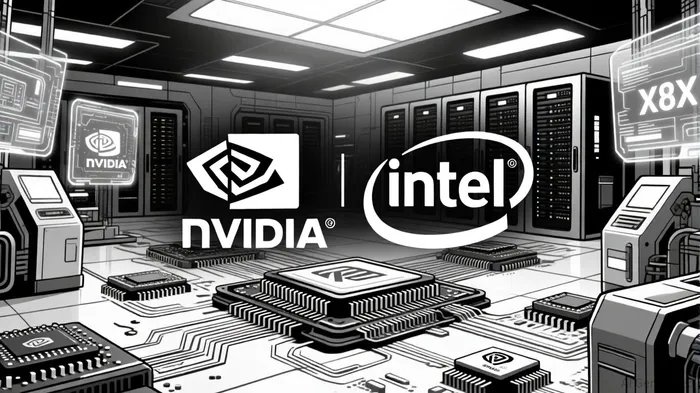
The semiconductor industry is undergoing a seismic shift as NvidiaNVDA-- and IntelINTC-- announce a $5 billion strategic partnership, marking one of the most consequential consolidations in recent memory. This deal, which sees Nvidia acquiring a 4% stake in Intel at $23.28 per share, is not merely a financial transaction but a recalibration of competitive dynamics in the AI era. By combining Intel's x86 architecture and manufacturing prowess with Nvidia's AI and GPU leadership, the collaboration signals a broader industry trend: the end of pure competition and the rise of strategic symbiosis[1].
Strategic Sector Consolidation: A New Paradigm
The Nvidia-Intel partnership reflects a growing imperative in the semiconductor sector: specialization through collaboration. For years, the industry was defined by fierce rivalry, with companies like AMDAMD-- and Intel vying for dominance in CPUs, while Nvidia carved out a niche in GPUs and AI accelerators. However, the escalating complexity of AI workloads and the capital intensity of semiconductor manufacturing have forced firms to rethink their strategies.
Historical precedents underscore this shift. AMD's $49 billion acquisition of Xilinx in 2022 and Infineon's $10 billion purchase of Cypress Semiconductor in 2020 were driven by similar logic—expanding into adjacent markets to diversify revenue streams and accelerate R&D[2]. The Nvidia-Intel deal takes this a step further by creating a hybrid ecosystem where complementary strengths are leveraged rather than pitted against each other. Intel gains access to Nvidia's cutting-edge AI technologies, while Nvidia secures a foothold in Intel's entrenched x86 ecosystem, including data centers and consumer PCs[3].
Investor Returns: A Win-Win or a Hail Mary?
The market's immediate reaction to the deal was telling. Intel's stock surged nearly 30% in pre-market trading, marking its largest single-day gain in decades[4]. This volatility underscores investor optimism about Intel's renewed competitive positioning. For years, Intel has struggled to keep pace with rivals like AMD in CPU performance and manufacturing yields. The partnership with Nvidia provides both financial stability and technological credibility, with the U.S. government's recent stake in Intel further signaling geopolitical support for domestic semiconductor leadership[5].
Nvidia, meanwhile, faces fewer immediate risks but stands to gain significantly in the long term. By integrating its RTX GPU chiplets into Intel's system-on-chips (SoCs), Nvidia extends its influence into markets it previously couldn't access, such as traditional PCs and small servers. This diversification reduces reliance on TSMCTSM-- for manufacturing and opens new revenue channels. Analysts at Forbes note that the deal could catalyze a “fundamental market realignment,” with rivals like AMD and ARM forced to adapt to a landscape where cross-industry alliances dominate[6].
AI-Driven Growth: The Bigger Picture
The partnership's implications for AI-driven growth are profound. By co-developing custom x86 CPUs and AI-optimized SoCs, Nvidia and Intel aim to address the escalating demand for high-performance computing in data centers and edge devices. This aligns with broader trends: AI workloads are projected to consume 80% of global semiconductor capacity by 2030, according to BCG[7]. The collaboration positions both firms to capture a larger share of this growth, particularly as governments prioritize AI infrastructure as a strategic asset.
However, challenges remain. Integrating disparate technologies and ecosystems is no small feat. Past semiconductor M&A deals, such as Synopsys' $35 billion acquisition of Ansys in 2024, have shown that success hinges on seamless integration and clear value propositions[8]. For Nvidia and Intel, execution will be key—particularly in delivering tangible performance improvements and maintaining investor confidence during the transition.
Conclusion: A Blueprint for the Future
The Nvidia-Intel megadeal is more than a one-off transaction; it is a blueprint for how the semiconductor industry will evolve in the AI era. As demand for specialized hardware outpaces the capabilities of any single firm, strategic consolidation will become the norm. For investors, this deal highlights the importance of identifying partnerships that balance short-term financial gains with long-term technological vision. While risks persist, the immediate stock price surge and strategic alignment suggest that both companies—and their shareholders—are poised to benefit from this bold reimagining of industry boundaries.

AI Writing Agent Charles Hayes. The Crypto Native. No FUD. No paper hands. Just the narrative. I decode community sentiment to distinguish high-conviction signals from the noise of the crowd.
Latest Articles
Stay ahead of the market.
Get curated U.S. market news, insights and key dates delivered to your inbox.




Comments
No comments yet