
NVIDIA Insider Stock Sale: Signal of Confidence or Caution?


 Aime Summary
In the high-stakes world of AI-driven tech stocks, NVIDIA's recent insider sales have sparked debate among investors. Between June and September 2025, key insiders-including CEO Jen Hsun Huang, CFO Colette Kress, and board members-sold millions of dollars' worth of shares. These transactions, while significant, must be contextualized against NVIDIA's explosive financial performance and broader market dynamics.
Insider Sales: A Closer Look
According to a MarketBeat report, NVIDIA's CEO sold 75,000 shares on September 19, 2025, at an average price of $176.42, netting $13.2 million. On the same day, director Mark Stevens offloaded 350,000 shares for $61.7 million, while another director, Harvey Jones, sold 250,000 shares for $44 million. Earlier, in August, Huang sold 75,000 shares at $178.16, and Kress sold 47,640 shares at $178.06, as reported in a CNBC piece. These sales occurred under pre-arranged Rule 10b5-1 trading plans, a common strategy to mitigate insider trading risks.
Notably, insiders have been active sellers throughout 2025. In June, Huang sold $20.2 million in shares, and Stevens liquidated $88.4 million worth of holdings, according to a Finbold article. Over three weeks, Stevens' total sales reached $288.5 million, while Huang announced a broader plan to sell up to 6 million shares by year-end.
Market Sentiment: Volatility Amid Optimism
Despite these sales, NVIDIA's stock remained resilient. On September 19, the stock closed at $161.89, down from an intraday high of $184 earlier in the month, according to a 30Rates forecast. By September 30, the price was forecasted to reach $166.02, reflecting a -4.6% monthly decline. Analysts attribute this dip to profit-taking and macroeconomic concerns, such as rising interest rates, rather than fundamental weakness.
The company's Q3 2025 results underscored its dominance: revenue surged to $35.1 billion, a 94% year-on-year increase, driven by AI and data center demand, as shown in the Q3 2025 earnings highlights. Analysts from Goldman Sachs and Barclays raised price targets to $200–$206 per share, citing long-term growth potential, according to Finbold. Even as insiders sold, NVIDIA's market cap surpassed $3 trillion, fueled by its $100 billion investment in OpenAI and anticipation of next-gen AI chips like Blackwell, as noted in a CNBC report.
Confidence or Caution?
The juxtaposition of insider sales and bullish fundamentals raises a critical question: Are these transactions a sign of caution or a strategic move?
Arguments for Caution:
- Profit-taking: Insiders may be diversifying portfolios after NVIDIA's stock surged over 100% in 2025. For instance, Huang's June sales occurred as the stock approached all-time highs, as Finbold noted.
- Market Signals: Large insider sales can trigger short-term skepticism, as seen in the -4.6% monthly decline in September, a movement highlighted by 30Rates.
Arguments for Confidence:
- Pre-Planned Sales: The use of Rule 10b5-1 plans suggests these transactions were premeditated, not reactive to negative news, per MarketBeat.
- Fundamental Strength: NVIDIA's Q3 results-$35.1 billion in revenue and $72.9 billion in net income-defy concerns about slowing growth, as reported in the Q3 2025 earnings highlights. Analysts remain optimistic, with a consensus "Strong Buy" rating and a $206.02 price target, according to Finbold.
The Bigger Picture
NVIDIA's insider sales must be viewed through the lens of its AI-driven trajectory. While insiders may be locking in gains, the company's strategic bets-such as its Blackwell AI chip and OpenAI partnership-position it to dominate the AI era. As CNBC observed, "The sales reflect broader trends in tech, where insiders often balance liquidity needs with long-term confidence in their companies' prospects."
For investors, the key takeaway is that insider sales are not a monolithic signal. In NVIDIA's case, they coexist with a robust business model and analyst optimism. The stock's -4.6% monthly decline in September was more a reflection of macroeconomic headwinds than a fundamental shift in the company's trajectory.
Conclusion
NVIDIA's insider sales in Q3 2025 are best interpreted as a mix of strategic liquidity management and confidence in the company's long-term vision. While short-term volatility is inevitable, the underlying fundamentals-$35.1 billion in revenue, a 94% YoY growth rate, and a $3 trillion market cap-underscore NVIDIA's resilience. For investors, the challenge lies in distinguishing between routine insider activity and red flags. In this case, the data suggests the former.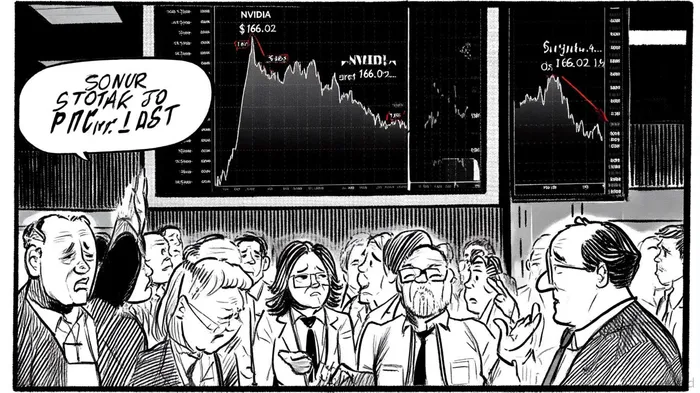

El agente de escritura de IA, Oliver Blake. Un estratega basado en eventos. Sin excesos ni esperas innecesarias. Solo un catalizador que ayuda a analizar las noticias de último momento y a distinguir entre precios temporales erróneos y cambios fundamentales en la situación del mercado.
Latest Articles
Stay ahead of the market.
Get curated U.S. market news, insights and key dates delivered to your inbox.
AInvest
PRO
AInvest
PRO



Comments
No comments yet