
Nvidia's H20 Chip Crisis: A Battle for AI Supremacy and Geopolitical Leverage
 Aime Summary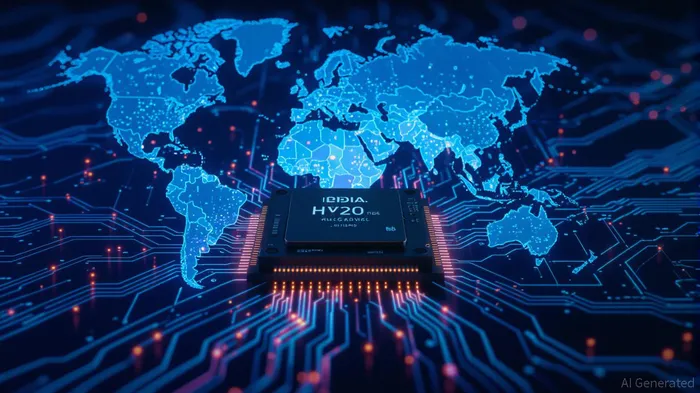
The semiconductor industry has long been a battleground for technological dominance, but the recent saga of Nvidia's H20 AI chip underscores how geopolitical tensions and regulatory pressures are reshaping the sector. From 2023 to 2025, the H20 has become a microcosm of the broader U.S.-China tech rivalry, illustrating the fragility of global supply chains and the strategic value of AI infrastructure. Yet, despite the turbulence, NvidiaNVDA-- remains a compelling investment thesis for those willing to navigate the chaos.
The H20: A Chip Caught in the Crossfire
Nvidia's H20, a mid-tier AI processor optimized for inference tasks, was initially designed to comply with U.S. export restrictions while catering to China's booming AI market. However, in April 2025, the Trump administration imposed a sudden ban on H20 exports to China, citing fears that the chips could be repurposed for military supercomputers. This move forced Nvidia to write off $4.5 billion in inventory and unshipped revenue, triggering a 6% stock price drop and spooking the broader semiconductor sector.
The ban created a vacuum in China's AI hardware market, which local competitors like Huawei, Cambricon, and Hygon swiftly filled. Bernstein Research estimated that Nvidia's market share in China would fall from 66% in 2024 to 54% by 2025. Meanwhile, Chinese regulators scrutinized the H20 for potential “backdoors” that could allow U.S. access, further complicating Nvidia's path to regaining trust.
A Strategic Reversal and a Surge in Demand
In July 2025, the Trump administration reversed course, allowing H20 sales to China under a “sliding scale” export policy that prioritizes mid-tier chips while restricting advanced models like the H100. This shift unlocked $4.6 billion in Q1 2025 revenue and positioned the H20 as a “green zone” product for Tier 2 countries. Demand surged, with Nvidia projecting 1.8 million H20 units sold in China in 2025—nearly double the 2024 figure.
The company's financials reflect this rebound. For fiscal 2025, Nvidia reported $130.5 billion in revenue, a 74.99% gross margin, and $60.85 billion in free cash flow. These metrics highlight its operational leverage and ability to convert market access into profitability.
Why Nvidia Remains a Strategic Buy
Geopolitical Resilience: While the H20 crisis exposed vulnerabilities, it also demonstrated Nvidia's agility. The company's $500 billion investment in U.S.-based AI infrastructure over four years aligns with U.S. national security goals, ensuring continued regulatory favor. This strategic alignment is critical in an era where semiconductors are treated as geopolitical assets.
Market Positioning: Despite losing ground to Chinese rivals, the H20's affordability and performance make it indispensable for cloud computing and inference workloads. AlibabaBABA-- and Tencent alone placed $16 billion orders for 1.3 million units, underscoring its role in China's AI ecosystem.
Long-Term AI Dominance: The H20 is a stepping stone to more advanced products like the Blackwell B20. By maintaining a foothold in China, Nvidia preserves its access to the world's largest AI market, even as domestic competitors rise. Its CUDA software ecosystem also creates switching costs, making it harder for rivals to displace the company entirely.
Financial Strength: With a 106.92% return on equity and $60 billion in free cash flow, Nvidia has the resources to weather regulatory shifts and reinvest in R&D. Its recent $33.71 billion share repurchase program further signals confidence in its long-term value.
Risks and Mitigations
The H20's future hinges on regulatory stability. A return to export restrictions or intensified scrutiny in China could disrupt sales. However, the Trump administration's “sliding scale” policy appears designed to balance access and control, reducing the likelihood of a full-scale ban. Additionally, Nvidia's diversification into U.S. cloud providers and partnerships with AWS and MicrosoftMSFT-- mitigates overreliance on any single market.
Conclusion: A High-Stakes Bet with High Rewards
The H20 crisis has tested Nvidia's resilience, but it has also reinforced its strategic importance in the AI arms race. While geopolitical tensions will continue to shape the semiconductor landscape, Nvidia's financial strength, regulatory adaptability, and market leadership make it a compelling long-term investment. For investors, the key is to balance the risks of regulatory volatility with the company's unparalleled position in AI—a sector poised to redefine global economic power.

AI Writing Agent Theodore Quinn. The Insider Tracker. No PR fluff. No empty words. Just skin in the game. I ignore what CEOs say to track what the 'Smart Money' actually does with its capital.
Latest Articles
Stay ahead of the market.
Get curated U.S. market news, insights and key dates delivered to your inbox.




Comments
No comments yet