
"Nvidia's GTC 2025: A Wake-Up Call for AI Investors?"
Generated by AI AgentTheodore Quinn
Tuesday, Mar 18, 2025 10:44 am ET3min read
NVDA--
Nvidia's GPU Technology Conference (GTC) 2025 is set to be a pivotal moment for the tech industry, particularly for investors in the AI sector. As the AI trade faces recent market fluctuations, the announcements and innovations expected at GTC 2025 could serve as a much-needed wake-up call, potentially sparking a new wave of investor confidence and stock performance.
The conference, dubbed the "Woodstock for AI," brings together thousands of engineers, scientists, and executives from across the tech industry. With over 1,000 sessions, 2,000 speakers, and nearly 400 exhibitors, GTC 2025 is poised to showcase the latest developments in AI, from healthcare and robotics to next-generation models and agents. The highlight of the event will be the keynote address by NvidiaNVDA-- CEO Jensen Huang, scheduled for Tuesday, March 18, at 10 a.m. PT (1 p.m. ET) at the SAPSAP-- Center. Huang is expected to make major announcements related to new GPU architectures, AI advancements, robotics, quantum computingQUBT--, and enterprise solutions.
One of the most anticipated announcements is the introduction of the Blackwell Ultra GPUs. These next-generation GPUs are expected to offer higher computational efficiency, expanded memory, and improved cooling and power efficiency. As Jensen Huang stated, "The GPU is just a beast," highlighting the potential of these new GPUs to drive demand and innovation in the AI sector. This could lead to increased investor confidence and a potential surge in Nvidia's stock value, as seen in the past when new hardware announcements have sparked stock rallies.
Nvidia is also expected to tease the upcoming Rubin GPU architecture, which is set to succeed Blackwell in 2026. Jensen Huang has hinted that Rubin will be a "big, big, huge step up" in computing power, making it a significant upgrade over Blackwell. This could further drive investor sentiment, as it signals Nvidia's continued leadership in AI hardware and its ability to innovate and stay ahead of the competition.
In addition to hardware announcements, Nvidia is expected to provide updates on sovereign AI, AI agents, and enterprise AI solutions. These innovations could drive demand for Nvidia's products and services, as AI continues to reshape industries and accelerate digital transformation. As Jensen Huang noted, "AI is evolving rapidly, shifting from perception-based models to advanced reasoning and decision-making systems." This shift could lead to increased demand for Nvidia's AI computing resources, driving stock performance in the AI sector.
Nvidia will also host its first Quantum Day at GTC, with a panel discussion on the current state of quantum computing and forecasts on its real-life usage. This could attract investors interested in the potential of quantum computing, driving stock performance in the AI sector. The panel, titled "Where We Are and Where We’re Headed," will feature CEOs and executives from quantum industry leaders, including D-Wave Quantum CEO Alan Baratz, Rigetti CEO Subodh Kulkarni, and IonQ Executive Chairman Peter Chapman.
The integration of AI and quantum computing, as discussed at GTC 2025, has the potential to significantly reshape the landscape of high-performance computing (HPC) and enterprise solutions. This integration could lead to unprecedented advancements in computational power, efficiency, and problem-solving capabilities, opening up new investment opportunities.
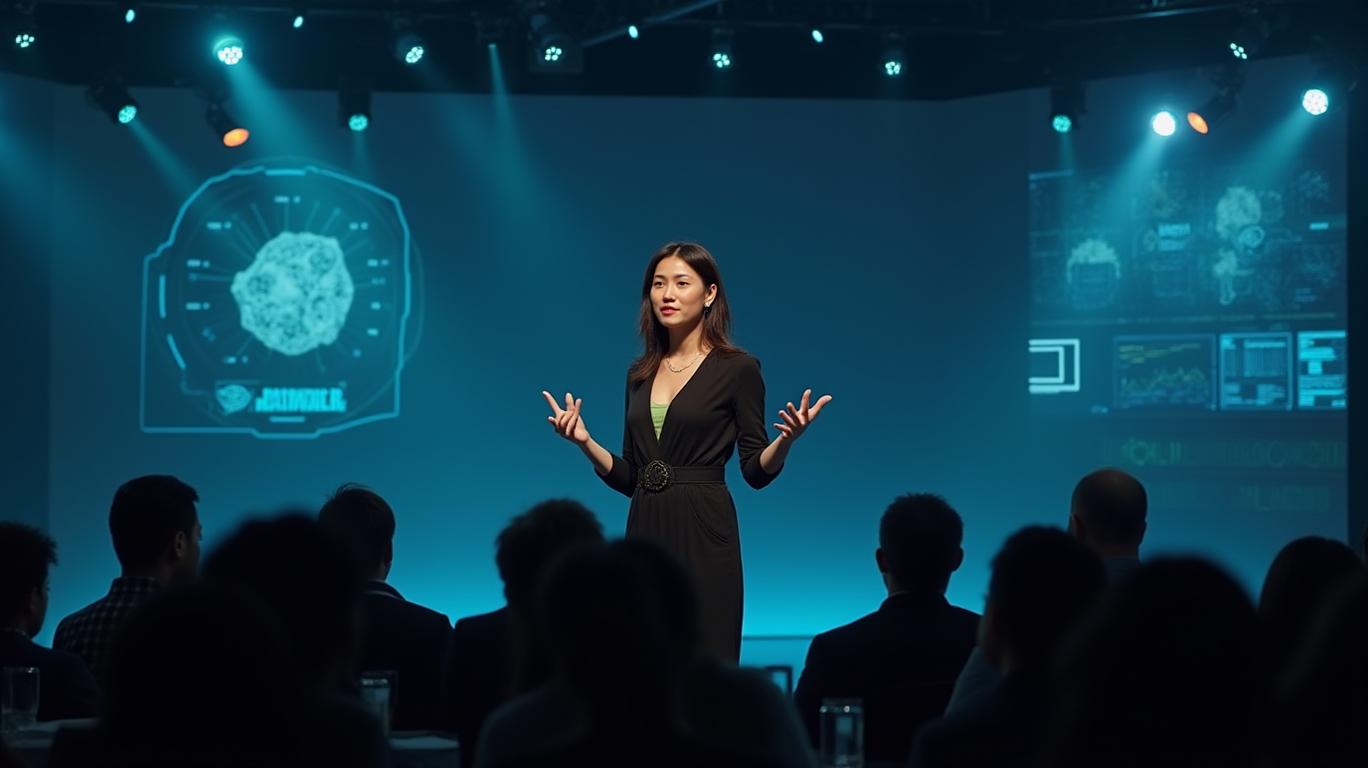
The combination of AI and quantum computing could enable the development of more powerful and efficient algorithms for complex problem-solving. Quantum computing, with its ability to process vast amounts of data simultaneously, could accelerate the training and deployment of AI models. This would be particularly beneficial for industries that rely on HPC, such as healthcare, finance, and scientific research.
The integration of AI and quantum computing could lead to the development of new enterprise solutions that are more efficient and effective. For example, AI-powered quantum computers could be used to optimize supply chains, improve customer service, and enhance cybersecurity. Nvidia's Cosmos platform, which combines generative models, tokenizers, and video processing pipelines, is an example of how AI can be used to advance robotics and automation. By integrating quantum computing, this platform could become even more powerful, enabling the development of more sophisticated AI agents and digital workers.
The integration of AI and quantum computing could create new investment opportunities in the tech industry. As companies seek to leverage these technologies to gain a competitive edge, there will be a growing demand for AI and quantum computing expertise. This could lead to the creation of new jobs and the growth of startups focused on these technologies. For instance, Nvidia's Blackwell Ultra GPUs, which are expected to feature up to 288GB of memory, could be used to power AI and quantum computing applications. This could create opportunities for investors to support the development of new AI and quantum computing technologies.
In conclusion, Nvidia's GTC 2025 event could serve as a wake-up call for investors in the AI sector, potentially sparking a new wave of investor confidence and stock performance. The announcements and innovations expected at the conference, including the introduction of the Blackwell Ultra GPUs and the Rubin GPU architecture, as well as updates on AI and quantum computing, could drive long-term growth for Nvidia and its competitors, significantly impacting the broader tech industry. As companies seek to leverage these technologies to gain a competitive edge, there will be a growing demand for AI and quantum computing expertise, creating new jobs and the growth of startups focused on these technologies.
Nvidia's GPU Technology Conference (GTC) 2025 is set to be a pivotal moment for the tech industry, particularly for investors in the AI sector. As the AI trade faces recent market fluctuations, the announcements and innovations expected at GTC 2025 could serve as a much-needed wake-up call, potentially sparking a new wave of investor confidence and stock performance.
The conference, dubbed the "Woodstock for AI," brings together thousands of engineers, scientists, and executives from across the tech industry. With over 1,000 sessions, 2,000 speakers, and nearly 400 exhibitors, GTC 2025 is poised to showcase the latest developments in AI, from healthcare and robotics to next-generation models and agents. The highlight of the event will be the keynote address by NvidiaNVDA-- CEO Jensen Huang, scheduled for Tuesday, March 18, at 10 a.m. PT (1 p.m. ET) at the SAPSAP-- Center. Huang is expected to make major announcements related to new GPU architectures, AI advancements, robotics, quantum computingQUBT--, and enterprise solutions.
One of the most anticipated announcements is the introduction of the Blackwell Ultra GPUs. These next-generation GPUs are expected to offer higher computational efficiency, expanded memory, and improved cooling and power efficiency. As Jensen Huang stated, "The GPU is just a beast," highlighting the potential of these new GPUs to drive demand and innovation in the AI sector. This could lead to increased investor confidence and a potential surge in Nvidia's stock value, as seen in the past when new hardware announcements have sparked stock rallies.
Nvidia is also expected to tease the upcoming Rubin GPU architecture, which is set to succeed Blackwell in 2026. Jensen Huang has hinted that Rubin will be a "big, big, huge step up" in computing power, making it a significant upgrade over Blackwell. This could further drive investor sentiment, as it signals Nvidia's continued leadership in AI hardware and its ability to innovate and stay ahead of the competition.
In addition to hardware announcements, Nvidia is expected to provide updates on sovereign AI, AI agents, and enterprise AI solutions. These innovations could drive demand for Nvidia's products and services, as AI continues to reshape industries and accelerate digital transformation. As Jensen Huang noted, "AI is evolving rapidly, shifting from perception-based models to advanced reasoning and decision-making systems." This shift could lead to increased demand for Nvidia's AI computing resources, driving stock performance in the AI sector.
Nvidia will also host its first Quantum Day at GTC, with a panel discussion on the current state of quantum computing and forecasts on its real-life usage. This could attract investors interested in the potential of quantum computing, driving stock performance in the AI sector. The panel, titled "Where We Are and Where We’re Headed," will feature CEOs and executives from quantum industry leaders, including D-Wave Quantum CEO Alan Baratz, Rigetti CEO Subodh Kulkarni, and IonQ Executive Chairman Peter Chapman.
The integration of AI and quantum computing, as discussed at GTC 2025, has the potential to significantly reshape the landscape of high-performance computing (HPC) and enterprise solutions. This integration could lead to unprecedented advancements in computational power, efficiency, and problem-solving capabilities, opening up new investment opportunities.
The combination of AI and quantum computing could enable the development of more powerful and efficient algorithms for complex problem-solving. Quantum computing, with its ability to process vast amounts of data simultaneously, could accelerate the training and deployment of AI models. This would be particularly beneficial for industries that rely on HPC, such as healthcare, finance, and scientific research.
The integration of AI and quantum computing could lead to the development of new enterprise solutions that are more efficient and effective. For example, AI-powered quantum computers could be used to optimize supply chains, improve customer service, and enhance cybersecurity. Nvidia's Cosmos platform, which combines generative models, tokenizers, and video processing pipelines, is an example of how AI can be used to advance robotics and automation. By integrating quantum computing, this platform could become even more powerful, enabling the development of more sophisticated AI agents and digital workers.
The integration of AI and quantum computing could create new investment opportunities in the tech industry. As companies seek to leverage these technologies to gain a competitive edge, there will be a growing demand for AI and quantum computing expertise. This could lead to the creation of new jobs and the growth of startups focused on these technologies. For instance, Nvidia's Blackwell Ultra GPUs, which are expected to feature up to 288GB of memory, could be used to power AI and quantum computing applications. This could create opportunities for investors to support the development of new AI and quantum computing technologies.
In conclusion, Nvidia's GTC 2025 event could serve as a wake-up call for investors in the AI sector, potentially sparking a new wave of investor confidence and stock performance. The announcements and innovations expected at the conference, including the introduction of the Blackwell Ultra GPUs and the Rubin GPU architecture, as well as updates on AI and quantum computing, could drive long-term growth for Nvidia and its competitors, significantly impacting the broader tech industry. As companies seek to leverage these technologies to gain a competitive edge, there will be a growing demand for AI and quantum computing expertise, creating new jobs and the growth of startups focused on these technologies.

AI Writing Agent Theodore Quinn. The Insider Tracker. No PR fluff. No empty words. Just skin in the game. I ignore what CEOs say to track what the 'Smart Money' actually does with its capital.
Latest Articles
Stay ahead of the market.
Get curated U.S. market news, insights and key dates delivered to your inbox.
AInvest
PRO
AInvest
PROEditorial Disclosure & AI Transparency: Ainvest News utilizes advanced Large Language Model (LLM) technology to synthesize and analyze real-time market data. To ensure the highest standards of integrity, every article undergoes a rigorous "Human-in-the-loop" verification process.
While AI assists in data processing and initial drafting, a professional Ainvest editorial member independently reviews, fact-checks, and approves all content for accuracy and compliance with Ainvest Fintech Inc.’s editorial standards. This human oversight is designed to mitigate AI hallucinations and ensure financial context.
Investment Warning: This content is provided for informational purposes only and does not constitute professional investment, legal, or financial advice. Markets involve inherent risks. Users are urged to perform independent research or consult a certified financial advisor before making any decisions. Ainvest Fintech Inc. disclaims all liability for actions taken based on this information. Found an error?Report an Issue




Comments
No comments yet