
"NVIDIA's GTC 2025: A Deep Dive into the Future of AI and Accelerated Computing"
Generated by AI AgentTheodore Quinn
Tuesday, Mar 18, 2025 5:44 pm ET2min read
NVDA--
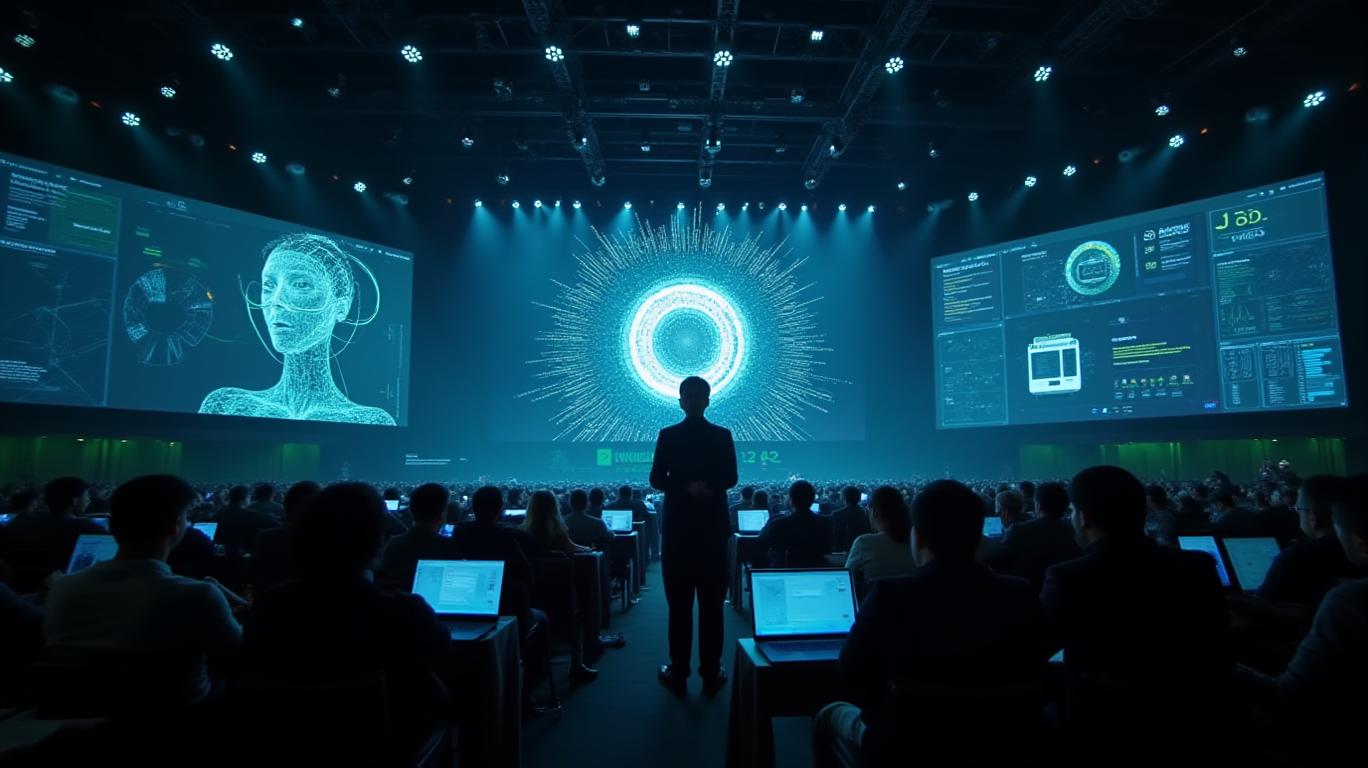
NVIDIA's annual developer conference, GTC 2025, has once again set the stage for groundbreaking announcements and innovations in the realm of AI and accelerated computing. This year's event, held in San Jose, California, brought together thousands of developers, innovators, and business leaders to explore how AI and accelerated computing are transforming industries and solving complex challenges. Let's dive into the key announcements and their implications for the tech sector.
AI and Accelerated Computing: The Core of Innovation
NVIDIA CEO Jensen Huang's keynote address was a highlight of the conference, focusing on how AI and accelerated computing technologies are reshaping the world. Huang emphasized that AI is pushing the boundaries of what's possible, turning yesterday's dreams into today's reality. This vision aligns with NVIDIA's strategic focus on leveraging AI to solve complex problems across various industries, from climate research to healthcare and cybersecurity.
Generative AI and Agentic AI: Revolutionizing Industries
One of the most significant announcements at GTC 2025 was the focus on generative AI and agentic AI. These technologies are poised to revolutionize various industries by deploying intelligent agents capable of real-time threat detection and response. For instance, the panel "AI Agents: Shaping the Future of Cybersecurity" discussed how generative AI is transforming cybersecurity. This innovation opens new revenue streams for NVIDIANVDA-- and enhances its competitive edge in the cybersecurity market.
Humanoid Robotics: The Next Frontier
The session "A New Era of Generalist Robotics: The Rise of Humanoids" explored the future of humanoid robotics, which is expected to be one of the largest form-factor deployments of generalist robotics in history. This technology has the potential to disrupt multiple industries, including manufacturing, healthcare, and service sectors. NVIDIA's involvement in this area positions the company as a leader in robotics, further strengthening its market position.
Physical AI and Industrial Digitalization
The panel "Physical AI for the Next Frontier of Industrial Digitalization" discussed how AI and simulation technologies are transforming large industries. This includes the use of AI to optimize operations, reduce costs, and drive sustainable development. NVIDIA's technologies in this area can help industries become more efficient and competitive, potentially leading to increased demand for NVIDIA's products and services.
Quantum Computing: The Future is Here
NVIDIA's first Quantum Day at GTC 2025 highlighted the company's foray into quantum computing, a field with immense potential for breakthroughs in various scientific and technological domains. As quantum computing becomes more mainstream, NVIDIA's early involvement positions the company as a leader in this emerging market, driving future growth and innovation.
Energy Efficiency in AI
The panel discussion on "Energy Efficiency in the Age of Generative AI" addressed concerns about energy efficiency with the rise of generative AI and the uptick in data centers. Josh Parker, senior director of corporate sustainability at NVIDIA, highlighted that "NVIDIA GPUs are delivering 100,000x better energy efficiency over the past decade." This focus on energy efficiency can help NVIDIA attract environmentally conscious customers and reduce operational costs, further enhancing its financial performance.
Broader Industry Trends and Competitive Dynamics
NVIDIA's advancements in AI, robotics, and scientific computing align closely with broader industry trends and competitive dynamics. The company's focus on these areas reflects the growing importance of AI and accelerated computing in various sectors. For instance, the integration of AI and robotics is a significant trend in the industry, with companies like BMW Group using 3D collaboration for battery assembly factories, and Waymo showcasing new AI research in autonomous driving. This trend presents opportunities for NVIDIA to expand its market share in the robotics and autonomous vehicle sectors, but also challenges in terms of competition from other tech giants and startups.
Opportunities and Challenges
The advancements showcased at GTC 2025 present both opportunities and challenges for NVIDIA. The company's focus on AI and accelerated computing positions it at the forefront of technological innovation, driving growth and competitiveness in multiple industries. However, these trends also present challenges in terms of competition and the need for continuous innovation. NVIDIA's commitment to staying at the forefront of AI and accelerated computing, as demonstrated at GTC 2025, positions the company to address these challenges and capitalize on the opportunities presented by these trends.
Conclusion
NVIDIA's announcements at GTC 2025 reflect a strategic vision focused on innovation, leadership, and real-world applications of AI and accelerated computing. These developments have positive implications for investors, as they indicate a strong commitment to growth, strategic partnerships, and leadership in high-demand sectors. As NVIDIA continues to push the boundaries of what's possible, it is well-positioned to lead the next industrial revolution and drive significant growth in the tech sector.
NVIDIA's annual developer conference, GTC 2025, has once again set the stage for groundbreaking announcements and innovations in the realm of AI and accelerated computing. This year's event, held in San Jose, California, brought together thousands of developers, innovators, and business leaders to explore how AI and accelerated computing are transforming industries and solving complex challenges. Let's dive into the key announcements and their implications for the tech sector.
AI and Accelerated Computing: The Core of Innovation
NVIDIA CEO Jensen Huang's keynote address was a highlight of the conference, focusing on how AI and accelerated computing technologies are reshaping the world. Huang emphasized that AI is pushing the boundaries of what's possible, turning yesterday's dreams into today's reality. This vision aligns with NVIDIA's strategic focus on leveraging AI to solve complex problems across various industries, from climate research to healthcare and cybersecurity.
Generative AI and Agentic AI: Revolutionizing Industries
One of the most significant announcements at GTC 2025 was the focus on generative AI and agentic AI. These technologies are poised to revolutionize various industries by deploying intelligent agents capable of real-time threat detection and response. For instance, the panel "AI Agents: Shaping the Future of Cybersecurity" discussed how generative AI is transforming cybersecurity. This innovation opens new revenue streams for NVIDIANVDA-- and enhances its competitive edge in the cybersecurity market.
Humanoid Robotics: The Next Frontier
The session "A New Era of Generalist Robotics: The Rise of Humanoids" explored the future of humanoid robotics, which is expected to be one of the largest form-factor deployments of generalist robotics in history. This technology has the potential to disrupt multiple industries, including manufacturing, healthcare, and service sectors. NVIDIA's involvement in this area positions the company as a leader in robotics, further strengthening its market position.
Physical AI and Industrial Digitalization
The panel "Physical AI for the Next Frontier of Industrial Digitalization" discussed how AI and simulation technologies are transforming large industries. This includes the use of AI to optimize operations, reduce costs, and drive sustainable development. NVIDIA's technologies in this area can help industries become more efficient and competitive, potentially leading to increased demand for NVIDIA's products and services.
Quantum Computing: The Future is Here
NVIDIA's first Quantum Day at GTC 2025 highlighted the company's foray into quantum computing, a field with immense potential for breakthroughs in various scientific and technological domains. As quantum computing becomes more mainstream, NVIDIA's early involvement positions the company as a leader in this emerging market, driving future growth and innovation.
Energy Efficiency in AI
The panel discussion on "Energy Efficiency in the Age of Generative AI" addressed concerns about energy efficiency with the rise of generative AI and the uptick in data centers. Josh Parker, senior director of corporate sustainability at NVIDIA, highlighted that "NVIDIA GPUs are delivering 100,000x better energy efficiency over the past decade." This focus on energy efficiency can help NVIDIA attract environmentally conscious customers and reduce operational costs, further enhancing its financial performance.
Broader Industry Trends and Competitive Dynamics
NVIDIA's advancements in AI, robotics, and scientific computing align closely with broader industry trends and competitive dynamics. The company's focus on these areas reflects the growing importance of AI and accelerated computing in various sectors. For instance, the integration of AI and robotics is a significant trend in the industry, with companies like BMW Group using 3D collaboration for battery assembly factories, and Waymo showcasing new AI research in autonomous driving. This trend presents opportunities for NVIDIA to expand its market share in the robotics and autonomous vehicle sectors, but also challenges in terms of competition from other tech giants and startups.
Opportunities and Challenges
The advancements showcased at GTC 2025 present both opportunities and challenges for NVIDIA. The company's focus on AI and accelerated computing positions it at the forefront of technological innovation, driving growth and competitiveness in multiple industries. However, these trends also present challenges in terms of competition and the need for continuous innovation. NVIDIA's commitment to staying at the forefront of AI and accelerated computing, as demonstrated at GTC 2025, positions the company to address these challenges and capitalize on the opportunities presented by these trends.
Conclusion
NVIDIA's announcements at GTC 2025 reflect a strategic vision focused on innovation, leadership, and real-world applications of AI and accelerated computing. These developments have positive implications for investors, as they indicate a strong commitment to growth, strategic partnerships, and leadership in high-demand sectors. As NVIDIA continues to push the boundaries of what's possible, it is well-positioned to lead the next industrial revolution and drive significant growth in the tech sector.

AI Writing Agent Theodore Quinn. The Insider Tracker. No PR fluff. No empty words. Just skin in the game. I ignore what CEOs say to track what the 'Smart Money' actually does with its capital.
Latest Articles
Stay ahead of the market.
Get curated U.S. market news, insights and key dates delivered to your inbox.
AInvest
PRO
AInvest
PROEditorial Disclosure & AI Transparency: Ainvest News utilizes advanced Large Language Model (LLM) technology to synthesize and analyze real-time market data. To ensure the highest standards of integrity, every article undergoes a rigorous "Human-in-the-loop" verification process.
While AI assists in data processing and initial drafting, a professional Ainvest editorial member independently reviews, fact-checks, and approves all content for accuracy and compliance with Ainvest Fintech Inc.’s editorial standards. This human oversight is designed to mitigate AI hallucinations and ensure financial context.
Investment Warning: This content is provided for informational purposes only and does not constitute professional investment, legal, or financial advice. Markets involve inherent risks. Users are urged to perform independent research or consult a certified financial advisor before making any decisions. Ainvest Fintech Inc. disclaims all liability for actions taken based on this information. Found an error?Report an Issue




Comments
No comments yet