
Nvidia Gains as Tesla Shifts Focus from Dojo Supercomputer
ByAinvest
Thursday, Aug 14, 2025 6:41 am ET2min read
NVDA--
The Dojo project, originally introduced in 2019, was positioned as a cornerstone in Tesla’s mission to achieve full self-driving and commercialize humanoid robots. However, after several years of development, Musk announced on X that the project had reached an "evolutionary dead end" [3]. The decision to shut down Dojo reflects Tesla's broader strategy to consolidate its AI efforts and reduce the complexity of its infrastructure.
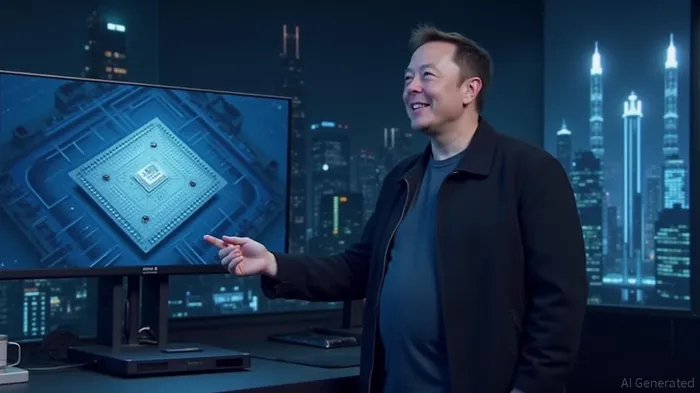
The new focus is on AI6, a next-generation chip designed to handle both AI training and real-time inference. Musk believes that AI6 will be more efficient and scalable than the specialized chips used in the Dojo project. The AI6 chip is expected to power Tesla’s self-driving vehicles and support its Optimus humanoid robot ambitions [3].
Tesla has partnered with Samsung to produce AI6 chips, with a reported deal worth $16.5 billion. This partnership reflects a broader industry trend, where companies are increasingly opting for partnerships over in-house supercomputing solutions. The collaboration with Samsung is expected to enhance Tesla’s AI decision-making capabilities, particularly for its Full Self-Driving (FSD) software and autonomous mobility services [2].
The shift away from Dojo is likely to have financial implications for Tesla. While the stock experienced a decline following the announcement of the project’s termination, Musk has emphasized the company’s commitment to achieving full autonomy [5]. The new strategy aligns with Tesla’s goal of accelerating real-time AI decisions, positioning the company to meet the practical demands of autonomous vehicle development while maintaining flexibility in its AI strategy [2].
The discontinuation of Dojo marks a significant departure from Tesla’s earlier vision of an in-house supercomputing system. However, it reflects a recalibration of resources toward more scalable and immediate applications, underscoring Tesla’s evolving approach to AI and hardware development [13]. The move is expected to simplify infrastructure, reduce cabling complexity, and cut costs significantly.
While the shutdown of Dojo raises questions about Tesla’s long-term R&D stability, the focus on AI6 may accelerate the company’s AI development, especially if the chip meets its performance targets. The shift is likely to have a ripple effect across the tech and automotive sectors, influencing how companies approach AI infrastructure and partnerships [3].
References:
[1] https://www.teslarati.com/elon-musk-confirms-tesla-ai6-chip-project-dojo-successor/
[2] https://www.ainvest.com/news/tesla-shifts-ai-focus-inference-chips-autonomous-driving-2508/
[3] https://startupnews.fyi/2025/08/14/tesla-shuts-down-dojo-supercomputer-project-citing-evolutionary-dead-end/
[4] https://www.teslarati.com/tesla-expands-robotaxi-program-in-austin-to-new-riders/
[5] https://www.tipranks.com/news/tesla-stock-tsla-tumbles-as-it-bins-dojo-ai-plans
TSLA--
Tesla CEO Elon Musk has announced that the company's in-house supercomputer, Dojo, is being sidelined in favor of a new chip project called AI6. This is a significant development for Nvidia, as Tesla is likely to remain a customer and use outsourced chips to scale its robotaxi and robotics services. Musk believes AI6 will handle both training workloads and inferencing neural networks across Tesla's broader infrastructure use cases.
Tesla CEO Elon Musk has announced a significant shift in the company's artificial intelligence (AI) strategy, signaling the end of its in-house supercomputer project, Dojo, in favor of a new chip project called AI6. This move is expected to have substantial implications for both Tesla and its key partners, particularly Nvidia.The Dojo project, originally introduced in 2019, was positioned as a cornerstone in Tesla’s mission to achieve full self-driving and commercialize humanoid robots. However, after several years of development, Musk announced on X that the project had reached an "evolutionary dead end" [3]. The decision to shut down Dojo reflects Tesla's broader strategy to consolidate its AI efforts and reduce the complexity of its infrastructure.
The new focus is on AI6, a next-generation chip designed to handle both AI training and real-time inference. Musk believes that AI6 will be more efficient and scalable than the specialized chips used in the Dojo project. The AI6 chip is expected to power Tesla’s self-driving vehicles and support its Optimus humanoid robot ambitions [3].
Tesla has partnered with Samsung to produce AI6 chips, with a reported deal worth $16.5 billion. This partnership reflects a broader industry trend, where companies are increasingly opting for partnerships over in-house supercomputing solutions. The collaboration with Samsung is expected to enhance Tesla’s AI decision-making capabilities, particularly for its Full Self-Driving (FSD) software and autonomous mobility services [2].
The shift away from Dojo is likely to have financial implications for Tesla. While the stock experienced a decline following the announcement of the project’s termination, Musk has emphasized the company’s commitment to achieving full autonomy [5]. The new strategy aligns with Tesla’s goal of accelerating real-time AI decisions, positioning the company to meet the practical demands of autonomous vehicle development while maintaining flexibility in its AI strategy [2].
The discontinuation of Dojo marks a significant departure from Tesla’s earlier vision of an in-house supercomputing system. However, it reflects a recalibration of resources toward more scalable and immediate applications, underscoring Tesla’s evolving approach to AI and hardware development [13]. The move is expected to simplify infrastructure, reduce cabling complexity, and cut costs significantly.
While the shutdown of Dojo raises questions about Tesla’s long-term R&D stability, the focus on AI6 may accelerate the company’s AI development, especially if the chip meets its performance targets. The shift is likely to have a ripple effect across the tech and automotive sectors, influencing how companies approach AI infrastructure and partnerships [3].
References:
[1] https://www.teslarati.com/elon-musk-confirms-tesla-ai6-chip-project-dojo-successor/
[2] https://www.ainvest.com/news/tesla-shifts-ai-focus-inference-chips-autonomous-driving-2508/
[3] https://startupnews.fyi/2025/08/14/tesla-shuts-down-dojo-supercomputer-project-citing-evolutionary-dead-end/
[4] https://www.teslarati.com/tesla-expands-robotaxi-program-in-austin-to-new-riders/
[5] https://www.tipranks.com/news/tesla-stock-tsla-tumbles-as-it-bins-dojo-ai-plans
Stay ahead of the market.
Get curated U.S. market news, insights and key dates delivered to your inbox.


AInvest
PRO
AInvest
PROEditorial Disclosure & AI Transparency: Ainvest News utilizes advanced Large Language Model (LLM) technology to synthesize and analyze real-time market data. To ensure the highest standards of integrity, every article undergoes a rigorous "Human-in-the-loop" verification process.
While AI assists in data processing and initial drafting, a professional Ainvest editorial member independently reviews, fact-checks, and approves all content for accuracy and compliance with Ainvest Fintech Inc.’s editorial standards. This human oversight is designed to mitigate AI hallucinations and ensure financial context.
Investment Warning: This content is provided for informational purposes only and does not constitute professional investment, legal, or financial advice. Markets involve inherent risks. Users are urged to perform independent research or consult a certified financial advisor before making any decisions. Ainvest Fintech Inc. disclaims all liability for actions taken based on this information. Found an error?Report an Issue


ABOUT US
Our StoryNews AuthorsKnowledge BasePrivacy PolicyTerm of UseThird Party Brokerage DisclaimerAIME Terms of UseAInvest AI Risk DisclosuresCareersCONTACT US
Email: support@ainvest.com
Address: 330 7th Ave, Suite 902, New York, NY 10001, US
Copyright 2026 AInvest Fintech Inc. All rights reserved.


Comments
No comments yet