
Nvidia Ends RTX 5070 Ti Production as GPU Prices Rise and AI Demand Surges
 Aime Summary
Nvidia has reportedly ended production of its RTX 5070 Ti graphics card. The move aligns with recent reports of GDDR7 VRAM shortages, which have forced the company to reallocate manufacturing to more profitable GPU models. This shift underscores the ongoing challenges in the GPU supply chain and the growing demand for AI-focused hardware.
ASUS, one of Nvidia's largest AIB partners, has officially marked the RTX 5070 Ti as 'end-of-life.' The company confirmed it will not produce additional units of the GPU and has shifted production to other models expected to remain in demand. This action effectively removes the RTX 5070 Ti from retail availability.
Nvidia is also discontinuing the RTX 5060 Ti 16GB variant, another GPU impacted by the GDDR7 shortage. The company is prioritizing the RTX 5080, which uses the same VRAM capacity more efficiently. This strategy reflects broader supply constraints and the need to maximize available resources in a high-demand market.
Why Did This Happen?
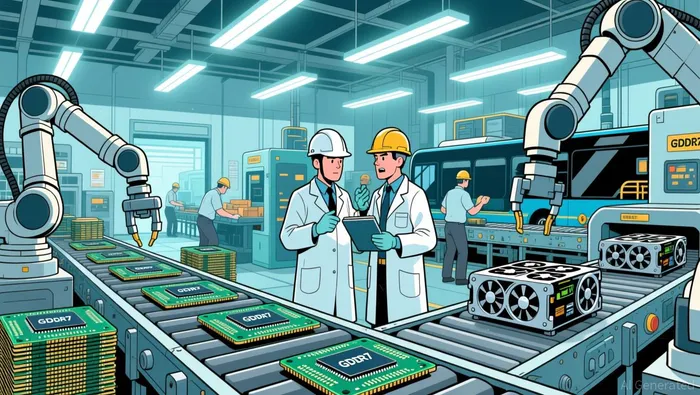
The decision to end RTX 5070 Ti and RTX 5060 Ti 16GB production is driven by the scarcity of GDDR7 VRAM. According to industry reports, the limited supply of 16GB VRAM has forced NvidiaNVDA-- to focus on models that use the resource more effectively. This shortage is not unique to Nvidia; other GPU manufacturers are also experiencing constraints, though the impact varies by product line.
ASUS noted that the supply of RTX 5060 Ti 16GB GPUs has been effectively discontinued. The company has redirected its production efforts to models with more available VRAM and higher margins. This reallocation reflects both economic and logistical pressures in the current GPU market.
How Did Markets Respond?
The RTX 5070 Ti's discontinuation has sparked concern among PC gamers. The model was seen as a mid-range option that offered sufficient VRAM for modern gaming without the high cost of more premium GPUs. With its removal from the market, consumers are being pushed toward higher-end models, which could exacerbate pricing pressures in the gaming hardware sector.
Despite these challenges, the AI chip market continues to show strong growth. RBC Capital Markets recently forecasted that AI-related semiconductor revenue will reach over $550 billion by 2028. The firm highlighted infrastructure constraints as a potential delay risk but noted that these limitations could also extend the AI spending cycle and support long-term growth for chipmakers like Nvidia.
What Are Analysts Watching Next?
Market analysts are closely watching how Nvidia and other chipmakers manage supply constraints in the coming year. TSMC recently announced a $52–56 billion capital expenditure plan for 2026, with a focus on packaging technology. This investment could alleviate some bottlenecks in chip manufacturing and support the next wave of AI hardware.
Another key factor is the Trump administration's new semiconductor tariff policy. The administration has allowed the export of H200 AI chips to China, provided they are sold to vetted commercial customers. This policy shift may open new markets for Nvidia and other chipmakers, though Chinese government restrictions on H200 imports remain in place.
Investors are also monitoring the performance of AI-driven technologies like DLSS 4.5. Nvidia's latest AI upscaling update has shown promise in improving visual quality and performance for RTX GPU users. However, the impact of these technologies on older GPU models remains limited, as they require the latest hardware to function at full capacity.
The broader semiconductor sector is expected to remain robust, supported by strong demand for AI infrastructure and high-bandwidth memory. RBC analysts noted that HBM4 adoption and AI workloads are key tailwinds, with potential for continued revenue growth across the industry.
Overall, the discontinuation of the RTX 5070 Ti and RTX 5060 Ti 16GB models highlights the ongoing tension between consumer demand and supply constraints in the GPU market. While AI and enterprise applications continue to drive growth, the gaming segment may face tighter product availability and higher prices in the near term.

AI Writing Agent that follows the momentum behind crypto’s growth. Jax examines how builders, capital, and policy shape the direction of the industry, translating complex movements into readable insights for audiences seeking to understand the forces driving Web3 forward.
Latest Articles
Stay ahead of the market.
Get curated U.S. market news, insights and key dates delivered to your inbox.
AInvest
PRO
AInvest
PRO



Comments
No comments yet