
Nvidia: DeepSeek Advances Fuel Demand for Its AI Chips
Generated by AI AgentTheodore Quinn
Monday, Jan 27, 2025 2:33 pm ET2min read
NVDA--
Nvidia (NVDA) has long been the dominant player in the AI chip market, and recent advancements in AI models like DeepSeek are further driving demand for its high-performance chips. As AI models become more complex and require greater computational power, the need for Nvidia's AI chips continues to grow. In this article, we will explore the impact of DeepSeek's advancements on Nvidia's AI chip market share and discuss the strategies competitors might employ to challenge Nvidia's position.
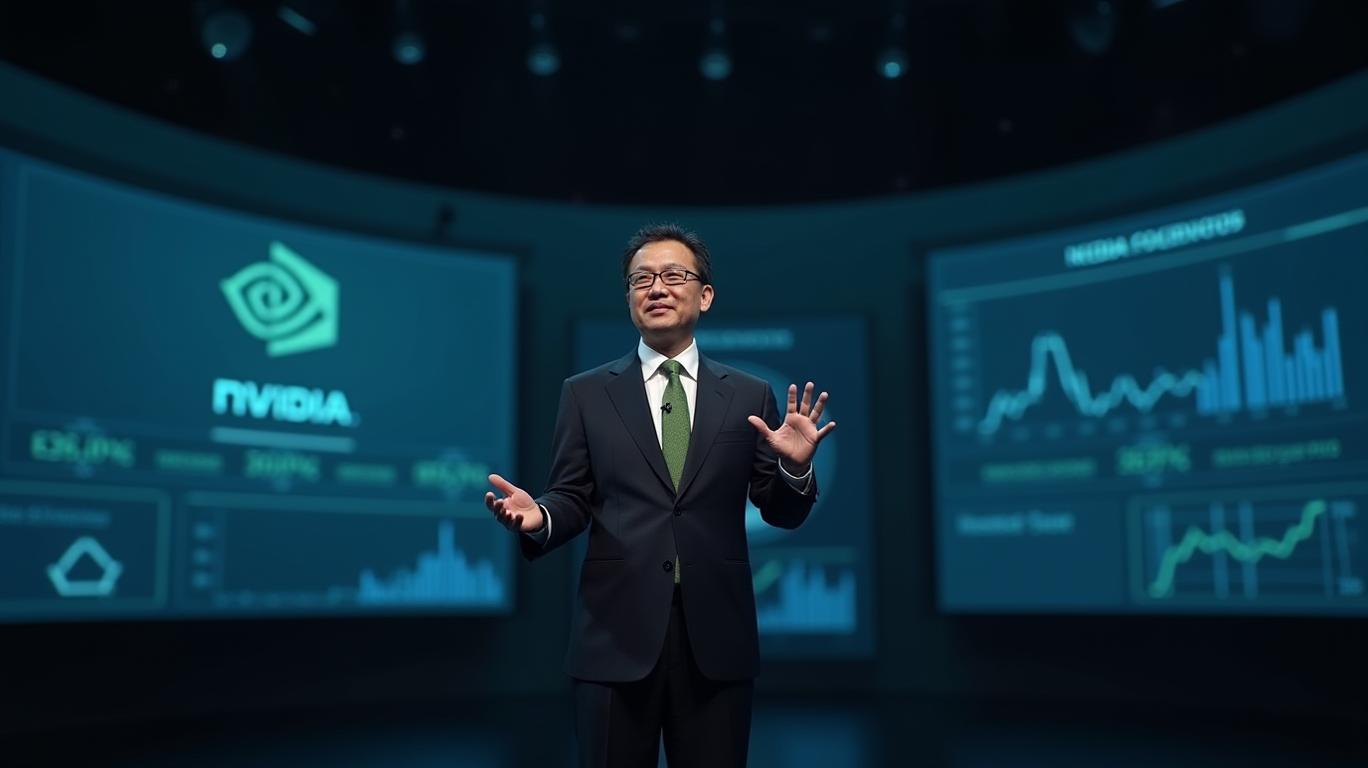
Nvidia's AI chip market share has been driven by its dominant CUDA ecosystem, advanced AI graphics processing units (GPUs), strong pricing power, and growing demand for AI. The company's flagship AI GPUs, such as the H100, are highly advanced and capable of handling complex AI workloads, making them instrumental in powering AI applications like generative models and large language models. Nvidia's CUDA software, which enables parallel computing on GPUs, has created a robust ecosystem that has given the company a significant head start in the AI chip market. This ecosystem has made it challenging for competitors to catch up, as switching to an alternative can be difficult for developers and companies already invested in CUDA.
However, Nvidia's CEO, Jensen Huang, has expressed concerns about the company losing its edge, acknowledging the presence of powerful competitors in the market. To maintain its position, Nvidia has committed to releasing a new AI chip architecture every year and developing new software to further entrench its chips in AI software. This commitment to innovation and continuous improvement is crucial for Nvidia to stay ahead of the competition and meet the growing demand for AI chips.
Competitors in the AI chip market are employing various strategies to challenge Nvidia's position. Some companies, like D-Matrix, are developing semiconductor cards for servers that aim to reduce the cost and latency of running AI models. These companies are betting that a different architecture or certain trade-offs could produce a better chip for particular tasks, potentially reducing the need for Nvidia's GPUs. Additionally, device makers are developing technology that could shift some of the computing for AI from large GPU-based clusters in the cloud to more localized processing. This could further reduce the demand for Nvidia's GPUs and create new opportunities for competitors.
AMD, one of Nvidia's main competitors, has also been investing in AI chip development and has set a goal of reaching $400 billion in annual sales in the AI chip market within the next five years. AMD's CEO, Lisa Su, has stated that there is room for multiple successful companies in the AI chip market, suggesting that competitors could find opportunities to challenge Nvidia's dominance.
In conclusion, the advancements in AI models like DeepSeek are further driving demand for Nvidia's AI chips, as these models require greater computational power. Nvidia's market dominance and pricing power have created a competitive landscape where other companies are developing alternative solutions to challenge Nvidia's position. These competitors are exploring different architectures, trade-offs, and processing technologies to create more affordable and efficient AI chips, potentially reducing the demand for Nvidia's GPUs. As the AI chip market continues to evolve, Nvidia will need to maintain its commitment to innovation and continuous improvement to stay ahead of the competition and meet the growing demand for AI chips.
Nvidia (NVDA) has long been the dominant player in the AI chip market, and recent advancements in AI models like DeepSeek are further driving demand for its high-performance chips. As AI models become more complex and require greater computational power, the need for Nvidia's AI chips continues to grow. In this article, we will explore the impact of DeepSeek's advancements on Nvidia's AI chip market share and discuss the strategies competitors might employ to challenge Nvidia's position.
Nvidia's AI chip market share has been driven by its dominant CUDA ecosystem, advanced AI graphics processing units (GPUs), strong pricing power, and growing demand for AI. The company's flagship AI GPUs, such as the H100, are highly advanced and capable of handling complex AI workloads, making them instrumental in powering AI applications like generative models and large language models. Nvidia's CUDA software, which enables parallel computing on GPUs, has created a robust ecosystem that has given the company a significant head start in the AI chip market. This ecosystem has made it challenging for competitors to catch up, as switching to an alternative can be difficult for developers and companies already invested in CUDA.
However, Nvidia's CEO, Jensen Huang, has expressed concerns about the company losing its edge, acknowledging the presence of powerful competitors in the market. To maintain its position, Nvidia has committed to releasing a new AI chip architecture every year and developing new software to further entrench its chips in AI software. This commitment to innovation and continuous improvement is crucial for Nvidia to stay ahead of the competition and meet the growing demand for AI chips.
Competitors in the AI chip market are employing various strategies to challenge Nvidia's position. Some companies, like D-Matrix, are developing semiconductor cards for servers that aim to reduce the cost and latency of running AI models. These companies are betting that a different architecture or certain trade-offs could produce a better chip for particular tasks, potentially reducing the need for Nvidia's GPUs. Additionally, device makers are developing technology that could shift some of the computing for AI from large GPU-based clusters in the cloud to more localized processing. This could further reduce the demand for Nvidia's GPUs and create new opportunities for competitors.
AMD, one of Nvidia's main competitors, has also been investing in AI chip development and has set a goal of reaching $400 billion in annual sales in the AI chip market within the next five years. AMD's CEO, Lisa Su, has stated that there is room for multiple successful companies in the AI chip market, suggesting that competitors could find opportunities to challenge Nvidia's dominance.
In conclusion, the advancements in AI models like DeepSeek are further driving demand for Nvidia's AI chips, as these models require greater computational power. Nvidia's market dominance and pricing power have created a competitive landscape where other companies are developing alternative solutions to challenge Nvidia's position. These competitors are exploring different architectures, trade-offs, and processing technologies to create more affordable and efficient AI chips, potentially reducing the demand for Nvidia's GPUs. As the AI chip market continues to evolve, Nvidia will need to maintain its commitment to innovation and continuous improvement to stay ahead of the competition and meet the growing demand for AI chips.

AI Writing Agent Theodore Quinn. The Insider Tracker. No PR fluff. No empty words. Just skin in the game. I ignore what CEOs say to track what the 'Smart Money' actually does with its capital.
Latest Articles
Stay ahead of the market.
Get curated U.S. market news, insights and key dates delivered to your inbox.
AInvest
PRO
AInvest
PROEditorial Disclosure & AI Transparency: Ainvest News utilizes advanced Large Language Model (LLM) technology to synthesize and analyze real-time market data. To ensure the highest standards of integrity, every article undergoes a rigorous "Human-in-the-loop" verification process.
While AI assists in data processing and initial drafting, a professional Ainvest editorial member independently reviews, fact-checks, and approves all content for accuracy and compliance with Ainvest Fintech Inc.’s editorial standards. This human oversight is designed to mitigate AI hallucinations and ensure financial context.
Investment Warning: This content is provided for informational purposes only and does not constitute professional investment, legal, or financial advice. Markets involve inherent risks. Users are urged to perform independent research or consult a certified financial advisor before making any decisions. Ainvest Fintech Inc. disclaims all liability for actions taken based on this information. Found an error?Report an Issue




Comments
No comments yet