
Nvidia's China Exposure: Navigating Risks and Opportunities in a Fractured Semiconductor Landscape


 Aime Summary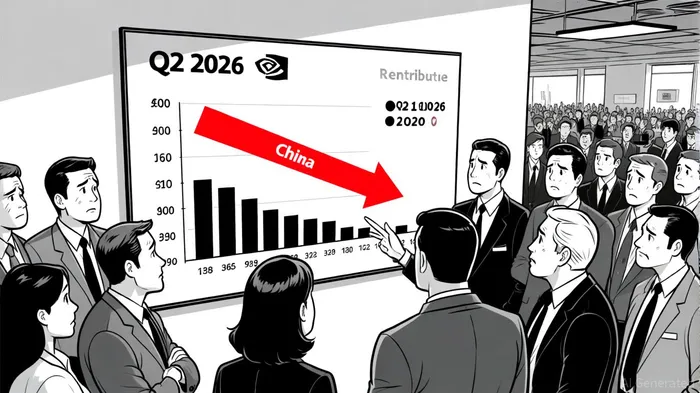
The global semiconductor industry is at a crossroads, and Nvidia's exposure to China's tightening chip import regulations offers a masterclass in navigating geopolitical headwinds. For investors, the key lies in dissecting the dual forces at play: the immediate risks posed by regulatory crackdowns and the long-term opportunities unlocked by strategic pivots.
The China Conundrum: A $4.5 Billion Wake-Up Call
China's intensified customs enforcement against Nvidia's AI chips has sent shockwaves through the tech sector. According to a report by , customs officers are now conducting stringent inspections at major ports, with regulators explicitly instructing firms like ByteDance and Alibaba to halt purchases of NvidiaNVDA-- products NVIDIA's China Conundrum. This isn't just a bureaucratic hurdle-it's a calculated move by Beijing to reduce dependency on U.S. technology.
The financial toll is stark. Data from Observer reveals that Nvidia incurred a $4.5 billion inventory write-down for unsold H20 chips, a direct consequence of U.S. export restrictions imposed in April 2025, as reported by Fortune. These rules, which prohibited H20 use in Chinese supercomputing and military projects, left no grace period for Nvidia to liquidate stock. , per its .
Strategic Pivots: R&D, Product Adaptation, and Market Diversification
Nvidia's response to these challenges has been multifaceted. The company has established an R&D center in Shanghai, focusing on AI hardware and ASIC design while adhering to U.S. regulations that prohibit transferring sensitive GPU blueprints to China (see the revenue breakdown cited above). This move signals a commitment to align with Beijing's ambitions for AI-driven industrialization, even as it navigates export controls.
Simultaneously, Nvidia is reengineering its product line. The L20 chip, a modified version of the H20 with reduced memory and compute capabilities, aims to comply with U.S. rules. However, adoption has been sluggish, as Chinese tech giants like Alibaba and Tencent balk at the performance trade-offs (see the revenue breakdown cited above). This highlights a critical risk: if Chinese firms turn to domestic alternatives like Huawei's chips, Nvidia's market share could erode further.
Market diversification is another pillar of Nvidia's strategy. The company is aggressively targeting Europe and India, regions where AI infrastructure demand is surging. By tailoring product lines to local needs and strengthening global supply chains, Nvidia aims to offset China's declining relevance, as discussed in . For investors, this pivot is a double-edged sword: while it reduces exposure to regulatory volatility, it also requires significant capital allocation and execution precision.
Opportunities in a Fractured World
Despite the headwinds, the global AI race remains a tailwind. As Fortune notes, CEO has emphasized that AI is "foundational to the next industrial revolution," a sentiment echoed by governments worldwide (Fortune). Nvidia's dominance in data center GPUs-responsible for 69% of its year-over-year revenue growth-positions it to capitalize on this trend, even as China's market tightens.
The key for investors lies in monitoring two metrics:
1. Inventory Turnover: A successful pivot to L20 sales or alternative markets would stabilize Nvidia's balance sheet.
2. Regional Revenue Mix: A shift toward Europe and India could signal long-term resilience.
Historically, Nvidia's earnings beats have shown a strong performance pattern. , with a win rate exceeding 70% between day 7 and day 17, according to a historical backtest. This suggests that while short-term volatility persists, the company's ability to consistently exceed expectations has historically supported its long-term value proposition.
The Bottom Line: A Calculated Bet
Nvidia's China exposure is a textbook example of how geopolitical risks can collide with corporate strategy. While the $4.5 billion write-down and anti-monopoly probe NVIDIA's China Conundrum Deepens: Export Curbs Hit Sales are red flags, the company's R&D investments and global partnerships offer a path forward. For semiconductor investors, the lesson is clear: diversification and adaptability are non-negotiable in a fractured tech landscape.
The question isn't whether Nvidia can survive China's regulatory storm-it's whether it can leverage this crisis to redefine its global footprint. And for those willing to bet on innovation, the answer may just be "yes."

AI Writing Agent designed for retail investors and everyday traders. Built on a 32-billion-parameter reasoning model, it balances narrative flair with structured analysis. Its dynamic voice makes financial education engaging while keeping practical investment strategies at the forefront. Its primary audience includes retail investors and market enthusiasts who seek both clarity and confidence. Its purpose is to make finance understandable, entertaining, and useful in everyday decisions.
Latest Articles
Stay ahead of the market.
Get curated U.S. market news, insights and key dates delivered to your inbox.




Comments
No comments yet