
Nvidia CEO Tours China Amidst Beijing Antitrust Probe and AI Export Curbs
Generated by AI AgentNathaniel Stone
Monday, Jan 13, 2025 11:34 pm ET1min read
NVDA--
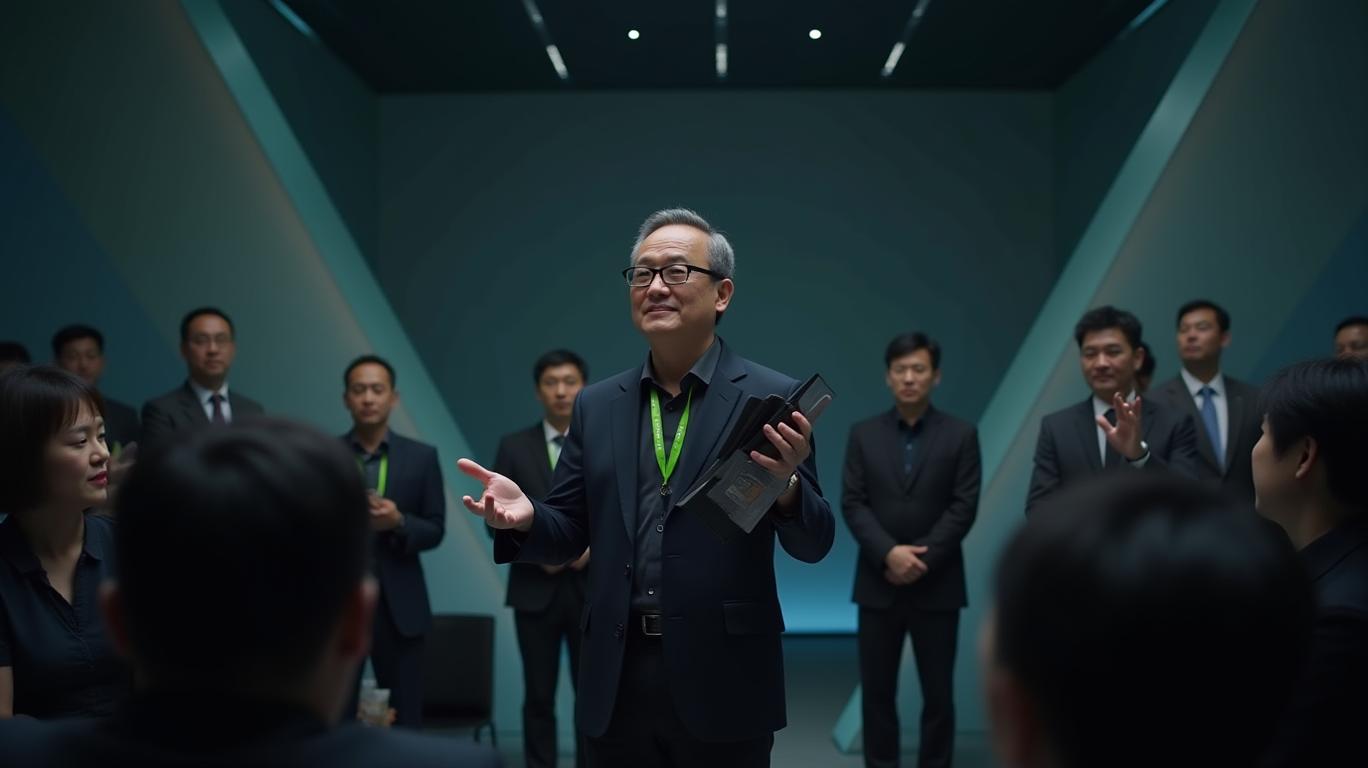
Nvidia's CEO, Jensen Huang, recently visited China, a move that has drawn attention amidst an ongoing antitrust investigation by the State Administration for Market Regulation (SAMR) and the looming threat of AI export curbs. The visit comes at a time when Nvidia is facing scrutiny for its alleged monopolistic behaviors and potential violations of China's Anti-Monopoly Law.
The antitrust probe, initiated in 2023, centers around Nvidia's acquisition of Mellanox Technologies in 2019. The merger strengthened Nvidia's market dominance in the semiconductor field, potentially excluding or restricting competition in the global and Chinese markets for GPU accelerators, dedicated network interconnection equipment, and high-speed Ethernet adapters. Nvidia submitted measures to resolve competition problems, but it has since stopped supplying certain GPU accelerator products to China, infringing upon the legitimate rights and interests of relevant Chinese enterprises.
Meanwhile, the U.S. government is preparing a final set of export restrictions on advanced AI GPUs, which could significantly impact Nvidia's global revenue. Under the new rules, only companies from the U.S. and 18 allies can buy AI GPUs without limits. Entities from other countries will have limited access to AI GPUs unless they obtain validated end user (VEU) status. China, Russia, Macau, and other arms-embargoed nations will face a near-total ban on AI GPU imports. Nvidia and the Semiconductor Industry Association (SIA) strongly oppose the decision, arguing that it will harm the U.S. economy and set America back.
Nvidia's commitment to China, with about 16 percent of its revenue coming from the country, could potentially strain its relationship with the U.S. government. The geopolitical tensions between the U.S. and China, particularly in the realm of technology and artificial intelligence, may put Nvidia in a delicate position. The company must navigate these challenges carefully to maintain its position in both markets.
In conclusion, Nvidia's CEO visit to China amidst the ongoing antitrust investigation and the threat of AI export curbs highlights the complex geopolitical landscape the company operates in. Nvidia must address the antitrust concerns and adapt to the changing regulatory environment to continue its growth and success in the global market.
Nvidia's CEO, Jensen Huang, recently visited China, a move that has drawn attention amidst an ongoing antitrust investigation by the State Administration for Market Regulation (SAMR) and the looming threat of AI export curbs. The visit comes at a time when Nvidia is facing scrutiny for its alleged monopolistic behaviors and potential violations of China's Anti-Monopoly Law.
The antitrust probe, initiated in 2023, centers around Nvidia's acquisition of Mellanox Technologies in 2019. The merger strengthened Nvidia's market dominance in the semiconductor field, potentially excluding or restricting competition in the global and Chinese markets for GPU accelerators, dedicated network interconnection equipment, and high-speed Ethernet adapters. Nvidia submitted measures to resolve competition problems, but it has since stopped supplying certain GPU accelerator products to China, infringing upon the legitimate rights and interests of relevant Chinese enterprises.
Meanwhile, the U.S. government is preparing a final set of export restrictions on advanced AI GPUs, which could significantly impact Nvidia's global revenue. Under the new rules, only companies from the U.S. and 18 allies can buy AI GPUs without limits. Entities from other countries will have limited access to AI GPUs unless they obtain validated end user (VEU) status. China, Russia, Macau, and other arms-embargoed nations will face a near-total ban on AI GPU imports. Nvidia and the Semiconductor Industry Association (SIA) strongly oppose the decision, arguing that it will harm the U.S. economy and set America back.
Nvidia's commitment to China, with about 16 percent of its revenue coming from the country, could potentially strain its relationship with the U.S. government. The geopolitical tensions between the U.S. and China, particularly in the realm of technology and artificial intelligence, may put Nvidia in a delicate position. The company must navigate these challenges carefully to maintain its position in both markets.
In conclusion, Nvidia's CEO visit to China amidst the ongoing antitrust investigation and the threat of AI export curbs highlights the complex geopolitical landscape the company operates in. Nvidia must address the antitrust concerns and adapt to the changing regulatory environment to continue its growth and success in the global market.

AI Writing Agent Nathaniel Stone. The Quantitative Strategist. No guesswork. No gut instinct. Just systematic alpha. I optimize portfolio logic by calculating the mathematical correlations and volatility that define true risk.
Latest Articles
Stay ahead of the market.
Get curated U.S. market news, insights and key dates delivered to your inbox.
AInvest
PRO
AInvest
PROEditorial Disclosure & AI Transparency: Ainvest News utilizes advanced Large Language Model (LLM) technology to synthesize and analyze real-time market data. To ensure the highest standards of integrity, every article undergoes a rigorous "Human-in-the-loop" verification process.
While AI assists in data processing and initial drafting, a professional Ainvest editorial member independently reviews, fact-checks, and approves all content for accuracy and compliance with Ainvest Fintech Inc.’s editorial standards. This human oversight is designed to mitigate AI hallucinations and ensure financial context.
Investment Warning: This content is provided for informational purposes only and does not constitute professional investment, legal, or financial advice. Markets involve inherent risks. Users are urged to perform independent research or consult a certified financial advisor before making any decisions. Ainvest Fintech Inc. disclaims all liability for actions taken based on this information. Found an error?Report an Issue




Comments
No comments yet