
Nvidia CEO Sees AI as 50% Productivity Booster Not Job Killer
Nvidia’s chief executive, Jensen Huang, has expressed a contrasting view to the widespread fear that artificial intelligence (AI) will lead to mass unemployment. In a discussion with CNN’s Fareed Zarkaria, Huang described AI as “the greatest technology equalizer the world has ever seen,” emphasizing its potential to create new opportunities and enhance productivity across various industries.
Huang acknowledged that AI will alter working practices, but he stressed that it will not eliminate jobs entirely. Instead, he predicted that AI will change the nature of work, making it 50% less than normal for everyone. He cited the example of AI enabling people, regardless of their computer literacy, to become more productive. Huang also highlighted the rapid adoption of AI tools like ChatGPT, noting that even first-time users find value in them. He emphasized that AI is a tool for empowerment, not a weapon.
Huang’s perspective on AI’s impact on the workforce is optimistic. He believes that AI will create new job opportunities in areas such as training models, engineering prompts, curating data, managing humans, and ensuring AI ethics. This aligns with historical shifts during the industrial and digital revolutions, where technology replaced some jobs but also created new industries and employment opportunities. Huang views AI as a “co-pilot” rather than a competitor, freeing humans to focus on creative, strategic, and people-oriented work. He also stressed the importance of retraining and educating workers to adapt to this transition, ensuring that societies can effectively cohabitate and work with AI.
Huang’s views stand in contrast to more pessimistic predictions within the AI industry. Some experts, such as Dario Amodei, CEO of the AI startup Anthropic, have warned that AI could automate half of all entry-level white-collar jobs within the next five years, potentially doubling unemployment rates. Others, like Adam Dorr of the research house RethinkX, believe that AI and robotics could automate virtually all human labor by 2045. However, Huang remains optimistic, arguing that such doomsday scenarios overlook the potential for AI to be a force for good. He believes that the impact of AI is more about transformation than replacement, and that the technology should empower rather than replace humans.
As the world adapts to the era of silicon and artificial intelligence, Huang’s message is clear: AI should be embraced as a tool to redefine the future of work, creating new opportunities and enhancing productivity across various sectors. 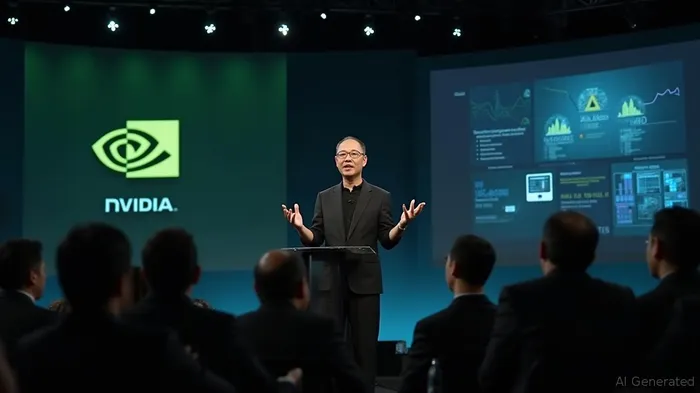

Stay ahead of the market.
Get curated U.S. market news, insights and key dates delivered to your inbox.
AInvest
PRO
AInvest
PRO



Comments
No comments yet