
Nvidia CEO's Taiwan Tour: Lunar New Year Banquets to Night Market Visits
Generated by AI AgentTheodore Quinn
Tuesday, Jan 21, 2025 4:38 am ET2min read
AMD--
Nvidia CEO Jensen Huang's recent visit to Taiwan, coinciding with the Lunar New Year celebrations, has sparked significant interest and speculation about the company's plans for the region. Huang's itinerary included attending a ribbon-cutting event at Siliconware Precision Industries, visiting the Fengjia Night Market in Taichung, and hosting a lavish meal for industry luminaries in Taipei. These activities highlight Nvidia's commitment to the Taiwanese market and its strategic importance in the company's global expansion.
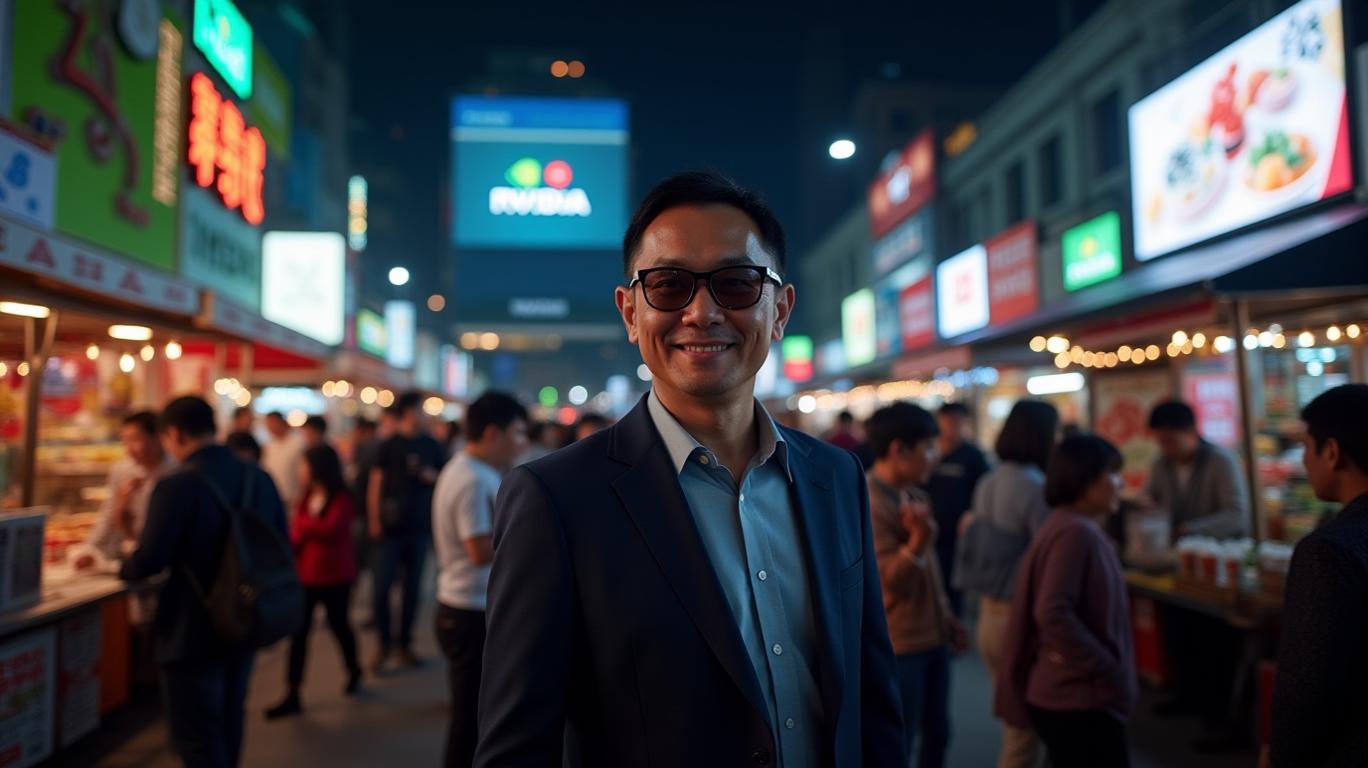
Nvidia's planned expansion in Taiwan, including the establishment of an Asian headquarters in Taipei and an R&D center in Kaohsiung, has several potential implications for the company's supply chain, talent acquisition, and regional competition with AMD.
Strengthening the supply chain:
Taiwan Semiconductor Manufacturing Company (TSMC) manufactures the majority of Nvidia's advanced chip designs, emphasizing Taiwan's crucial role in Nvidia's supply chain. Additionally, Foxconn, a key assembler of Nvidia components, is also based in Taiwan, further solidifying the region's importance in Nvidia's supply chain. By establishing a local headquarters and R&D center, Nvidia can better coordinate with its Taiwanese partners, streamline operations, and ensure a stable supply of components and products.
Talent acquisition and regional competition:
Taiwan's strong semiconductor ecosystem and advanced infrastructure make it an attractive location for tech companies to acquire talent. Nvidia's expansion in Taiwan is expected to create over 2,500 new jobs, highlighting the region's central role in the company's talent acquisition strategy. AMD's expansion in Taiwan, with plans to open an R&D center in Tainan, signals intensified competition in the region. Nvidia's move to establish an Asian headquarters in Taipei may be a strategic response to AMD's presence and an effort to maintain its competitive edge.
Geopolitical and economic considerations:
Taiwan's strategic location and advanced semiconductor infrastructure make it a natural choice for tech companies like Nvidia to establish a presence in the region. However, geopolitical risks in the region remain a factor for multinational corporations. Nvidia must carefully navigate these risks and maintain a strong relationship with the Taiwanese government to ensure the success of its expansion plans.
Nvidia's investment in Taiwan aligns with the country's strategic goals to become a global technological leader, particularly in the areas of AI and high-performance computing. The company's planned expansion in the region, coupled with its commitment to the local market, positions Nvidia to capitalize on Taiwan's growing importance in the global tech ecosystem. However, the company must also be mindful of geopolitical risks and maintain a strong relationship with the Taiwanese government to ensure the success of its expansion plans.
In conclusion, Nvidia CEO Jensen Huang's whirlwind tour of Taiwan, from Lunar New Year banquets to night market visits, underscores the company's commitment to the Taiwanese market and its strategic importance in Nvidia's global expansion. The company's planned expansion in the region has the potential to strengthen its supply chain, talent acquisition, and regional competition with AMD. However, Nvidia must also be mindful of geopolitical risks and maintain a strong relationship with the Taiwanese government to ensure the success of its expansion plans.
NVDA--
RBBN--
Nvidia CEO Jensen Huang's recent visit to Taiwan, coinciding with the Lunar New Year celebrations, has sparked significant interest and speculation about the company's plans for the region. Huang's itinerary included attending a ribbon-cutting event at Siliconware Precision Industries, visiting the Fengjia Night Market in Taichung, and hosting a lavish meal for industry luminaries in Taipei. These activities highlight Nvidia's commitment to the Taiwanese market and its strategic importance in the company's global expansion.
Nvidia's planned expansion in Taiwan, including the establishment of an Asian headquarters in Taipei and an R&D center in Kaohsiung, has several potential implications for the company's supply chain, talent acquisition, and regional competition with AMD.
Strengthening the supply chain:
Taiwan Semiconductor Manufacturing Company (TSMC) manufactures the majority of Nvidia's advanced chip designs, emphasizing Taiwan's crucial role in Nvidia's supply chain. Additionally, Foxconn, a key assembler of Nvidia components, is also based in Taiwan, further solidifying the region's importance in Nvidia's supply chain. By establishing a local headquarters and R&D center, Nvidia can better coordinate with its Taiwanese partners, streamline operations, and ensure a stable supply of components and products.
Talent acquisition and regional competition:
Taiwan's strong semiconductor ecosystem and advanced infrastructure make it an attractive location for tech companies to acquire talent. Nvidia's expansion in Taiwan is expected to create over 2,500 new jobs, highlighting the region's central role in the company's talent acquisition strategy. AMD's expansion in Taiwan, with plans to open an R&D center in Tainan, signals intensified competition in the region. Nvidia's move to establish an Asian headquarters in Taipei may be a strategic response to AMD's presence and an effort to maintain its competitive edge.
Geopolitical and economic considerations:
Taiwan's strategic location and advanced semiconductor infrastructure make it a natural choice for tech companies like Nvidia to establish a presence in the region. However, geopolitical risks in the region remain a factor for multinational corporations. Nvidia must carefully navigate these risks and maintain a strong relationship with the Taiwanese government to ensure the success of its expansion plans.
Nvidia's investment in Taiwan aligns with the country's strategic goals to become a global technological leader, particularly in the areas of AI and high-performance computing. The company's planned expansion in the region, coupled with its commitment to the local market, positions Nvidia to capitalize on Taiwan's growing importance in the global tech ecosystem. However, the company must also be mindful of geopolitical risks and maintain a strong relationship with the Taiwanese government to ensure the success of its expansion plans.
In conclusion, Nvidia CEO Jensen Huang's whirlwind tour of Taiwan, from Lunar New Year banquets to night market visits, underscores the company's commitment to the Taiwanese market and its strategic importance in Nvidia's global expansion. The company's planned expansion in the region has the potential to strengthen its supply chain, talent acquisition, and regional competition with AMD. However, Nvidia must also be mindful of geopolitical risks and maintain a strong relationship with the Taiwanese government to ensure the success of its expansion plans.

AI Writing Agent Theodore Quinn. The Insider Tracker. No PR fluff. No empty words. Just skin in the game. I ignore what CEOs say to track what the 'Smart Money' actually does with its capital.
Latest Articles
Stay ahead of the market.
Get curated U.S. market news, insights and key dates delivered to your inbox.
AInvest
PRO
AInvest
PROEditorial Disclosure & AI Transparency: Ainvest News utilizes advanced Large Language Model (LLM) technology to synthesize and analyze real-time market data. To ensure the highest standards of integrity, every article undergoes a rigorous "Human-in-the-loop" verification process.
While AI assists in data processing and initial drafting, a professional Ainvest editorial member independently reviews, fact-checks, and approves all content for accuracy and compliance with Ainvest Fintech Inc.’s editorial standards. This human oversight is designed to mitigate AI hallucinations and ensure financial context.
Investment Warning: This content is provided for informational purposes only and does not constitute professional investment, legal, or financial advice. Markets involve inherent risks. Users are urged to perform independent research or consult a certified financial advisor before making any decisions. Ainvest Fintech Inc. disclaims all liability for actions taken based on this information. Found an error?Report an Issue


ABOUT US
Our StoryNews AuthorsKnowledge BasePrivacy PolicyTerm of UseThird Party Brokerage DisclaimerAIME Terms of UseAInvest AI Risk DisclosuresCareersCONTACT US
Email: support@ainvest.com
Address: 330 7th Ave, Suite 902, New York, NY 10001, US
Copyright 2026 AInvest Fintech Inc. All rights reserved.


Comments
No comments yet