
NVIDIA CEO Claims AGI Breakthrough: What Investors Need to Know
 Aime Summary
NVIDIA CEO Jensen Huang recently claimed artificial general intelligence (AGI) has been achieved.
- AGI is a controversial milestone suggesting AI can perform any intellectual task humans can.
- Huang noted that while AGI has been achieved, the long-term sustainability of AI-driven ventures remains uncertain.
NVIDIA CEO Jensen Huang has made bold claims about the state of artificial general intelligence (AGI), saying that it has already been achieved. While his statements are generating both excitement and skepticism in the tech and investor communities, the implications for NVIDIANVDA-- and the broader AI landscape are significant. , or artificial general intelligence, refers to a system that can perform any intellectual task a human can do, and Huang's assertion that this is no longer a theoretical concept has sparked renewed debate over the true nature and potential of AI.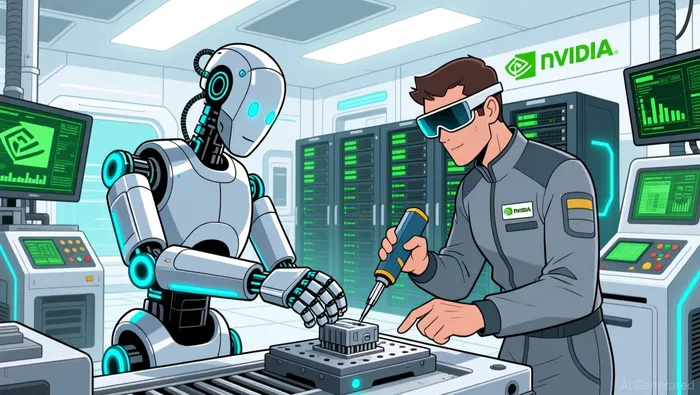
Is AGI a Reality or Marketing Hype?
The term AGI has long been debated in both academic and commercial circles. While Huang claims it has been achieved, he also quickly tempered expectations by acknowledging the challenges of maintaining AI-driven ventures over time. In a recent interview, he noted that many AI applications, despite their initial success, tend to fade after a short period. This suggests that while the technical capabilities may be there, the practical and business sustainability of AGI systems remains unproven.
Still, Huang's claims align with broader industry momentum. Open-source platforms like have shown viral success, and companies like NVIDIA are pushing the boundaries of AI's potential in robotics, healthcare, and energy. The collaboration between NVIDIA and Emerald AI on energy-efficient AI factories and the expansion into robotics with partners like Disney further underline the transformative potential of AI.
What Does AGI Mean for NVIDIA Investors?
For investors, Huang's comments raise important questions. If AGI is indeed achievable, the demand for high-performance computing (HPC) infrastructure—and thus NVIDIA's products—could grow exponentially. The company is already benefiting from the AI boom, with AI chips at the heart of cloud computing, generative AI, and autonomous systems. However, Huang also stressed that 2025–2030 is a critical window for individuals to participate in the AI revolution before the infrastructure becomes consolidated by major players. This suggests there's still time for early-stage investors to benefit, but that the landscape is rapidly shifting.
Meanwhile, NVIDIA faces growing competition. through AWS, including the development of Trainium chips, could challenge NVIDIA's dominance in AI hardware. The ability of competitors to offer lower-cost, high-performance alternatives could impact NVIDIA's market share and margins, especially if AI inference becomes commoditized.
What to Watch in the Coming Months
The next few months will be critical in determining whether AGI is more than a buzzword. Key developments to watch include: - The performance of NVIDIA's AI-driven robotics initiatives in manufacturing and healthcare. - Regulatory and ethical discussions around AGI and its potential impact on jobs and society. - The success of open-source AGI projects like OpenClaw in sustaining long-term user engagement. - The response from competitors like Amazon and Google in developing alternative AI chip ecosystems.
Investors should also keep an eye on NVIDIA's upcoming financial reports and partnerships, as they will provide insight into the company's AI-driven growth trajectory. For now, Huang's claims highlight both the transformative potential and the uncertainty of the AI landscape.
At the end of the day, while the term AGI may still be contested, the broader AI revolution is already reshaping industries. Whether or not Huang is overstating the current capabilities, the message is clear: AI is no longer the future—it's the present.

Stay ahead of the market.
Get curated U.S. market news, insights and key dates delivered to your inbox.
AInvest
PRO
AInvest
PRO



Comments
No comments yet