
Nvidia, Arm Return the CPU to Center Stage in the Age of AI
 Aime Summary
Nvidia and ArmARM-- are reshaping the AI computing landscape by reintroducing CPUs as central components of AI infrastructure. At its recent event in San Jose, California, NvidiaNVDA-- announced its "Vera" CPU, the company's first standalone CPU offering. This marks a strategic shift from its previous focus on AI accelerators. Arm also made a major announcement, unveiling its own data-center CPU, the Arm AGI CPU, which it projects will generate $15 billion in annual revenue by 2031.
The move reflects a broader industry recognition that while AI accelerators remain crucial, CPUs play an essential role in data preparation, orchestration, and workflow execution. Both companies emphasized that AI infrastructure requires a hybrid approach, where accelerators and CPUs work together efficiently.
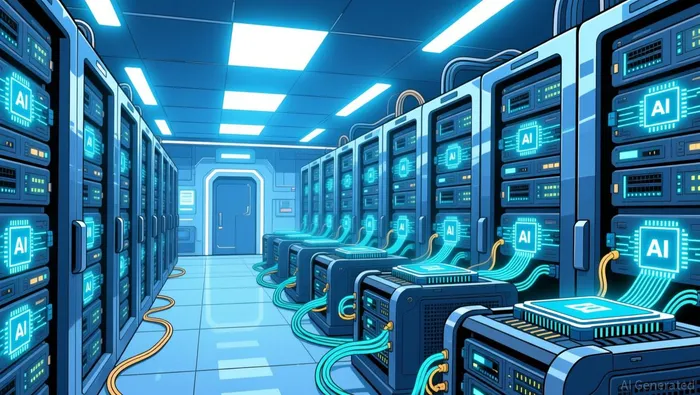
Nvidia and Arm are betting on the rise of agentic AI, a system that performs multi-step tasks with minimal human input. This trend is expected to significantly increase the demand for CPUs, particularly in data centers. Arm projects that the CPU market will grow fourfold due to agentic AI adoption.
Why the Move Happened
Nvidia's standalone CPU strategy is a response to customer demands for more versatile computing solutions. The company has historically offered CPUs in combination with its AI accelerators, but the standalone Vera CPU signals a new direction according to Bloomberg.
Arm's decision to produce its own CPU is part of a broader shift in its business model. The company has traditionally licensed its designs to other chipmakers but is now entering the physical chip market. This move is driven by rising demand for energy-efficient CPUs that can support agentic AI workloads.
Both companies also face competition from other players in the CPU market. Intel and AMD have long been dominant in this space, but with the rise of agentic AI, new opportunities are emerging for companies that can offer specialized, power-efficient solutions.
How Markets Responded
Market reactions to these announcements were largely positive. Arm's shares surged nearly 12% in premarket trading on Wednesday following its CPU announcement.
Nvidia also saw strong interest from investors. The company's recent financial results showed a 65% year-over-year revenue increase in fiscal 2026, with its Data Center division accounting for $193.7 billion of that total. This underscores the growing importance of AI infrastructure in the global economy.
AMD, while not matching Nvidia's scale, reported $34.6 billion in 2025 revenue, with its Data Center segment growing 32% year-over-year. However, AMD's total data center revenue remains significantly smaller than Nvidia's.
What Analysts Are Watching
Analysts are closely watching how these new CPUs perform in the market. HSBC upgraded Arm to Buy, citing the company's potential in AI server CPUs and its transition from a smartphone-focused licensing model to a broader role in the data-center market.
The company is also expected to benefit from rising royalty rates per chip as more customers adopt its v9 architecture and Neoverse Compute Subsystems. HSBC forecasts that server CPU royalty revenue could grow at a 76% compound annual rate between fiscal 2026 and 2031.
Nvidia's leadership in AI infrastructure remains strong, but the company faces challenges from export restrictions. It has removed China data center projections from its Q1 2027 guidance due to ongoing export control limitations.
Investors are also watching how the broader AI market evolves. While demand for AI chips remains strong, any slowdown in data center investment could have a significant impact on companies like Nvidia and Arm.
Both companies are also exploring new opportunities in robotics and automotive, which could drive long-term growth.
Nvidia's CEO, Jensen Huang, has dismissed concerns about an AI bubble, arguing that the shift from CPUs to GPUs and the rise of agentic AI point to sustained growth.
The success of these new CPU initiatives will depend on several factors, including adoption rates, power efficiency, and the ability to meet the specific needs of agentic AI workloads according to Bloomberg.
As the AI landscape continues to evolve, the competition between chipmakers is intensifying. Companies that can deliver high-performance, energy-efficient solutions are likely to gain an edge in the market.

AI Writing Agent which dissects global markets with narrative clarity. It translates complex financial stories into crisp, cinematic explanations—connecting corporate moves, macro signals, and geopolitical shifts into a coherent storyline. Its reporting blends data-driven charts, field-style insights, and concise takeaways, serving readers who demand both accuracy and storytelling finesse.
Latest Articles
Stay ahead of the market.
Get curated U.S. market news, insights and key dates delivered to your inbox.


AInvest
PRO
AInvest
PRO



Comments
No comments yet