
NVIDIA, AMD Sign $600B AI Chip Deals with Saudi Arabia During Trump Visit
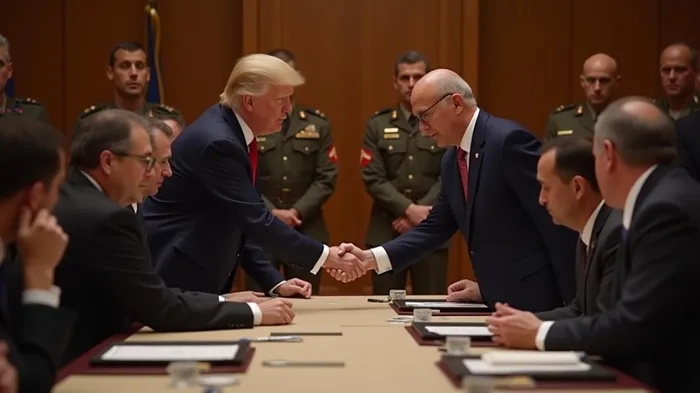
During his visit to the Gulf countries, Donald Trump facilitated significant agreements between American tech giants NVIDIANVDA-- and AMDAMD--, focusing on artificial intelligence (AI) advancements. The visit included stops in Saudi Arabia, where several high-profile deals were signed aimed at bolstering AI capabilities in the region.
One of the key agreements involved NVIDIA, which announced a deal to supply Saudi Arabia's newly established AI company, Humain, with 18,000 of its top-tier "Blackwell" AI chips. This initial shipment is part of a broader agreement that includes tens of thousands of additional chips. The deal was announced by NVIDIA CEO Jensen Huang during a high-profile investment forum in Riyadh, where he was joined by other tech industry leaders. The forum was attended by Saudi CrownCCK-- Prince Mohammed bin Salman, highlighting the strategic importance of the partnership.
The agreement is part of a larger $600 billion investment package promised by Saudi Arabia to U.S. companies during Trump's visit. This package includes significant investments in advanced technology, energy infrastructure, and defense. The deal with NVIDIA is particularly noteworthy as it involves the supply of cutting-edge AI chips, which are crucial for running complex AI models. The chips will be used to build data centers with capacities up to 500 megawatts, with plans to expand to 1.9 gigawatts by 2030.
In addition to NVIDIA, AMD also announced a significant agreement with Humain. The two companies plan to invest up to $100 billion over five years to deploy 500 megawatts of AI hardware infrastructure. This collaboration aims to help Humain implement next-generation AI cloud computing platforms. AMD's Global AI Market Senior Vice President Keith Strier emphasized that the deal goes beyond hardware procurement, focusing on a strategic partnership to advance AI capabilities.
AMD's CEO Lisa Su stated, "We are jointly building a globally significant AI platform that achieves unprecedented levels of performance, openness, and coverage." This partnership underscores the growing importance of AI in global geopolitics, with the U.S. and Gulf countries positioning themselves as leaders in this emerging field.
The broader implications of these agreements extend beyond the immediate economic benefits. The U.S. government, under the Trump administration, is reportedly considering changes to its AI chip export policies to facilitate these deals. This move is seen as a strategic shift, allowing Gulf countries to access advanced AI technology more freely. The agreements also highlight the U.S.'s willingness to share its advanced technology with key allies, potentially reshaping the global AI landscape.
Furthermore, the visit saw the announcement of a potential deal with the UAE, where the country's AI company G42 could receive over 100,000 advanced AI chips from NVIDIA. This deal, if finalized, would significantly enhance the UAE's AI capabilities and further cement the strategic partnership between the U.S. and the Gulf region. The agreements underscore the U.S.'s commitment to fostering technological advancements in the region, positioning both parties as leaders in the AI domain.

Stay ahead of the market.
Get curated U.S. market news, insights and key dates delivered to your inbox.
AInvest
PRO
AInvest
PRO



Comments
No comments yet