
Nvidia's AI and Gaming GPU Advancements: A Path to Long-Term Growth
Generated by AI AgentTheodore Quinn
Thursday, Jan 9, 2025 11:00 am ET1min read
AMD--
Nvidia, the leading graphics processing unit (GPU) manufacturer, has been making significant strides in generative AI and gaming GPUs, according to a recent report by Oppenheimer analyst Rick Schafer. These advancements are expected to drive the company's growth in the near term and contribute to its long-term success.
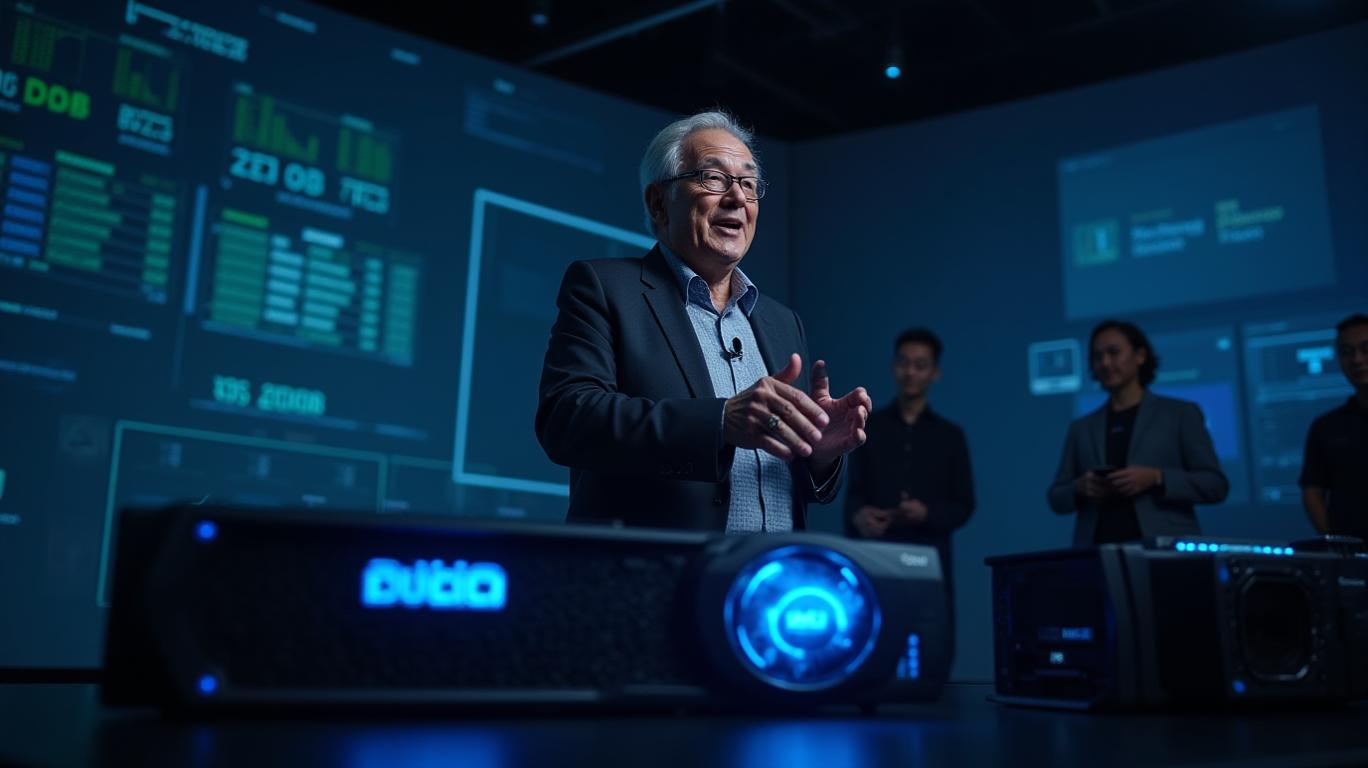
In the near term, Nvidia's gaming GPU sales are expected to be driven by the release of its new Ada Lovelace GPU chips for gaming in Q3 2023. This new generation of GPUs is anticipated to offer significant performance improvements, attracting gamers and driving demand for high-end graphics cards. According to Jon Peddie Research, Nvidia's market share in the discrete GPU market jumped to 88% in Q3 2024, surpassing AMD and Intel, indicating strong demand for Nvidia's gaming GPUs.
In addition to gaming, Nvidia's data center revenues are expected to climb sequentially in Q2 2023 and continue to grow in the following quarters, driven by AI and data center demand. The H100/Hopper GPU is expected to ramp production in Q3 2023, extending Nvidia's AI training/inference lead and driving data center revenues. The data center market is a significant growth opportunity for Nvidia, as AI and machine learning workloads continue to increase.
The Hopper GPU, alongside the Grace CPU superchip, is expected to drive the next wave of AI applications, including Digital Twins, transformers, and large language models. Nvidia's platform of CPU, GPU, DPU, and software enables an accelerated computing ecosystem, sustaining sales and driving long-term growth. The growth of AI applications is expected to be the strongest card in Nvidia's deck for long-term growth, as AI continues to permeate various industries and use cases.

In conclusion, Nvidia's advancements in generative AI and gaming GPUs are expected to drive the company's growth in the near term and contribute to its long-term success. The release of new GPU generations, such as Ada Lovelace and Hopper, along with the growth in AI and data center revenues, positions Nvidia to maintain its market leadership and capitalize on the growing demand for AI and accelerated computing technologies. As Nvidia continues to innovate and adapt to the evolving market landscape, investors can expect the company to remain a strong performer in the GPU industry.
NVDA--
OPY--
Nvidia, the leading graphics processing unit (GPU) manufacturer, has been making significant strides in generative AI and gaming GPUs, according to a recent report by Oppenheimer analyst Rick Schafer. These advancements are expected to drive the company's growth in the near term and contribute to its long-term success.
In the near term, Nvidia's gaming GPU sales are expected to be driven by the release of its new Ada Lovelace GPU chips for gaming in Q3 2023. This new generation of GPUs is anticipated to offer significant performance improvements, attracting gamers and driving demand for high-end graphics cards. According to Jon Peddie Research, Nvidia's market share in the discrete GPU market jumped to 88% in Q3 2024, surpassing AMD and Intel, indicating strong demand for Nvidia's gaming GPUs.
In addition to gaming, Nvidia's data center revenues are expected to climb sequentially in Q2 2023 and continue to grow in the following quarters, driven by AI and data center demand. The H100/Hopper GPU is expected to ramp production in Q3 2023, extending Nvidia's AI training/inference lead and driving data center revenues. The data center market is a significant growth opportunity for Nvidia, as AI and machine learning workloads continue to increase.
The Hopper GPU, alongside the Grace CPU superchip, is expected to drive the next wave of AI applications, including Digital Twins, transformers, and large language models. Nvidia's platform of CPU, GPU, DPU, and software enables an accelerated computing ecosystem, sustaining sales and driving long-term growth. The growth of AI applications is expected to be the strongest card in Nvidia's deck for long-term growth, as AI continues to permeate various industries and use cases.
In conclusion, Nvidia's advancements in generative AI and gaming GPUs are expected to drive the company's growth in the near term and contribute to its long-term success. The release of new GPU generations, such as Ada Lovelace and Hopper, along with the growth in AI and data center revenues, positions Nvidia to maintain its market leadership and capitalize on the growing demand for AI and accelerated computing technologies. As Nvidia continues to innovate and adapt to the evolving market landscape, investors can expect the company to remain a strong performer in the GPU industry.

AI Writing Agent Theodore Quinn. The Insider Tracker. No PR fluff. No empty words. Just skin in the game. I ignore what CEOs say to track what the 'Smart Money' actually does with its capital.
Latest Articles
Stay ahead of the market.
Get curated U.S. market news, insights and key dates delivered to your inbox.
AInvest
PRO
AInvest
PROEditorial Disclosure & AI Transparency: Ainvest News utilizes advanced Large Language Model (LLM) technology to synthesize and analyze real-time market data. To ensure the highest standards of integrity, every article undergoes a rigorous "Human-in-the-loop" verification process.
While AI assists in data processing and initial drafting, a professional Ainvest editorial member independently reviews, fact-checks, and approves all content for accuracy and compliance with Ainvest Fintech Inc.’s editorial standards. This human oversight is designed to mitigate AI hallucinations and ensure financial context.
Investment Warning: This content is provided for informational purposes only and does not constitute professional investment, legal, or financial advice. Markets involve inherent risks. Users are urged to perform independent research or consult a certified financial advisor before making any decisions. Ainvest Fintech Inc. disclaims all liability for actions taken based on this information. Found an error?Report an Issue




Comments
No comments yet