
NVIDIA's AI Ascendancy: Sovereign Contracts, Market Power, and the Case for Strategic Investment
The global rush to control artificial intelligence (AI) infrastructure has thrust NVIDIANVDA-- (NASDAQ: NVDA) into a position of unparalleled dominance. Sovereign AI contracts—multi-billion-dollar deals with nations seeking to build independent AI ecosystems—are fueling NVIDIA's growth and justifying its sky-high valuation. Yet, as geopolitical stakes rise and competitors lurk, investors must weigh the company's entrenched market position against looming risks. Here's why NVIDIA remains a critical play in the AI revolution—and how to position your portfolio.
Sovereign AI Contracts: The Catalyst for NVIDIA's Surge
NVIDIA's recent deals are rewriting the rules of the AI economy. The crown jewel is its partnership with Saudi Arabia's Humain, a $15–20 billion project to build an 18,000-GPU supercomputer. This venture alone could generate $3–5 billion annually, offsetting headwinds from U.S. export restrictions on China. Meanwhile, the EU's “AI Continent” plan—a €200 billion five-year initiative—has locked in NVIDIA as the go-to provider for European governments, with deals like Germany's AI cloud collaboration with Deutsche Telekom.
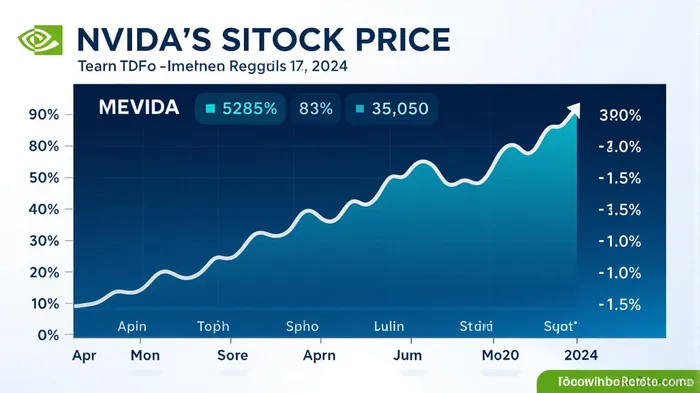
Why These Deals Matter:
Governments aren't just buying hardware—they're investing in NVIDIA's CUDA ecosystem, which powers 90% of global AI supercomputers. This software-hardware moat creates a network effect: countries adopting NVIDIA's GPUs today will deepen their reliance on its tools tomorrow, making switching costs prohibitively high. As Bank of AmericaBAC-- notes, this positions NVIDIA to capture $500 billion in AI infrastructure opportunities, with single projects like Saudi Arabia's Humain potentially generating $50 billion in lifetime revenue.
Market Entrenchment: Why NVIDIA's Lead is Unassailable
Bank of America's assertion that NVIDIA holds an “unassailable market share” isn't hyperbole. Competitors like AMDAMD-- and IntelINTC-- lack NVIDIA's decade-long lead in GPU architecture and its CUDA software ecosystem, which underpins everything from large language model training to quantum computing simulations. Even China's push for domestic alternatives—Huawei's AI chips, for instance—struggle to replicate CUDA's ecosystem.
The geopolitical angle amplifies this advantage. Nations prioritizing AI sovereignty (e.g., Saudi Arabia, EU members) are effectively subsidizing NVIDIA's dominance. As one analyst put it: “You can't build a sovereign AI stack without NVIDIA's GPUs. They're the oxygen of the industry.”
Valuation: A High Bar, but Justified by TAM
NVIDIA's P/E ratio of 85x dwarfs its five-year average of 50x, raising red flags for skeptics. But consider the $1.5 trillion Total Addressable Market (TAM) for sovereign AI. At current revenue run rates ($13.5 billion in 2023), NVIDIA is capturing less than 1% of this opportunity. Even if it secures just 10% of the TAM, its valuation would need to double to remain reasonable—a stark contrast to its current premium.
Risks: Valuation Volatility and the Shadow of Regulation
- Valuation Bubbles: Overvaluation is a clear risk. If AI adoption slows or geopolitical tensions disrupt supply chains (e.g., U.S.-China chip disputes), NVIDIA's stock could correct sharply.
- Regulatory Fragmentation: The EU's AI Act and China's data sovereignty laws could fragment markets, complicating NVIDIA's global scaling. Saudi Arabia's ALLAM LLM—a model trained to avoid sensitive geopolitical topics—hints at how national priorities may limit cross-border collaboration.
- Competitor Innovations: While CUDA is a moat, Meta's struggles with its Llama 4 “Behemoth” model highlight industry-wide challenges in scaling AI. If demand for high-end GPUs wanes, NVIDIA's pricing power could erode.
Investment Thesis: A Core Holding for the Long Game
Buy for 3–5 years, but tread carefully in the near term:
- Entry Points: A 5–10% dip from current prices (e.g., below $350) after earnings reports or geopolitical news could offer an attractive entry.
- Hold for Short-Term: High volatility and valuation mean traders should avoid chasing the stock.
- Avoid Only if AI Fails: NVIDIA's success is tied to the AI revolution itself. If governments retreat from AI infrastructure spending—or if alternative ecosystems emerge—the narrative collapses.
Conclusion: NVIDIA's Dominance is a Buy Signal
NVIDIA's sovereign AI contracts and CUDA ecosystem have cemented its role as the linchpin of global AI infrastructure. While risks like valuation and regulation loom, the $1.5T TAM ensures this is a multi-decade story. For investors with a long horizon, NVIDIA's stock—despite its high price—remains a core holding in a world where AI is the new oil.
Final Call: *Buy on dips, hold for the AI century.

Delivering real-time insights and analysis on emerging financial trends and market movements.
Latest Articles
Stay ahead of the market.
Get curated U.S. market news, insights and key dates delivered to your inbox.
AInvest
PRO
AInvest
PRO



Comments
No comments yet