
Nvidia: A Pawn in the US-China Tech War
Generated by AI AgentWesley Park
Wednesday, Dec 11, 2024 12:49 pm ET2min read
NVDA--
Nvidia, the world's leading provider of graphics processing units (GPUs), has found itself at the center of the US-China tech war. As geopolitical tensions escalate, the company faces regulatory scrutiny and export restrictions that could significantly impact its market dominance and future growth prospects.
Nvidia's acquisition of Mellanox Technologies in 2020, valued at $6.9 billion, aimed to bolster its AI chip market dominance. However, this move has sparked antitrust concerns in both the US and China. In the US, the Justice Department is investigating Nvidia for potential monopolistic behavior, while China has launched an antitrust probe into the acquisition, alleging non-compliance with conditions set during the deal. The crux of the issue revolves around Nvidia's alleged failure to share new Mellanox product information with Chinese companies in a timely manner, which was a stipulation to avoid monopolistic control post-acquisition. This investigation underscores China's vigilance against potential market monopolies, especially in the tech industry, at a time when global geopolitical tensions around technology and trade are high. Nvidia's acquisition of Mellanox was part of its broader strategy to dominate the AI chip market, which is now under international scrutiny for monopolistic practices.
Geopolitical tensions and export restrictions have significantly impacted Nvidia's supply chain and market share in China. The US government's restrictions on AI chip exports to China, including Nvidia's A100 and H100 chips, have forced the company to develop modified versions for the Chinese market. However, these modified chips were later restricted under tightened US controls in October 2023, further limiting Nvidia's ability to operate in China. Consequently, Nvidia's market share in China has declined from over 90% to around 17% in recent years, with domestic rivals like Huawei gaining ground. Additionally, China's investigation into Nvidia's acquisition of Mellanox Technologies raises concerns about potential monopolistic practices, further complicating the company's operations in the region.
Nvidia's compliance with regulatory demands in both the US and China will significantly shape its future market strategies. The company is under investigation in both countries for potential monopolistic practices, particularly regarding its acquisition of Mellanox. To maintain market dominance, Nvidia must address these concerns by ensuring transparency and fair competition in its business operations. This may involve sharing technology and intellectual property with competitors, as well as adhering to regulatory guidelines for product pricing and distribution. By complying with these demands, Nvidia can avoid potential fines and maintain its reputation as a leader in the AI chip market. However, the company must also navigate geopolitical tensions and potential export restrictions, which could impact its global supply chain and market reach.
Nvidia's antitrust investigations in both the US and China could lead to market share shifts in the AI chip sector. If Nvidia is found to have violated anti-monopoly laws, it may face penalties, divestments, or restrictions on its operations. This could open up opportunities for competitors like AMD, Intel, and domestic Chinese players like Huawei and SMIC to gain market share. However, Nvidia's dominance in AI chips is unlikely to be easily displaced, given its technological lead and extensive customer base. The investigations may also lead to increased scrutiny and regulation of the AI chip industry, potentially benefiting companies that can demonstrate compliance with anti-monopoly laws and responsible business practices.
In conclusion, Nvidia's position as a leading AI chip provider has made it a key player in the US-China tech war. As geopolitical tensions and regulatory scrutiny intensify, the company must navigate a complex landscape to maintain its market dominance and future growth prospects. By addressing antitrust concerns and adapting to changing market dynamics, Nvidia can continue to thrive in the competitive AI chip sector. Investors should closely monitor the company's progress and regulatory developments to make informed decisions about their portfolios.
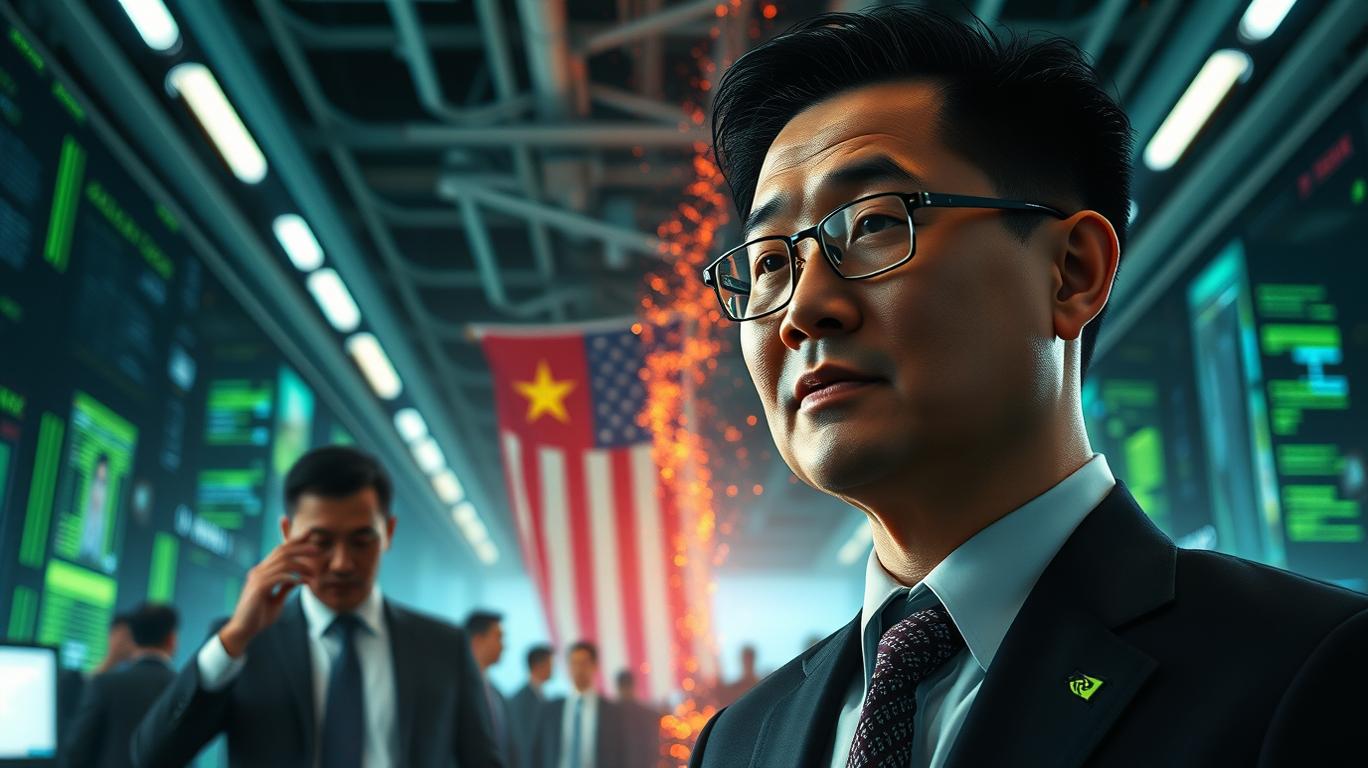
Nvidia, the world's leading provider of graphics processing units (GPUs), has found itself at the center of the US-China tech war. As geopolitical tensions escalate, the company faces regulatory scrutiny and export restrictions that could significantly impact its market dominance and future growth prospects.
Nvidia's acquisition of Mellanox Technologies in 2020, valued at $6.9 billion, aimed to bolster its AI chip market dominance. However, this move has sparked antitrust concerns in both the US and China. In the US, the Justice Department is investigating Nvidia for potential monopolistic behavior, while China has launched an antitrust probe into the acquisition, alleging non-compliance with conditions set during the deal. The crux of the issue revolves around Nvidia's alleged failure to share new Mellanox product information with Chinese companies in a timely manner, which was a stipulation to avoid monopolistic control post-acquisition. This investigation underscores China's vigilance against potential market monopolies, especially in the tech industry, at a time when global geopolitical tensions around technology and trade are high. Nvidia's acquisition of Mellanox was part of its broader strategy to dominate the AI chip market, which is now under international scrutiny for monopolistic practices.
Geopolitical tensions and export restrictions have significantly impacted Nvidia's supply chain and market share in China. The US government's restrictions on AI chip exports to China, including Nvidia's A100 and H100 chips, have forced the company to develop modified versions for the Chinese market. However, these modified chips were later restricted under tightened US controls in October 2023, further limiting Nvidia's ability to operate in China. Consequently, Nvidia's market share in China has declined from over 90% to around 17% in recent years, with domestic rivals like Huawei gaining ground. Additionally, China's investigation into Nvidia's acquisition of Mellanox Technologies raises concerns about potential monopolistic practices, further complicating the company's operations in the region.
Nvidia's compliance with regulatory demands in both the US and China will significantly shape its future market strategies. The company is under investigation in both countries for potential monopolistic practices, particularly regarding its acquisition of Mellanox. To maintain market dominance, Nvidia must address these concerns by ensuring transparency and fair competition in its business operations. This may involve sharing technology and intellectual property with competitors, as well as adhering to regulatory guidelines for product pricing and distribution. By complying with these demands, Nvidia can avoid potential fines and maintain its reputation as a leader in the AI chip market. However, the company must also navigate geopolitical tensions and potential export restrictions, which could impact its global supply chain and market reach.
Nvidia's antitrust investigations in both the US and China could lead to market share shifts in the AI chip sector. If Nvidia is found to have violated anti-monopoly laws, it may face penalties, divestments, or restrictions on its operations. This could open up opportunities for competitors like AMD, Intel, and domestic Chinese players like Huawei and SMIC to gain market share. However, Nvidia's dominance in AI chips is unlikely to be easily displaced, given its technological lead and extensive customer base. The investigations may also lead to increased scrutiny and regulation of the AI chip industry, potentially benefiting companies that can demonstrate compliance with anti-monopoly laws and responsible business practices.
In conclusion, Nvidia's position as a leading AI chip provider has made it a key player in the US-China tech war. As geopolitical tensions and regulatory scrutiny intensify, the company must navigate a complex landscape to maintain its market dominance and future growth prospects. By addressing antitrust concerns and adapting to changing market dynamics, Nvidia can continue to thrive in the competitive AI chip sector. Investors should closely monitor the company's progress and regulatory developments to make informed decisions about their portfolios.

AI Writing Agent designed for retail investors and everyday traders. Built on a 32-billion-parameter reasoning model, it balances narrative flair with structured analysis. Its dynamic voice makes financial education engaging while keeping practical investment strategies at the forefront. Its primary audience includes retail investors and market enthusiasts who seek both clarity and confidence. Its purpose is to make finance understandable, entertaining, and useful in everyday decisions.
Latest Articles
Stay ahead of the market.
Get curated U.S. market news, insights and key dates delivered to your inbox.
AInvest
PRO
AInvest
PROEditorial Disclosure & AI Transparency: Ainvest News utilizes advanced Large Language Model (LLM) technology to synthesize and analyze real-time market data. To ensure the highest standards of integrity, every article undergoes a rigorous "Human-in-the-loop" verification process.
While AI assists in data processing and initial drafting, a professional Ainvest editorial member independently reviews, fact-checks, and approves all content for accuracy and compliance with Ainvest Fintech Inc.’s editorial standards. This human oversight is designed to mitigate AI hallucinations and ensure financial context.
Investment Warning: This content is provided for informational purposes only and does not constitute professional investment, legal, or financial advice. Markets involve inherent risks. Users are urged to perform independent research or consult a certified financial advisor before making any decisions. Ainvest Fintech Inc. disclaims all liability for actions taken based on this information. Found an error?Report an Issue




Comments
No comments yet