
Nvidia's $2 Billion Synopsys Stake: A Strategic Move in AI Chip Software Dominance


 Aime Summary
Strategic Rationale: Embedding AI into the Semiconductor Workflow
The partnership's core objective is to accelerate the adoption of AI in engineering and design processes. Synopsys' , which are critical for designing complex chips, will now leverage Nvidia's CUDA-X libraries to enhance computational efficiency. This integration allows engineers to use AI-powered assistance during chip design, effectively making Nvidia's AI capabilities a cornerstone of next-generation semiconductor development according to analysis. Additionally, the collaboration extends to and digital twin technologies via NVIDIA Omniverse, enabling real-time simulation and verification of complex systems as reported.
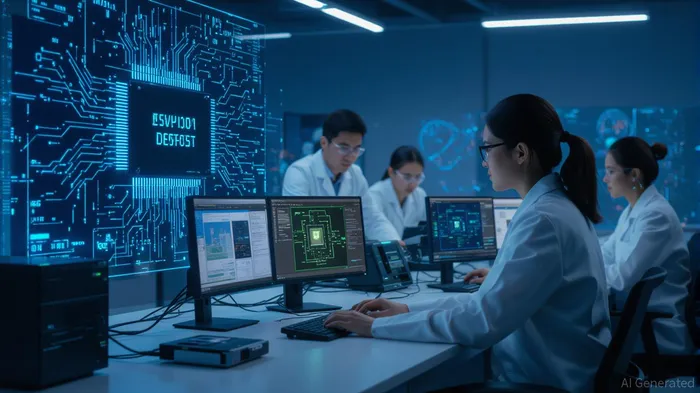
Nvidia's rationale is clear: as AI systems grow in complexity, the need for accelerated design workflows and precision in simulation becomes paramount. By partnering with SynopsysSNPS--, Nvidia positions itself to address these challenges while expanding its reach into industries such as aerospace, automotive, and industrial manufacturing according to industry analysis. The non-exclusive nature of the partnership also allows both companies to maintain flexibility in engaging with other industry players, mitigating risks of over-reliance on a single ecosystem as stated in the announcement.
Valuation Implications: A Win for Synopsys, A Calculated Risk for Nvidia
The immediate market reaction underscored the partnership's significance. , reflecting investor confidence in its EDA leadership and growth potential as reported. , , driven by its AI-powered engineering solutions and strategic alliances according to market intelligence. , as calculated by financial analysts.
For Nvidia, the valuation story is more nuanced. While its shares dipped slightly post-announcement, the company's long-term prospects remain robust. , . as projected by market analysts. However, as noted in investment research.
Broader Industry Trends: The AI Semiconductor Supercycle
The Nvidia-Synopsys partnership is emblematic of a broader industry shift. The AI chip market, , is driving a semiconductor supercycle characterized by rapid innovation and consolidation according to industry reports. like TSMC's CoWoS and High Bandwidth Memory (HBM) are becoming critical components of AI infrastructure, as detailed in market analysis.
This supercycle is also reshaping valuation dynamics. , as observed in financial data. Business model innovation, patent value, and R&D efficiency are now key determinants of valuation, according to research findings.
Competitive Landscape and Risks
While Nvidia's dominance in is unchallenged, competitors like AMD and Intel are aggressively expanding their ecosystems. AMD's acquisitions of ZT Systems, Silo AI, and Untether AI aim to create a to rival Nvidia as reported in industry analysis. Intel, meanwhile, . to bolster its AI-driven semiconductor capabilities as stated in strategic reports.
Geopolitical tensions further complicate the outlook. U.S. export restrictions on AI chips to China and retaliatory measures from Beijing pose structural risks to global supply chains according to industry analysis. For Synopsys, which derives a portion of its revenue from Chinese markets, these tensions could temper growth as noted in market intelligence.
Conclusion: A Strategic Bet on the Future of AI
. By embedding its AI and GPU technologies into Synopsys' EDA tools, Nvidia ensures its influence spans from chip design to intelligent system development. While the partnership carries risks, including valuation pressures and geopolitical headwinds, the long-term growth potential for both companies is substantial. As the AI semiconductor supercycle unfolds, such alliances will likely define the next era of technological innovation and market leadership.

Delivering real-time insights and analysis on emerging financial trends and market movements.
Latest Articles
Stay ahead of the market.
Get curated U.S. market news, insights and key dates delivered to your inbox.




Comments
No comments yet