
NV Energy's Grid Modernization: A Strategic Catalyst for Decarbonization and Investor Returns


 Aime Summary
In the evolving landscape of energy transition, utilities are no longer just providers of electricity—they are architects of resilience, equity, and long-term value. NV Energy, a cornerstone of Nevada's power infrastructure, has emerged as a model for how strategic infrastructure investments can align with decarbonization goals while delivering stable returns for investors. With a $3.2 billion grid modernization program announced for 2025, the company is positioning itself at the intersection of climate action, regulatory innovation, and investor confidence.
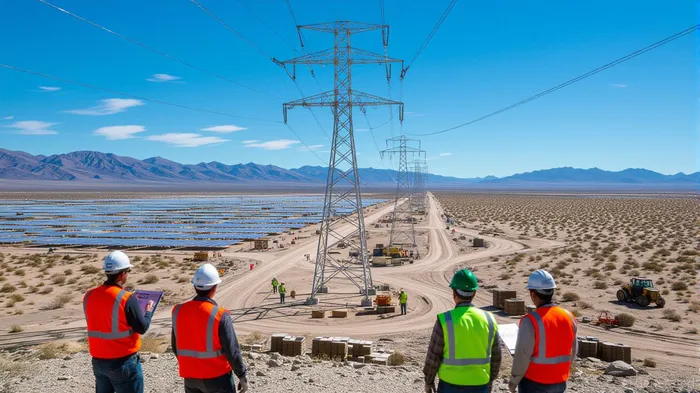
Strategic Infrastructure: Building a Resilient, Renewable-Ready Grid
At the heart of NV Energy's strategy is the Greenlink Nevada transmission line, a 600-mile project designed to bridge the gap between renewable-rich regions and high-demand urban hubs. This initiative is projected to unlock $1.2 billion in economic benefits by 2030 by reducing transmission congestion and enabling the integration of 12,000 MW of new solar and storage capacity. The project's alignment with Nevada's 2050 net-zero mandate is not accidental—it is a calculated move to future-proof the grid against climate disruptions while meeting the state's renewable energy targets.
NV Energy's modernization efforts also include dynamic line rating (DLR) technology and digital twin systems, which optimize transmission capacity and reduce costs by 15–20%. These innovations, paired with federal funding from the DOE's Grid Modernization Initiative ($38 million) and Grid-Enhancing Technologies (GETs) grants ($2.1 million), underscore the utility's ability to leverage public-private partnerships. The result? A grid that is not only more resilient to wildfires and heatwaves but also more efficient in managing the intermittency of renewables.
Regulatory Alignment and Policy Tailwinds
NV Energy's success hinges on its alignment with both federal and state policies. The Inflation Reduction Act (IRA) and Nevada's Senate Bill 448 (net-zero by 2050) provide a regulatory framework that incentivizes decarbonization while ensuring cost recovery for infrastructure upgrades. The company's 2025 Grid Resilience Formula Grant Program, funded under the Bipartisan Infrastructure Law, further demonstrates its ability to navigate complex regulatory environments.
This alignment is critical for investor confidence. Utilities like NV Energy benefit from regulated returns on equity (ROE), which shield them from the volatility of unregulated markets. As the EIA notes, the average utility ROE in 2024 was 9.8%, a stable benchmark for NV Energy's projected 10.2% ROE by 2026.
Clean Energy Equity: A Win for Communities and Investors
Beyond infrastructure, NV Energy's Expanded Solar Access Program—which brings solar to 23,700 low-income households—highlights its commitment to social equity. This initiative, coupled with a $100 million investment in EV infrastructure since 2021, aligns with Assembly Bill 262 (zero-emission public vehicles by 2025) and strengthens the utility's social license to operate.
For investors, this dual focus on equity and efficiency is a differentiator. Utilities that integrate social value into their business models often see lower regulatory risk and higher customer retention. NV Energy's credit metrics reflect this: its probability of default has fallen from 0.821% in 2022 to 0.454% by 2025, supporting its A2 rating from S&P.
Risks and Mitigants: Navigating the Transition
No investment is without risk. NV Energy faces challenges such as rising solar and battery costs and a pending PUCN investigation into a $17 million overcharging scandal. However, its strategic use of federal funding, diversified project pipeline, and alignment with IRA tax credits mitigate these risks. The company's $3.2 billion program is structured to absorb cost overruns while maintaining investor returns, a testament to its long-term planning.
The Case for Utility Equities in the Energy Transition
As the energy sector shifts toward decarbonization, utility equities like NV Energy offer a unique value proposition: inflation-protected cash flows from regulated infrastructure, coupled with growth from renewable integration. Unlike tech-driven renewables companies, utilities benefit from monopoly-like pricing power and predictable demand, making them a hedge against macroeconomic volatility.
For long-term investors, NV Energy's grid modernization program represents more than a capital expenditure—it is a blueprint for how infrastructure can drive both environmental and financial returns. With a clear path to net-zero, regulatory tailwinds, and a diversified portfolio of projects, the company is well-positioned to deliver 8–10% annualized returns through 2030.
Conclusion: A Strategic Bet on the Future
NV Energy's $3.2 billion grid modernization effort—anchored by the Greenlink transmission line and supported by federal and state policies—exemplifies the strategic infrastructure investments that will define the energy transition. For investors seeking stability in an era of climate and economic uncertainty, utilities like NV Energy offer a compelling case: a sector where decarbonization and profitability are not mutually exclusive, but mutually reinforcing.
In the end, the energy transition is not just about technology—it's about infrastructure. And in that arena, NV Energy is leading the way.

Delivering real-time insights and analysis on emerging financial trends and market movements.
Latest Articles
Stay ahead of the market.
Get curated U.S. market news, insights and key dates delivered to your inbox.






Comments
No comments yet