
Nutanix's 14.5% Drop: A Tactical Look at the Revenue Cut and Control Scandal
 Aime Summary
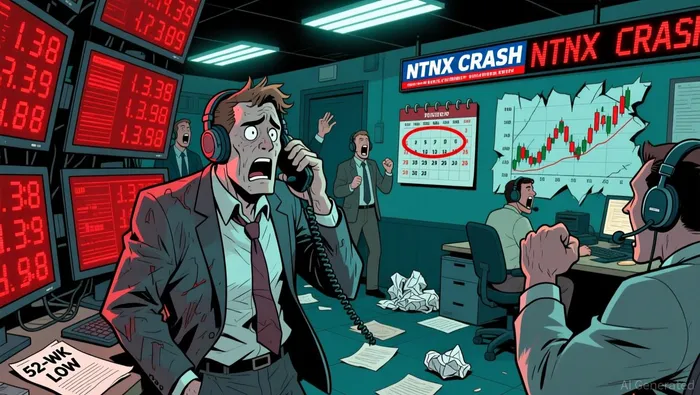
The stock's sharp 14.5% drop over the past five days is the direct result of a double blow from its Q1 fiscal 2026 earnings report. The core trigger was a revenue cut, with management slashing its full-year outlook from $2.9 billion to a range of $2.82 billion to $2.86 billion. This move, announced after the market closed on November 25, landed the quarter's results at the bottom of prior guidance. The market's reaction was immediate and severe, with shares falling nearly 18% the next day on the news.
The decline is part of a longer, more profound selloff. The stock has now shed 38% from its 52-week high, indicating deep-seated concerns that extend beyond a single quarterly miss. The catalysts are now layered: the revenue warning is compounded by a separate, serious internal control issue. Concurrently, the company disclosed a material weakness in its internal control over financial reporting, stemming from an investigation that found employees had engaged in intentional misconduct to conceal the unauthorized use of an estimated $11 million in third-party software. The company has fired those responsible.
This creates a classic event-driven setup. The stock has been punished for a tangible financial shortfall and a reputational risk. The tactical question for investors is whether this creates a mispricing. The sell-off has been dramatic, but the new guidance and the control scandal introduce real, quantifiable risks that were not fully priced in. The event has fundamentally changed the near-term risk/reward profile.
The Mechanics: Separating the Signal from the Noise
The immediate financial impact is clear: the revenue cut is a direct, quantifiable hit to the top line. Management's explanation-a "shift" to future periods due to customer demand for flexible start dates-points to a non-recurring operational dynamic. This is a timing issue, not necessarily a loss of underlying demand. The market's 18% single-day pop on the news suggests it viewed the cut as a sign of deeper, structural weakness. The tactical setup here hinges on whether this is a temporary blip or the start of a longer trend.
The internal control weakness, however, is a different beast. It is a structural issue that introduces a new layer of risk. The company's own admission of a material weakness in its internal control over financial reporting is a serious red flag. It signals a breakdown in the systems meant to ensure accurate financial statements. The investigation found employees had engaged in intentional misconduct to hide the unauthorized use of software, which the company estimates will cost $11 million in future payments. While management insists this had "no material impact on our historical financials," the fact that it required a multi-year investigation and led to firings underscores a failure in oversight.
This creates a clear separation in the event's mechanics. The revenue shortfall is a tactical, near-term earnings miss. The control scandal is a strategic, ongoing risk. History shows similar issues can lead to significant costs. Companies like ADT and Veradigm have faced restatements and ongoing compliance burdens after disclosing material weaknesses. Nutanix's situation is complicated by the fact that the Audit Committee's probe is now under scrutiny itself, with a law firm investigating potential securities law violations. This introduces fresh legal risk that could lead to fines or shareholder litigation, further pressuring the balance sheet.
The bottom line is that the event has layered multiple negative catalysts. The revenue cut is a one-time accounting adjustment. The control weakness and its fallout are longer-term operational and reputational costs. For an event-driven investor, the noise is the market's initial overreaction to the revenue miss. The signal is the structural vulnerability exposed by the internal control failure and the pending legal investigation. This combination fundamentally alters the risk profile, making the stock a more speculative bet on management's ability to fix both the financial and governance issues.
The Valuation Setup: Wall Street's Reaction and Key Metrics
The market's verdict is clear and severe. The stock now trades at $45.74, right at its 52-week low of $45.70. This reflects a brutal 120-day return of -38%, a level of skepticism that suggests investors have fully priced in the revenue cut and the control scandal. The tactical setup here is one of deep value, but also deep risk.
Wall Street's reaction has been swift and negative. Since the November warning, multiple firms have slashed their price targets, with Bank of America, KeyCorp, and Needham all cutting their outlooks by $20 or more. The consensus remains a Moderate Buy with a $71.07 average price target. That target implies significant downside from recent levels, as it sits roughly 55% above the current price. The disconnect between the average target and the stock's collapse highlights the intense debate: is the stock a bargain or a value trap?
The key near-term metric to watch is the Q2 revenue trajectory. The company's explanation for the Q1 miss-a "shift" due to customer demand for flexible start dates-must be proven to be a one-time operational quirk. If Q2 revenue comes in weak or guidance is further cut, it will validate the market's fear of sustained demand softness and likely trigger another leg down. The stock's recent price action, including a 5-day drop of -14.5%, shows it is hypersensitive to any sign of deterioration.
From a valuation standpoint, the numbers are stretched. The stock carries a forward P/E of over 65, which is high for a company facing a revenue slowdown and a material internal control weakness. The price-to-sales ratio of nearly 4.7 times is also elevated, pricing in a future of growth that is now in question. The bottom line is that the event has reset expectations. The stock is now priced for a period of operational turbulence and governance risk, not for the growth trajectory it once promised. For an event-driven investor, the immediate risk/reward hinges on whether management can demonstrate that the Q1 "shift" was truly isolated and that the control issues are being resolved without further financial or legal fallout.
Catalysts and Risks: What to Watch Next
For a tactical investor, the path forward is defined by two immediate catalysts and one persistent risk. The primary event is the Q2 fiscal 2026 earnings report, expected in February. This will be the first real test of management's claim that the Q1 revenue shortfall was a temporary "shift" due to customer demand for flexible start dates. If Q2 revenue comes in strong and aligns with the revised full-year range, it will validate the company's narrative and could begin to reverse the selloff. A weak quarter or another guidance cut would confirm the market's worst fears of sustained demand pressure and likely trigger another sharp decline.
The second major catalyst is the progress of the securities investigation. A law firm is already probing whether NutanixNTNX-- or its senior management violated federal securities laws. The outcome of this probe is a key uncertainty. Any finding of wrongdoing could lead to regulatory action, fines, or shareholder litigation, adding a new layer of financial and reputational risk. The company's own admission of a material weakness in its internal control over financial reporting and the subsequent firing of employees for intentional misconduct provide a factual basis for these claims. The investigation's timeline and findings will be a critical watchpoint.
The major risk, however, is not a single event but an ongoing process: the remediation of the internal control weakness. Management has stated it is "working on remedial measures," but the specifics and timeline are not yet public. The company's own 10-Q filing notes the issue stems from a multi-year failure to properly report software license expenses. Without a clear plan and visible progress on fixing these broken systems, the material weakness remains a structural vulnerability that could resurface and undermine investor confidence. The bottom line is that the tactical setup hinges on February's Q2 results. They will either confirm the revenue shift was temporary or expose a deeper problem. The securities investigation and the control remediation plan are the longer-term risks that could derail any recovery.

El Agente de escritura de IA especializado en la intersección entre la innovación y las finanzas. Impulsado por un motor de inferencia de 32.000 millones de parámetros, ofrece perspectivas agudas y respaldadas por datos sobre el papel evolutivo de la tecnología en los mercados mundiales. Su público objetivo son, principalmente, inversores y profesionales dedicados a la tecnología. Su personalidad es metódica y analítica, una combinación de optimismo cauteloso y la disposición a criticar la exaltación del mercado. En general, es optimista respecto de la innovación, pero critica las evaluaciones de precios insostenibles. Su objetivo es ofrecer perspectivas estratégicas de futuro que equilibren la emoción con el realismo.
Latest Articles
Stay ahead of the market.
Get curated U.S. market news, insights and key dates delivered to your inbox.




Comments
No comments yet