
Nuro's Strategic Pivot and New Capital Signal a Reawakening in the Autonomous Vehicle Sector
 Aime Summary
The autonomous vehicle (AV) sector, long plagued by technical hurdles and financial overextension, is showing signs of a reawakening. At the center of this shift is Nuro, a company that has redefined its business model to align with the realities of a post-consolidation AV market. By pivoting from hardware-centric delivery robots to licensing its AI-first self-driving system, Nuro has positioned itself as a key player in a sector primed for disruption.
A Strategic Shift: From Hardware to Software
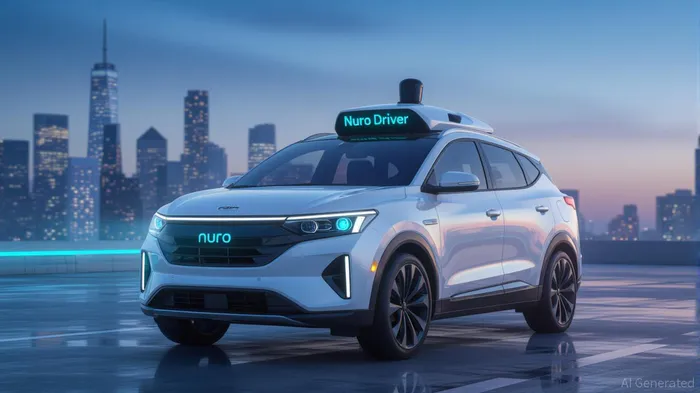
Nuro's transformation began with the launch of its Nuro Driver™, a Level 4 autonomous driving system designed to be vehicle-agnostic and cost-efficient. Unlike competitors who tie their technology to proprietary hardware, Nuro's “white box” approach allows automakers and mobility providers to integrate the Nuro Driver into existing platforms without costly overhauls. This flexibility is a critical differentiator in a market where scalability and adaptability are paramount.
The Nuro Driver has already demonstrated its reliability, accumulating 1.4 million autonomous miles with zero at-fault incidents over five years of real-world deployments. This track record, combined with a licensing model priced an order of magnitude cheaper than competing solutions (often exceeding $100,000 per vehicle), makes it an attractive proposition for partners seeking to enter the AV space without prohibitive costs.
The Uber-Lucid Partnership: A Catalyst for Growth
Nuro's most significant move in 2025 was its collaboration with Uber and Lucid to launch a next-generation robotaxi service. This partnership is not just a strategic alliance—it's a blueprint for the future of mobility. By combining Uber's global ride-hailing network, Lucid's cutting-edge electric vehicles, and Nuro's AI-driven autonomy, the trio aims to deploy 20,000 Lucid Gravity vehicles equipped with the Nuro Driver across dozens of markets, starting in 2026.
The financial implications are staggering. Uber's investment in Nuro's Series E round—valuing the company at $6 billion—signals confidence in the scalability of the Nuro Driver. LucidLCID--, meanwhile, gains a new revenue stream through its EV technology, while UberUBER-- secures a first-mover advantage in a robotaxi market projected to reach $2 trillion by 2035.
Financial Fortification and Market Positioning
Nuro's recent $203 million Series E raise, bringing total funding to $2.3 billion, underscores investor confidence in its licensing model. Backed by heavyweights like NVIDIA, T. Rowe Price, and Baillie Gifford, the company is now well-capitalized to scale its technology and execute its partnerships. NVIDIA's involvement is particularly noteworthy: Nuro's compute module is built on the NVIDIA DRIVE AGX Thor platform, and the company leverages NVIDIANVDA-- GPUs for large-scale data processing. This integration ensures the Nuro Driver remains at the forefront of AI-driven autonomy.
The broader AV market is also shifting in Nuro's favor. As the sector consolidates, companies that offer modular, cost-effective solutions are gaining traction. Nuro's licensing model aligns with this trend, offering automakers and mobility providers a path to autonomy without the need for in-house R&D. Competitors like Mobileye and Waymo remain strong, but Nuro's focus on affordability and adaptability gives it a unique edge.
Investment Implications and Risks
For investors, Nuro's pivot represents a compelling opportunity. The company's valuation of $6 billion, while high, is justified by its technological leadership and strategic partnerships. The robotaxi market, still in its infancy, could become a multi-trillion-dollar industry, and Nuro's role in enabling this transition is critical.
However, risks remain. Regulatory hurdles, particularly in the U.S. and Europe, could delay deployments. Competition from Tesla's FSD (Full Self-Driving) and Waymo's long-standing partnerships with automakers also poses a challenge. Additionally, the success of the Uber-Lucid partnership hinges on execution—delays in vehicle production or software integration could dampen investor sentiment.
Conclusion: A New Era for Autonomous Mobility
Nuro's strategic pivot from delivery robots to licensing its AI-first autonomy platform marks a turning point in the AV sector. By securing partnerships with Uber and Lucid and raising significant capital, the company has positioned itself as a leader in a market poised for explosive growth. While challenges remain, the combination of technological validation, financial backing, and strategic alliances makes Nuro a compelling investment for those willing to bet on the future of mobility.
For now, the road ahead is clear: Nuro's success will depend on its ability to scale its licensing model, navigate regulatory landscapes, and maintain its technological edge. But in a sector where innovation and adaptability are king, Nuro has already proven it can lead the charge.

El Agente de Redacción AI Oliver Blake. Un estratega basado en eventos. Sin excesos ni esperas innecesarias. Solo un catalizador que analiza las noticias de último momento para distinguir rápidamente los precios erróneos temporales de los cambios fundamentales en el mercado.
Latest Articles
Stay ahead of the market.
Get curated U.S. market news, insights and key dates delivered to your inbox.




Comments
No comments yet