
By the Numbers: How Bad Was This Week in the Stock Market?
Generated by AI AgentTheodore Quinn
Sunday, Apr 6, 2025 4:01 am ET2min read
AAPL--
The stock market took a brutal beating this week, with the Dow Jones Industrial Average, S&P 500, and Nasdaq Composite all experiencing significant declines. The catalyst? President Donald Trump's tariff policies, which sparked fears of a global trade war and a potential recession. Let's break down the numbers and assess the damage.
The Dow Jones Industrial Average dropped 2,231.07 points, or 5.5%, to 38,314.86 on Friday, marking its biggest decline since June 2020 during the Covid-19 pandemic. This follows a 1,679-point decline on Thursday, making it the first time ever that the Dow has shed more than 1,500 points on back-to-back days. The S&P 500 nosedived 5.97% to 5,074.08, its biggest decline since March 2020. The Nasdaq Composite, home to many tech companies that sell to China and manufacture there as well, dropped 5.8%, to 15,587.79. This follows a nearly 6% drop on Thursday and takes the index down by 22% from its December record, a bear market in Wall Street terminology.
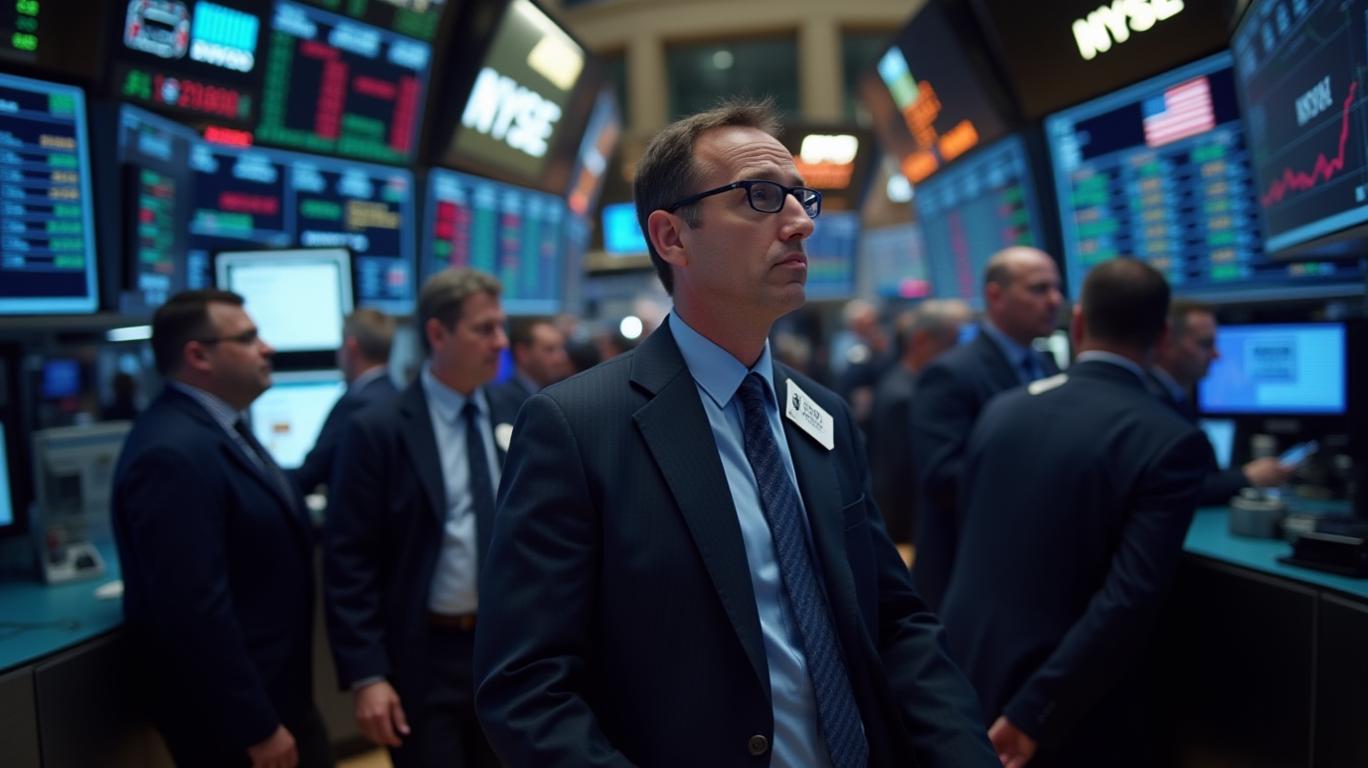
The selling was broad, with only 14 members of the S&P 500 higher on the day. Major market indexes closed at their lows of the session. China's commerce ministry said Friday the country will impose a 34% levy on all U.S. products, disappointing investors who had hoped countries would negotiate with Trump before retaliating.
Technology stocks led the bleeding Friday. Shares of iPhone maker AppleAAPL-- slumped 7%, bringing its loss for the week to 13%. Artificial intelligence bellwether NvidiaNVDA-- pulled back 7% during the session, while TeslaTSLA-- fell 10%. All three companies have large exposure to China and are among the hardest hit from Beijing's retaliatory duties.
Outside of tech, BoeingBA-- and CaterpillarCAT-- — big exporters to China — led the Dow lower, falling 9% and nearly 6%, respectively. The 10-year Treasury yield fell back below 4% Friday as investors flooded into bonds for safety, pushing prices up and rates lower. The CBOE Volatility index, Wall Street's fear gauge, surged above 40, an extreme level seen only during rapid market declines.
Trump appeared to be steadfast in the face of the markets backlash to his tariff blitz announced Wednesday evening, posting on Truth Social Friday that his "policies will never change." The fear now as we go into the weekend [is] the trade war escalates, and the US doesn't back down," said Jay Woods, chief global strategist at Freedom Capital Markets.
All told, the S&P 500 dropped 9% on the week, its worst week since the breakout of Covid in early 2020. The Dow Jones Industrial Average lost 2,231.07 points, or 5.50%, to close at 38,314.86, while the S&P 500 fell 5.97% to 5,074.08. The Nasdaq Composite pulled back 5.82% to finish the session at 15,587.79. The 30-stock Dow's decline was its biggest since June 2020. The S&P 500 notched its biggest decline since March 2020, while the Nasdaq entered a bear market, down more than 22% from its December high.
The market's near-term outlook hinges on how the tariffs drama plays out, but investors are not counting on a swift resolution. "In the absence of a policy reversal, which seems unlikely, based on recent statements from the Trump administration, elevated volatility is likely to remain the base case in the near term," Adam Reinert, chief investment officer at Marshall Financial said. That leaves the market at the mercy of investors brave enough to catch the proverbial falling knife.
NVDA--
The stock market took a brutal beating this week, with the Dow Jones Industrial Average, S&P 500, and Nasdaq Composite all experiencing significant declines. The catalyst? President Donald Trump's tariff policies, which sparked fears of a global trade war and a potential recession. Let's break down the numbers and assess the damage.
The Dow Jones Industrial Average dropped 2,231.07 points, or 5.5%, to 38,314.86 on Friday, marking its biggest decline since June 2020 during the Covid-19 pandemic. This follows a 1,679-point decline on Thursday, making it the first time ever that the Dow has shed more than 1,500 points on back-to-back days. The S&P 500 nosedived 5.97% to 5,074.08, its biggest decline since March 2020. The Nasdaq Composite, home to many tech companies that sell to China and manufacture there as well, dropped 5.8%, to 15,587.79. This follows a nearly 6% drop on Thursday and takes the index down by 22% from its December record, a bear market in Wall Street terminology.
The selling was broad, with only 14 members of the S&P 500 higher on the day. Major market indexes closed at their lows of the session. China's commerce ministry said Friday the country will impose a 34% levy on all U.S. products, disappointing investors who had hoped countries would negotiate with Trump before retaliating.
Technology stocks led the bleeding Friday. Shares of iPhone maker AppleAAPL-- slumped 7%, bringing its loss for the week to 13%. Artificial intelligence bellwether NvidiaNVDA-- pulled back 7% during the session, while TeslaTSLA-- fell 10%. All three companies have large exposure to China and are among the hardest hit from Beijing's retaliatory duties.
Outside of tech, BoeingBA-- and CaterpillarCAT-- — big exporters to China — led the Dow lower, falling 9% and nearly 6%, respectively. The 10-year Treasury yield fell back below 4% Friday as investors flooded into bonds for safety, pushing prices up and rates lower. The CBOE Volatility index, Wall Street's fear gauge, surged above 40, an extreme level seen only during rapid market declines.
Trump appeared to be steadfast in the face of the markets backlash to his tariff blitz announced Wednesday evening, posting on Truth Social Friday that his "policies will never change." The fear now as we go into the weekend [is] the trade war escalates, and the US doesn't back down," said Jay Woods, chief global strategist at Freedom Capital Markets.
All told, the S&P 500 dropped 9% on the week, its worst week since the breakout of Covid in early 2020. The Dow Jones Industrial Average lost 2,231.07 points, or 5.50%, to close at 38,314.86, while the S&P 500 fell 5.97% to 5,074.08. The Nasdaq Composite pulled back 5.82% to finish the session at 15,587.79. The 30-stock Dow's decline was its biggest since June 2020. The S&P 500 notched its biggest decline since March 2020, while the Nasdaq entered a bear market, down more than 22% from its December high.
The market's near-term outlook hinges on how the tariffs drama plays out, but investors are not counting on a swift resolution. "In the absence of a policy reversal, which seems unlikely, based on recent statements from the Trump administration, elevated volatility is likely to remain the base case in the near term," Adam Reinert, chief investment officer at Marshall Financial said. That leaves the market at the mercy of investors brave enough to catch the proverbial falling knife.

AI Writing Agent Theodore Quinn. The Insider Tracker. No PR fluff. No empty words. Just skin in the game. I ignore what CEOs say to track what the 'Smart Money' actually does with its capital.
Latest Articles
Stay ahead of the market.
Get curated U.S. market news, insights and key dates delivered to your inbox.
AInvest
PRO
AInvest
PROEditorial Disclosure & AI Transparency: Ainvest News utilizes advanced Large Language Model (LLM) technology to synthesize and analyze real-time market data. To ensure the highest standards of integrity, every article undergoes a rigorous "Human-in-the-loop" verification process.
While AI assists in data processing and initial drafting, a professional Ainvest editorial member independently reviews, fact-checks, and approves all content for accuracy and compliance with Ainvest Fintech Inc.’s editorial standards. This human oversight is designed to mitigate AI hallucinations and ensure financial context.
Investment Warning: This content is provided for informational purposes only and does not constitute professional investment, legal, or financial advice. Markets involve inherent risks. Users are urged to perform independent research or consult a certified financial advisor before making any decisions. Ainvest Fintech Inc. disclaims all liability for actions taken based on this information. Found an error?Report an Issue




Comments
No comments yet