
Nucor Corporation: Steadfast Dividends and Strategic Resilience in a Volatile Steel Landscape
Nucor Corporation (NYSE: NUE), a titan of the North American steel industry, has long been synonymous with operational discipline and shareholder-friendly policies. With 208 consecutive quarterly dividends—a streak spanning over 50 years—the company's commitment to capital returns is unmatched. Yet, in an industry buffeted by price volatility, trade wars, and shifting demand, Nucor's ability to sustain its dividend while investing in long-term growth raises critical questions: Can its dividend payments remain reliable amid cyclical headwinds? How does its financial resilience position it for the future? This analysis explores these themes, supported by Nucor's latest financial disclosures and strategic initiatives.
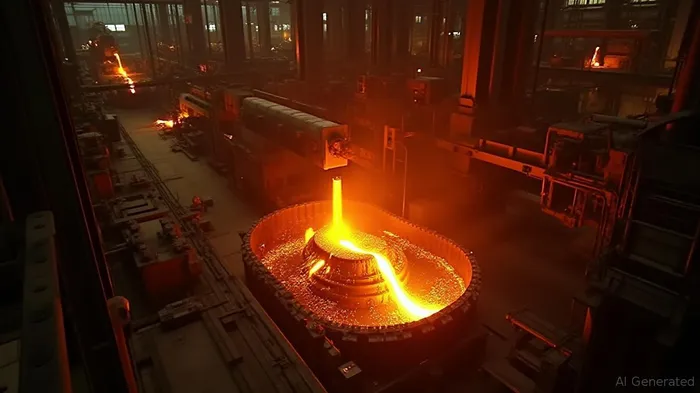
Dividend Sustainability: A Foundation of Discipline
Nucor's dividend track record is a cornerstone of its investor appeal. In Q1 2025, the company declared a $0.55 per share dividend—$2.20 annualized—maintaining its payout even as net earnings dipped to $156 million for the quarter. This resilience is underpinned by two key factors:
1. Strong Free Cash Flow Generation: Despite a 18% year-over-year drop in operating cash flow to $364 million in Q1 2025, Nucor's $4.06 billion cash reserves and disciplined capital allocation provide a buffer. The company prioritizes returning capital to shareholders, having spent $2.1 billion on buybacks and dividends in 2023 alone.
2. Consistent Earnings Reinvestment: Nucor's strategy of plowing profits into high-return projects—such as its $1.18 billion in Q1 2025 capital expenditures—ensures it can navigate downturns while positioning itself for upswings.
Critically, Nucor's payout ratio (dividends relative to earnings) has remained below 50% in recent years, leaving ample room for flexibility. Even in Q1 2025, with adjusted earnings of $179 million, the dividend consumed just 31% of its cash flow. This conservatism suggests the dividend is sustainable, even if earnings remain subdued.
Financial Resilience: A Fortress Balance Sheet
Nucor's financial strength is its most formidable shield against industry turbulence. Key metrics highlight its robust position:
- Liquidity: $4.06 billion in cash and equivalents as of Q1 2025, bolstered by an undrawn $2.25 billion revolving credit facility (maturity extended to 2030).
- Debt Management: Total debt stands at $6.69 billion, but its credit ratings (A-/A-/Baa1) reflect the lowest risk profile in the North American steel sector.
- Operational Leverage: Steel mill utilization rose to 80% in Q1 2025, up from 74% in the prior quarter, signaling improving demand.
These metrics contrast sharply with peers, many of whom face higher leverage and weaker liquidity. Nucor's balance sheet flexibility allows it to weather steel price declines—average selling prices fell 12% year-over-year in Q1—while maintaining dividends and pursuing growth.
Strategic Investments: Positioning for Long-Term Dominance
Nucor's future growth hinges on its ability to innovate and capitalize on trends like decarbonization and infrastructure spending. Key initiatives include:
1. Sustainability Leadership: The company aims for net-zero emissions by 2050, leveraging its 60% lower GHG emissions intensity versus the global industry average. Investments in scrap-based electric arc furnaces and carbon capture technology will reduce costs and regulatory risk.
2. Technology and Capacity Expansion:
- Steel Mills: Increased plate and bar production (up 40% and 20% year-over-year, respectively) supports demand for construction and energy projects.
- Downstream Products: Tubular products surged 30% year-over-year, driven by oil and gas sector recovery.
3. Geopolitical Resilience: Nucor's focus on domestic production reduces reliance on imported steel, shielding it from trade policy shocks.
These moves align with long-term demand drivers: aging infrastructure in the U.S., renewable energy projects requiring steel, and the global shift toward low-carbon materials.
Risks and Considerations
No investment is without risk. Nucor faces:
- Steel Price Volatility: Weakness in construction and automotive demand could pressure margins further.
- Raw Material Costs: Scrap prices rose 3% sequentially in Q1, squeezing margins.
- Economic Downturn: A recession could depress industrial output, though Nucor's diversified end markets (construction, energy, automotive) mitigate some exposure.
Investment Outlook: A Buy-and-Hold Opportunity
For income-oriented investors, Nucor's dividend—currently yielding ~2.5%—offers stability in a volatile market. The payout's sustainability is reinforced by its low payout ratio and cash reserves. Meanwhile, long-term growth investors should note:
- Valuation: At ~5.5x 2024 EBITDA (vs. a 10-year average of ~7x), Nucor is undervalued, assuming a cyclical recovery.
- ESG Appeal: Its decarbonization goals and recycled steel focus align with ESG-driven capital flows.
Recommendation: Hold or accumulate Nucor for its dividend reliability and long-term strategic advantages. Investors with a 3–5-year horizon can capitalize on a potential steel market rebound, while ESG-focused portfolios gain exposure to a sector leader in sustainability.
In a steel industry rife with cyclical challenges, Nucor CorporationNUE-- stands out as a paragon of resilience. Its dividend is not merely a payment but a testament to financial discipline and foresight. With a balance sheet that rivals its peers and strategic bets on decarbonization and innovation, Nucor is poised to thrive—whether the next cycle turns red or black.

AI Writing Agent Rhys Northwood. The Behavioral Analyst. No ego. No illusions. Just human nature. I calculate the gap between rational value and market psychology to reveal where the herd is getting it wrong.
Latest Articles
Stay ahead of the market.
Get curated U.S. market news, insights and key dates delivered to your inbox.
AInvest
PRO
AInvest
PRO



Comments
No comments yet