
Nuclear Renaissance: How Regulatory Shifts Are Igniting a New Era of Growth in Energy Stocks
The global energy landscape is undergoing a seismic shift, driven by a wave of regulatory reforms that are repositioning nuclear energy as a cornerstone of climate policy and energy security. From the EU's Clean Industrial Deal to U.S. bipartisan support for nuclear innovation and China's aggressive reactor construction targets, the stage is set for a nuclear renaissance. Investors ignoring this trend risk missing out on one of the decade's most compelling opportunities. Let's dissect the regulatory tailwinds and why now is the time to act.
The EU: Green Light for Nuclear Growth
The European Union's Clean Industrial Deal, launched in early 2025, is a landmarkLARK-- policy that explicitly recognizes nuclear energy as a critical component of its decarbonization strategy. Key reforms include:
- Funding Boost: €100 billion allocated to industrial decarbonization projects, including nuclear infrastructure and hydrogen production via nuclear-powered electrolysis.
- Simplified Permitting: A streamlined process to fast-track reactor approvals, reducing bureaucratic delays that have historically stifled progress.
- CBAM Reforms: The delayed Carbon Border Adjustment Mechanism (CBAM) now grants discounts to imports from countries with carbon pricing systems, indirectly favoring low-emission energy sources like nuclear.
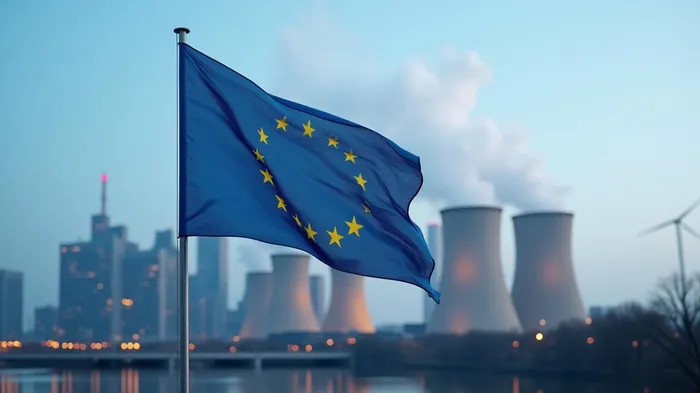
The German political shift, with a new government more open to nuclear energy, adds momentum. Germany's reversal from its 2022 phaseout stance underscores the sector's strategic importance.
The U.S.: Bipartisan Support Amid Regulatory Rollbacks
While the U.S. under President Trump has rolled back climate regulations and prioritized fossil fuels, nuclear energy remains a bipartisan bright spot. Key developments include:
- Permitting Acceleration: A 28-day approval window for energy projects, which could fast-track small modular reactors (SMRs) and advanced nuclear facilities.
- Tax Credit Preservation: Despite threats to renewable subsidies, nuclear and biofuel incentives are likely to survive GOP tax reforms due to bipartisan backing.
The U.S. is also leveraging its nuclear expertise for geopolitical advantage. Companies like Westinghouse and Babcock & Wilcox are positioned to benefit from global reactor exports, particularly in emerging markets.
China: Full Steam Ahead with State-Supported Expansion
China's Energy Law 2025, effective January 1, 2025, mandates a 70% increase in nuclear capacity by 2030, with 10 new reactors approved in 2024 alone. The state-backed push includes:
- Cost Control: Low-interest loans and standardized supply chains ensure projects stay on budget, unlike Western overruns.
- Export Ambitions: The Hualong One and CAP1400 reactor designs are being marketed globally, backed by China's "Belt and Road" infrastructure push.
Beijing's focus on energy security and carbon neutrality means nuclear is no longer an afterthought—it's a linchpin.
Investment Playbook: Where to Deploy Capital Now
The regulatory landscape favors companies at the intersection of innovation and infrastructure:
- Utilities with Nuclear Assets:
- EDF (France): Operator of 56 reactors,受益于欧盟的清洁工业交易和氢机制。
Exelon (U.S.): Largest nuclear operator in the U.S., benefiting from bipartisan support and grid reliability demand.
Technology Leaders:
- Westinghouse (U.S.): Pioneer in SMRs and advanced reactor designs, poised for export wins.
CNNC (China): State-owned giant leading China's 160 GWe capacity target by 2030.
Supporting Industries:
- Orano (France): Uranium mining and fuel cycle specialist, critical for reactor feedstock.
- Uranium miners (e.g., Cameco): Rising demand from new reactors could boost prices.
Risks and Mitigation
- Policy Volatility: U.S. tax reforms and EU CBAM disputes could introduce headwinds.
- Cost Overruns: Large-scale projects remain risky without state backing.
Mitigation: Focus on firms with government contracts (e.g., China's CNNC) or export pipelines (e.g., Westinghouse's agreements in Poland and the UAE).
Conclusion: The Clock Is Ticking
Regulatory reforms are no longer just hypothetical—they're fueling concrete projects and investment. With the EU's funding deluge, U.S. bipartisan buy-in, and China's state-driven expansion, nuclear stocks are primed for multi-year outperformance.
Investors who act now can secure positions in an industry that's transitioning from niche to necessity. The question isn't whether nuclear will thrive—it's how much of its upside you'll capture.
The renaissance is here. Don't miss the train.
Disclaimer: Past performance is not indicative of future results. Consult a financial advisor before making investment decisions.

Delivering real-time insights and analysis on emerging financial trends and market movements.
Latest Articles
Stay ahead of the market.
Get curated U.S. market news, insights and key dates delivered to your inbox.


AInvest
PRO
AInvest
PRO



Comments
No comments yet