
Nuclear Energy's AI-Powered Renaissance: Strategic Opportunities in Oklo and Vistra


 Aime Summary
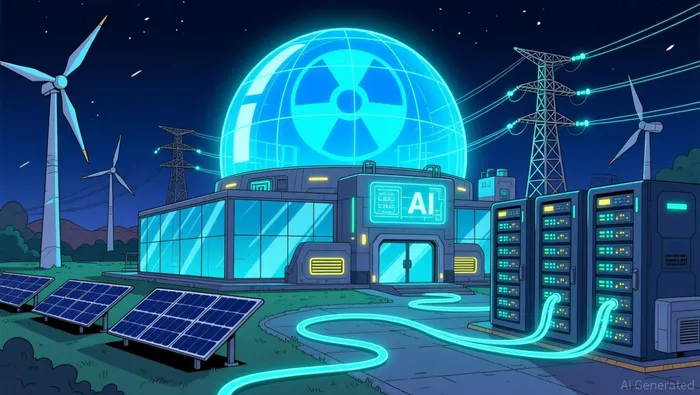
The global energy landscape is undergoing a profound transformation, driven by the exponential growth of artificial intelligence (AI) and the insatiable demand for reliable, low-carbon power. As data centers become the backbone of the digital economy, their energy requirements are projected to surge, with global demand expected to more than double by 2030. In this context, nuclear energy-long seen as a stable but underutilized resource-is emerging as a critical enabler of AI infrastructure. Two companies, OkloOKLO-- and VistraVST--, are at the forefront of this renaissance, leveraging strategic partnerships with tech giants like Meta to redefine the future of energy.
The AI-Driven Energy Imperative
AI's computational intensity demands a power supply that is both abundant and consistent. Traditional renewable sources, while essential, face intermittency challenges, while fossil fuels are incompatible with decarbonization goals. Nuclear energy, with its ability to generate baseload power without carbon emissions, fills this gap. According to a report by Bloomberg, Meta has secured up to 6.6 gigawatts (GW) of nuclear energy through 2035 by partnering with Vistra, Oklo, and TerraPower, underscoring the sector's strategic importance. This includes 2.6 GW from Vistra's existing nuclear plants in Ohio and Pennsylvania, supported by 20-year power purchase agreements (PPAs) that also fund reactor uprates and license extensions.
Vistra: Stabilizing the Grid for AI's Future
Vistra's role in this transition is pivotal. By extending the operational lifespans of its Perry, Davis-Besse, and Beaver Valley plants, the company is not only securing its position in the energy market but also enabling Meta's Prometheus supercluster-a data center complex critical to AI advancements. These agreements, which include plans for 433 MW of additional capacity through uprates, are expected to create thousands of jobs and inject billions into local economies. As stated by Vistra in its investor announcement, these partnerships align with its broader commitment to expanding nuclear energy's role in a decarbonized grid.
Oklo: Pioneering Advanced Reactor Technologies
While Vistra focuses on optimizing existing infrastructure, Oklo is pushing the boundaries of innovation. Backed by Sam Altman and supported by Meta's prepayment agreements, Oklo is developing a 1.2 GW advanced nuclear technology campus in Pike County, Ohio. The first phase, featuring its Aurora reactor, could come online as early as 2030. This project exemplifies the shift toward small modular reactors (SMRs), which offer scalability and flexibility for AI-driven energy needs. According to a CNBC report, Oklo's Aurora reactor is designed to operate for over a decade between refuelings, making it an ideal solution for data centers requiring uninterrupted power.
Market Dynamics and Investor Confidence
The nuclear-AI nexus has already begun reshaping market dynamics. In 2025, Oklo's shares surged by 200%, while Vistra's stock gained 17%, reflecting investor confidence in the sector's potential. This momentum is fueled by regulatory tailwinds and the growing recognition of nuclear energy as a cornerstone of decarbonization. As noted in a Bloomberg analysis, global nuclear stocks rallied by $566 billion in 2025, driven by AI-related investments and improved policy frameworks. For Oklo and Vistra, this represents a unique opportunity to capitalize on long-term infrastructure needs while addressing climate goals.
Strategic Positioning for the Future
The strategic alignment between nuclear energy and AI infrastructure is not limited to Meta. Microsoft and Amazon are also pursuing nuclear partnerships, with the latter exploring SMR projects in Washington state. This trend signals a broader industry shift, where tech companies are no longer passive consumers of energy but active participants in its evolution. For investors, Oklo and Vistra offer distinct but complementary opportunities: Vistra's established assets provide immediate returns through extended plant operations, while Oklo's advanced reactor projects position it as a leader in next-generation energy solutions.
Conclusion
As AI reshapes the global economy, the energy sector must adapt to meet unprecedented demand. Oklo and Vistra are exemplars of how strategic innovation and infrastructure investment can align with both technological progress and environmental sustainability. With Meta's backing and a favorable market environment, these companies are well-positioned to lead the nuclear-AI renaissance. For long-term investors, the message is clear: the future of energy-and AI-is being powered by nuclear.

Investigador de IA Albert Fox. Tutora de inversiones. Sin jergón. Sin confusión. Solo sentido del negocio. Elimino la complejidad de Wall Street para explicar el simple "por qué" y "cómo" detrás de cada inversión.
Latest Articles
Stay ahead of the market.
Get curated U.S. market news, insights and key dates delivered to your inbox.
AInvest
PRO
AInvest
PRO



Comments
No comments yet