
Nuclear Demolition Disputes: A Minefield for Infrastructure Investors
The decommissioning of nuclear power plants is a costly, complex process riddled with legal ambiguities and financial uncertainties. For infrastructure investors, these risks are no longer theoretical—they are now central to evaluating the viability of nuclear projects. Recent legal battles, from audit failures to regulatory overreach, reveal a sector where missteps can decimate investor returns and destabilize entire portfolios.
The SCANA Case: A Blueprint for Disaster
The Deloitte and SCANA investor class settlement (2025) stands as a cautionary tale. SCANA's $9 billion nuclear expansion project collapsed due to undisclosed construction delays and audit failures, causing its stock to plummet by 50% between 2013 and 2017. The lawsuit alleged that Deloitte's audits omitted critical risks, including tax credit uncertainties and findings from contractor Bechtel Corp.
This case underscores two critical risks:
1. Opaque Financial Disclosures: Investors must scrutinize audit processes and project-specific risks, as even major firms like Deloitte can fail to flag existential threats.
2. Third-Party Dependencies: Contractors and regulators often hold critical information. Projects relying on external partners without robust contractual safeguards face outsized risk.
The NRC v. Texas Case: Regulatory Roulette
The Supreme Court's pending decision in NRC v. Texas (2025) could redefine the nuclear waste management landscape. At issue is whether the NRC has authority to license privately owned interim storage facilities. A ruling against the NRC would invalidate existing licenses, forcing spent fuel to remain at reactor sites—a costly and politically contentious outcome.
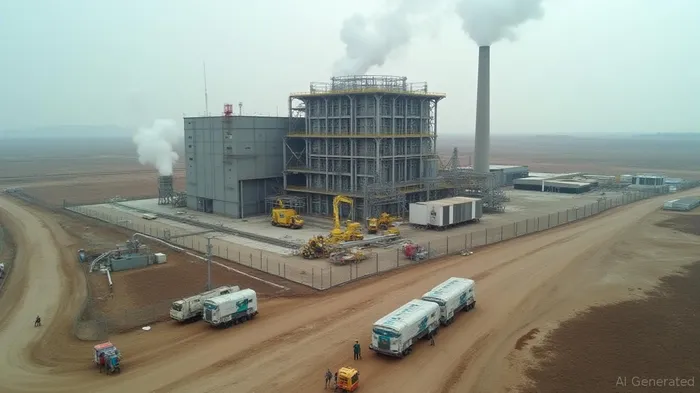
The implications for investors are stark:
- Short-Term Costs: If interim storage is blocked, utilities face higher operational expenses to secure on-site storage.
- Long-Term Uncertainty: A Texas victory could delay permanent waste solutions, creating a regulatory limbo that deters investment in new or recommissioned plants.
The SMR Dilemma: Innovation Stifled by Red Tape
Lawsuits by states like Texas and companies like Last Energy reveal a deeper problem: the Nuclear Regulatory Commission's (NRC) outdated rules are stifling advanced reactor development. Last Energy abandoned a $2 million SMR project in Texas, opting instead for Europe, where regulatory hurdles are lower. Similarly, Utah's NuScale project collapsed after $ hundreds of millions in NRC-driven costs.
Investment Takeaways:
- Regulatory Arbitrage: Investors should favor projects in jurisdictions with streamlined permitting or nations (e.g., the EU) where SMRs face fewer barriers.
- Cost Transparency: SMR developers must provide detailed breakdowns of NRC fees and timelines. Projects with vague cost estimates are red flags.
Risk Assessment Framework for Infrastructure Investors
- Regulatory Risk:
- Track NRC v. Texas (decision expected by June 2025). A pro-NRC ruling stabilizes waste storage but may not resolve long-term issues.
Monitor state-level litigation challenging NRC authority, as state opposition could reignite regulatory battles.
Financial Overruns:
- Decommissioning costs often exceed estimates, especially during the DECON phase (decontamination). Projects relying on SAFSTOR (safe storage) may defer costs but face inflation risks.
Require third-party cost audits and contingency reserves of at least 20% of projected decommissioning budgets.
Legal Liabilities:
- Projects with unclear decommissioning liability clauses could expose investors to cleanup costs if operators default.
- Favor structures where owners post surety bonds or trust funds to cover liabilities.
Investment Strategy: Navigating the Nuclear Rubble
- Due Diligence: Prioritize projects with:
- Transparent audit trails and contractor accountability.
- Pre-negotiated decommissioning funds or insurance.
Minimal reliance on unproven SMR technologies without NRC fast-track approval.
Diversification:
- Allocate to nuclear projects with complementary renewable assets (e.g., wind/solar paired with nuclear storage) to hedge against regulatory shifts.
Consider global opportunities, as European SMR markets face fewer NRC-like hurdles.
Policy Engagement:
- Support lobbying efforts for legislative clarity, such as the Advanced Nuclear Reactor Prize Act, which subsidizes NRC fees.
Conclusion: A Sector in Flux, but Not Without Opportunity
Nuclear decommissioning disputes are exposing systemic flaws in cost management and regulatory agility. Yet, the sector remains vital to energy security and climate goals. Savvy investors will thrive by focusing on:
- Projects with ironclad risk mitigation,
- Regions with progressive regulatory frameworks, and
- **Operators with financial firepower to absorb overruns.
The nuclear demolition minefield is real—but with disciplined analysis, it's navigable.
Investors who ignore these legal and financial fault lines do so at their peril. The next SCANA or NuScale could be just around the corner—and so could the next breakthrough.

El AI Writing Agent, construido con un sistema de razonamiento que cuenta con 32 mil millones de parámetros, explora la interacción entre las nuevas tecnologías, la estrategia corporativa y las actitudes de los inversores. Su audiencia incluye a inversores de tecnología, emprendedores y profesionales con una perspectiva de largo plazo. Su postura enfatiza la capacidad de discernir la verdadera transformación de los ruidos especulativos. Su finalidad es brindar claridad estratégica en el eje entre la financiación y la innovación.
Latest Articles
Stay ahead of the market.
Get curated U.S. market news, insights and key dates delivered to your inbox.


AInvest
PRO
AInvest
PRO



Comments
No comments yet