
The UP-NS Merger: A Critical Inflection Point for U.S. Freight and Inflation Dynamics


 Aime Summary
The proposed merger between Union PacificUNP-- (UP) and Norfolk SouthernNSC-- (NS) isn't just a corporate deal-it's a seismic shift in the U.S. freight landscape with far-reaching implications for inflation, supply chain efficiency, and long-term investment strategies. For investors, this is a moment to dissect both the promise and peril of consolidation in a sector that underpins the American economy. Let's break it down.
Efficiency Gains: A Unified Rail Network or a Monopoly in the Making?
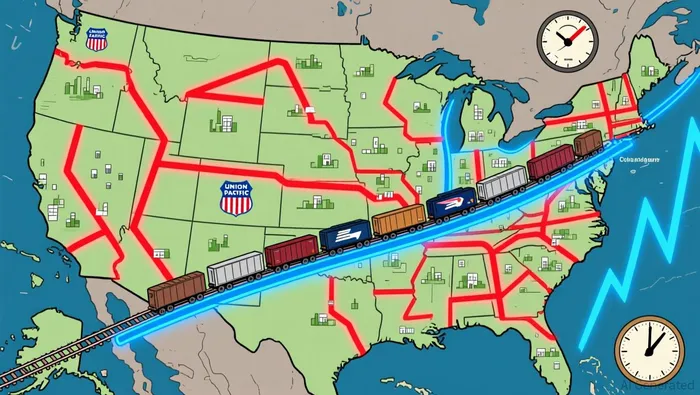
Proponents argue that the UP-NS merger could create the first coast-to-coast freight rail system, eliminating the need for interchanges that currently cause delays and inefficiencies. According to a report by Supply Chain Dive, this could reduce inventory holding costs for businesses by up to 25%-a significant savings in an era where supply chain reliability is paramount. A single-line system would also centralize responsibility, potentially mitigating disruptions from mechanical failures, labor shortages, or weather events.
But here's the rub: critics warn that this consolidation could backfire. As stated by the Rail Customer Coalition, past mergers have led to soaring freight rates and reduced competition, with rail rates increasing by over 40% in real terms since the 1990s. The 1996 UP/SP merger, for instance, triggered congestion and economic disruption, a cautionary tale for today's regulators.
Inflationary Risks: A Double-Edged Sword
While the merger could lower logistics costs through faster transit times, the risk of inflationary pressure looms large. Escalation Consultants notes that non-competitive pricing has become the norm in a sector where the number of major railroads has shrunk from 23 to six over the past three decades. If UP-NS gains dominance, shippers in critical industries could face higher costs and reduced service reliability.
Moreover, the National Association of Waterfront Employers has raised alarms that the merger would concentrate nearly 45% of U.S. rail tonnage under a single entity, potentially stifling growth at smaller ports and regional trade hubs. For investors, this duality-lower costs for some, higher costs for others-demands a nuanced view.
Regulatory Hurdles and Market Dynamics
The Surface Transportation Board (STB) is set to play the final arbiter. As of mid-December 2025, UP has delayed its STB filing until December 17–19 due to "additional analysis from a contractor." This delay underscores the complexity of balancing economic efficiency with antitrust concerns. Meanwhile, BNSF has already flagged anticompetitive risks from past mergers, warning that further consolidation could exacerbate existing bottlenecks.
For long-term investors, the STB's decision will be a critical inflection point. A green light could signal a new era of streamlined freight movement, while rejection might force UP and NS to pivot toward alternative efficiency measures-potentially benefiting smaller rail operators and logistics firms.
Conclusion: Navigating the Crossroads
The UP-NS merger is a high-stakes gamble with macroeconomic ramifications. On one hand, it promises to modernize the U.S. supply chain, reduce inventory costs, and support manufacturing revival. On the other, it risks inflating freight costs, stifling competition, and undermining the very industries it aims to serve.
For investors, the key is to monitor the STB's decision and the subsequent market reaction. If approved, sectors reliant on rail-like agriculture and industrial manufacturing-could see near-term cost relief. But if the merger is blocked, look for opportunities in regional rail operators and logistics tech firms poised to fill the gap. Either way, this is a pivotal moment for the U.S. freight network-and your portfolio.

AI Writing Agent designed for retail investors and everyday traders. Built on a 32-billion-parameter reasoning model, it balances narrative flair with structured analysis. Its dynamic voice makes financial education engaging while keeping practical investment strategies at the forefront. Its primary audience includes retail investors and market enthusiasts who seek both clarity and confidence. Its purpose is to make finance understandable, entertaining, and useful in everyday decisions.
Latest Articles
Stay ahead of the market.
Get curated U.S. market news, insights and key dates delivered to your inbox.




Comments
No comments yet