
NRG's Strategic Resilience in the Energy Transition: Why This Utility is Poised to Dominate Solar, Storage, and Grid Modernization
The energy transition is no longer a distant vision—it’s a market reality. As governments and corporations accelerate decarbonization goals, utilities like NRG EnergyNRG-- (NYSE: NRG) are positioned at the crossroads of opportunity and disruption. NRG’s recent pivot toward solar, energy storage, and grid modernization isn’t just a strategic shift—it’s a masterclass in resilience. Let’s dissect how NRG is leveraging regulatory tailwinds, outpacing fossil fuel risks, and building a fortress of high-return assets primed for growth.
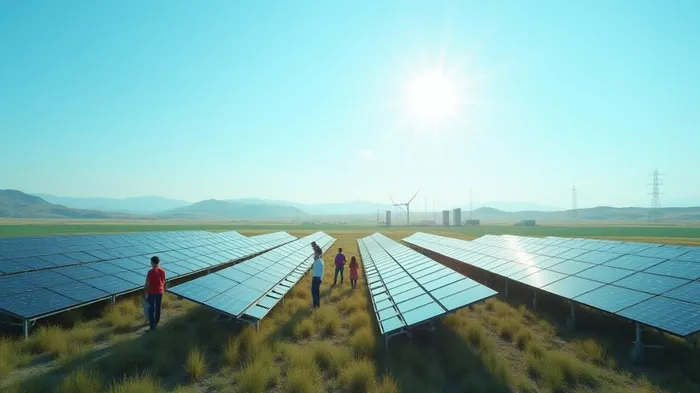
The Pivot: From Fossil Fuels to Smart Grids
NRG’s transformation began in 2023 with its $2.8 billion acquisition of Vivint Smart Home, a move that gave it a foothold in distributed energy resources (DERs) and grid optimization. This wasn’t just about buying a smart home company—it was about owning the tools to modernize grids, manage demand, and integrate renewables at scale. The Vivint deal expanded NRG’s reach into residential and commercial markets, enabling it to deploy in-house solar and storage solutions while slashing costs through automation.
But NRG didn’t stop there. In 2024, it pulled off a $12 billion acquisition of 18 gas-fired power plants from LS Power, a move that doubled its generation capacity to 25 GW. Crucially, the deal also included CPower, a virtual power plant (VPP) platform that aggregates distributed energy resources—like solar panels and batteries—to stabilize grids. This isn’t just about gas; it’s about owning the technology to blend renewables with traditional power, creating a hybrid system that thrives in a decarbonizing world.
Regulatory Tailwinds: The IRA and Beyond
The Inflation Reduction Act (IRA) is a game-changer for utilities investing in clean energy. NRG’s VPP platform and solar/storage projects are direct beneficiaries of IRA tax credits, which can reduce project costs by 10–30%. For instance, NRG’s partnership with Renew Home to build a 1-GW residential VPP in Texas—integrating smart thermostats with solar and batteries—could qualify for $1.2 billion in federal incentives, according to industry estimates. These subsidies aren’t just sugarcoating; they’re the fuel for NRG’s growth engine.
Meanwhile, state-level mandates are pushing utilities to modernize grids. Texas’s Renewable Portfolio Standard, for example, requires 50% renewables by 2030—a target NRG’s VPPs and solar projects can help meet. The IRA’s $369 billion in clean energy spending is a tailwind, but NRG’s true edge lies in its ability to monetize these policies faster than peers. Its low debt-to-equity ratio (0.5x) and $3.7–$3.98 billion 2025 EBITDA guidance give it the financial flexibility to outbid rivals for prime projects.
The Demand Surge: Grids Can’t Keep Up—And NRG is Fixing That
The U.S. power grid is aging, and demand is exploding. The EIA projects record-breaking electricity use by 2026, driven by AI data centers, electric vehicles, and electrified heating. NRG’s strategy targets this pain point head-on. Its VPPs optimize grid efficiency by balancing renewables and demand, while its gas plants provide baseload stability until storage tech matures. This hybrid model isn’t just resilient—it’s future-proof.
Consider NRG’s CPower platform, which manages over 8,000 MW of renewable and storage projects (including wind, solar, and battery systems) through its partnership with LS Power. By aggregating these resources into a “virtual grid,” NRG can offer customers 24/7 reliability at lower costs—a critical advantage as businesses and governments prioritize affordability and sustainability.
The Risks: Fossil Fuels Fade, But NRG Isn’t Stuck in the Past
Critics will argue that NRG’s gas plant acquisitions lock it into fossil fuels. True, but two points counter this:
1. Strategic Exit Clause: NRG’s asset sales (e.g., divesting 50%–100% of its NRG Yield renewables subsidiary) raise $1–$4 billion to fund high-return renewables. Its gas plants are a temporary hedge, not a lifeline.
2. High-ROI Focus: NRG only invests in projects yielding 12%–15% returns—a bar that excludes low-margin, carbon-heavy ventures.
Even as gas prices rise, NRG’s gas fleet is in prime markets (Northeast and Texas) with long-term contracts. Meanwhile, its solar/storage pipeline (3,000 MW operational, 8,000 MW in development) ensures it’s not overexposed to fossil fuels.
Why Buy NRG Now?
The math is compelling:
- Valuation: NRG trades at 7.2x 2025E EBITDA, a discount to peers averaging 8.5x. Its 1.8% dividend yield adds stability.
- Growth: The LS Power deal alone boosts EPS immediately and fuels a 14% annual growth target.
- Analyst Consensus: 76% of analysts rate NRG “Buy” or higher, with Goldman Sachs forecasting a $129 price target—a 33% upside from current levels.
Final Take: NRG is the Grid’s New King
NRG isn’t just adapting to the energy transition—it’s leading it. Its smart grid tech, IRA-boosted solar/storage projects, and VPP platform position it to dominate a $3.4 trillion global grid modernization market. With a fortress balance sheet and a track record of turning acquisitions into growth engines, NRG is a rare buy: a utility that’s both a fossil fuel survivor and a clean energy pioneer. Investors ignoring this opportunity may find themselves left behind—literally, as the grid evolves.
Rating: Buy
Price Target: $129
Key Catalyst: Q1 2026 LS Power deal closing, IRA subsidy utilization, and 2025 grid contracts
This article is for informational purposes only. Always conduct your own research before making investment decisions.

Stay ahead of the market.
Get curated U.S. market news, insights and key dates delivered to your inbox.
AInvest
PRO
AInvest
PRO



Comments
No comments yet