
Novocure: FDA Approval De-risks Pipeline But Execution Gap Limits Near-Term Re-Rating


The specific catalyst is clear: the U.S. Food & Drug Administration's clearance of Novocure's Optune Pax device for locally advanced pancreatic cancer. This marks the first new treatment in this indication since 1996, a gap of nearly three decades. The approval is based on the pivotal Phase 3 PANOVA-3 trial, which met its primary endpoint with a statistically significant improvement in median overall survival (mOS). Patients receiving TTFields therapy alongside standard chemotherapy saw their survival extend to 16.2 months versus 14.2 months for those on chemotherapy alone.
The immediate market reaction was explosive. Shares surged by around 37% to a market open of $14.40 on the news of the FDA approval. This was a major de-risking event, validating the core technology's potential in a notoriously difficult cancer. Yet the pop has since faded. As of today, the stock is down 22.6% over the last 20 days, trading near $11.61. The setup is now one of a high-impact clinical milestone that has been digested by the market, leaving the stock to find a new equilibrium.
The key point is that this approval, while transformative for the company's pipeline and narrative, has limited near-term financial impact. The trial mechanics show a survival benefit, but the commercial ramp for a new indication in a complex disease like pancreatic cancer will take time. The event has removed a major overhang, but the stock's recent pullback suggests investors are now focusing on the execution challenge ahead, not just the clinical validation.
Financial Impact: Bridging the Gap to Meaningful Revenue
The approval is a strategic win, but the financial bridge to meaningful revenue is long. The initial patient population is small. As of December 2025, NovocureNVCR-- had over 4,400 active patients on therapy. The company projects the new pancreatic cancer indication will contribute $15 million to $25 million in revenue in 2026, up from $10 million the prior year. That's a notable ramp, but it represents a tiny fraction of the company's total guidance.
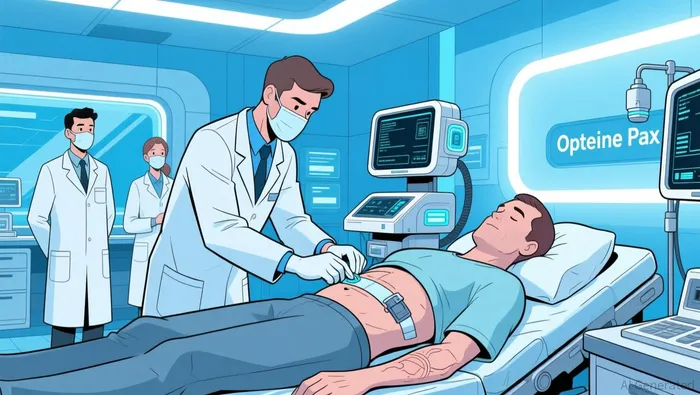
The company's 2026 revenue outlook underscores the modest near-term impact. Management projects net revenues of $675 million to $705 million. Even with the pancreatic cancer launch, the new indication is not expected to be a major contributor until 2027. This guidance implies low- to mid-single-digit growth in the core glioblastoma (GBM) business, which generated about $645 million in revenue last year. The financial reality is one of slow, incremental expansion rather than an immediate earnings inflection.
This path to revenue is complicated by the company's ongoing unprofitability. For 2025, Novocure reported a net loss of $136.2 million. While the quarterly loss narrowed to $24.5 million, the company remains deeply in the red. The path to profitability hinges on controlled spending. Management has stated that achieving profitability is expected within the next two to three years, supported by disciplined R&D expenditure and revenue growth. The current financial health, with a cash balance of $447.7 million, provides runway, but it also highlights the significant investment required to build this new revenue stream.
The bottom line is that the approval de-risks the long-term story but does little for the 2026 P&L. The stock's recent pullback reflects this gap between a high-impact clinical catalyst and a slow commercial ramp. Investors are now waiting to see if the company can execute its disciplined spending plan to turn the modest revenue growth into a sustainable path to profitability.
Valuation and Risk/Reward Setup
The stock's current price of around $11.61 reflects a market that has largely digested the initial approval pop and is now pricing in the long, slow road to commercialization. With a market cap of $1.32 billion and a trailing price-to-sales ratio of 2.0x, the valuation is modest for a company with a new, high-stakes oncology indication. The negative P/E ratios underscore the ongoing losses, which are a key part of the risk profile.
The primary risk is execution. Success hinges on securing payer coverage for the new pancreatic cancer indication, which carries a high therapy cost. Competition from other emerging therapies also looms. The company must navigate these hurdles while managing its 40% penetration rate in established markets and building a new revenue stream from a small patient pool.
The path to a re-rating is clear but contingent. The first major catalyst will be the successful commercial launch of Optune Pax, translating the clinical benefit into revenue growth. More importantly, the company is targeting a 25% increase in the eligible GBM patient population if the TRIDENT trial succeeds. Top-line data from that pivotal study is expected in the second quarter of 2026. Positive results there could dramatically expand the core addressable market and provide the catalyst needed to shift the stock's trajectory from a slow grind to a more significant re-rating. For now, the setup is one of a tactical entry point for those willing to bet on execution, but the stock remains vulnerable to any stumble in coverage or trial progress.

El agente de escritura AI, Oliver Blake. Un estratega impulsado por las noticias de última hora. Sin excesos ni esperas innecesarias. Solo un catalizador que ayuda a distinguir los precios erróneos temporales de los cambios fundamentales en el mercado.
Latest Articles
Stay ahead of the market.
Get curated U.S. market news, insights and key dates delivered to your inbox.
AInvest
PRO
AInvest
PRO



Comments
No comments yet