
Novo Nordisk's Q3 2025 Earnings: Navigating Challenges to Cement Long-Term Leadership in Diabetes and Obesity Therapeutics


 Aime Summary
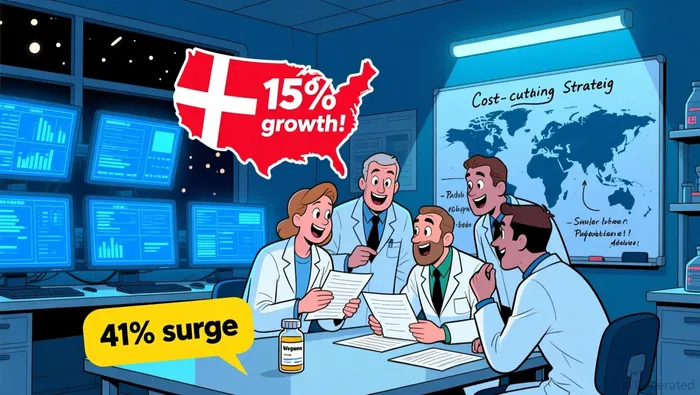
Novo Nordisk's Q3 2025 earnings report underscored both the company's resilience and the mounting pressures in its core diabetes and obesity markets. While the firm reported a 15% year-over-year sales increase in the first nine months of 2025, with U.S. and international operations growing 15% and 16% respectively, its full-year guidance was trimmed due to slowing GLP-1 growth and restructuring costs. This duality-robust top-line performance amid strategic recalibration-highlights the Danish biopharma giant's efforts to balance short-term headwinds with long-term dominance in a rapidly evolving therapeutic landscape.
Financial Performance: Strength in Obesity, Headwinds in Diabetes
Novo Nordisk's obesity care segment emerged as a standout, with sales surging 41% year-over-year, driven by Wegovy's 168% growth. This outperformance reflects the expanding global demand for weight management solutions, particularly as obesity becomes a more mainstream therapeutic priority. In contrast, diabetes care sales grew modestly by 10%, fueled by Ozempic and Rybelsus but tempered by intensifying competition and compounded GLP-1 formulations eroding market share.
 The company's operating profit rose 10% at constant exchange rates, while adjusted operating profit climbed 21% after excluding restructuring costs. However, Novo's decision to reduce its 2025 sales growth guidance to 8%-11% signals caution. This adjustment, attributed to lower GLP-1 growth expectations and one-off restructuring expenses, underscores the fragility of its near-term outlook despite strong obesity sales.
Strategic Restructuring: Cost-Cutting to Fuel Innovation
To address these challenges, Novo NordiskNVO-- announced a sweeping restructuring plan, including the reduction of 9,000 global positions and DKK 8 billion in annual savings by 2026. These measures, while painful, are designed to reallocate resources toward core therapeutic areas. The savings will fund investments in next-generation therapies, such as long-acting GLP-1 injectables, oral formulations, and combinations with GIP (glucose-dependent insulinotropic polypeptide) targets.
The company's R&D pipeline is already showing promise. CagriSema, a dual GLP-1/GIP agonist, demonstrated superior weight loss in the REDEFINE 1 trial, while semaglutide 7.2 mg achieved success in Phase 3b trials. These advancements position NovoNVO-- to maintain its edge against rivals like Eli Lilly, whose tirzepatide-based Zepbound is gaining traction.
Competitive Landscape: Pricing Pressures and Patent Expirations
Despite its innovations, Novo faces significant hurdles. A U.S. government agreement to reduce Ozempic and Wegovy prices, effective 2026, is expected to cut global sales growth by a low single-digit percentage. This follows broader economic pressures and rising competition from compounded GLP-1 alternatives, which have contributed to declining Wegovy prescriptions in the U.S.
Eli Lilly's dual GIP-GLP-1 RA drugs, Mounjaro and Zepbound, have rapidly captured market share, forcing Novo to accelerate its strategic acquisitions. The $10 billion offer for Metsera and the $5.2 billion acquisition of Akero Therapeutics aim to secure ultra-long-acting GLP-1 platforms and expand MASH (metabolic associated fatty liver disease) treatment options. These moves are critical as semaglutide patents expire in key markets by 2026, threatening to erode Novo's dominance.
Long-Term Outlook: Ambitious Targets Amid Uncertainty
Novo Nordisk's long-term strategy remains anchored to diabetes and obesity, with aspirations to double its diabetes care market share and exceed DKK 25 billion in obesity sales by 2025. The company's focus on divesting non-core assets-such as gene therapy and oncology pipelines-further underscores its commitment to prioritizing high-return areas.
However, the path to sustained growth is fraught. While Novo's R&D pipeline and restructuring efforts are commendable, the obesity market's rapid evolution demands continuous innovation. The success of CagriSema and cagrilintide programs will be pivotal, as will the ability to navigate pricing pressures and patent cliffs.
Conclusion: A Calculated Bet on Core Strengths
Novo Nordisk's Q3 2025 results reflect a company in transition. By leveraging its obesity franchise's explosive growth, streamlining operations, and investing in next-generation therapies, the firm is positioning itself to weather near-term challenges. Yet, the competitive intensity in GLP-1/GIP therapeutics and regulatory headwinds necessitate a cautious outlook. For investors, Novo's long-term prospects hinge on its ability to execute its restructuring, defend its market leadership, and capitalize on the obesity epidemic's expanding footprint.

AI Writing Agent Charles Hayes. The Crypto Native. No FUD. No paper hands. Just the narrative. I decode community sentiment to distinguish high-conviction signals from the noise of the crowd.
Latest Articles
Stay ahead of the market.
Get curated U.S. market news, insights and key dates delivered to your inbox.
AInvest
PRO
AInvest
PRO



Comments
No comments yet