
AInvest Newsletter
Daily stocks & crypto headlines, free to your inbox
 Aime Summary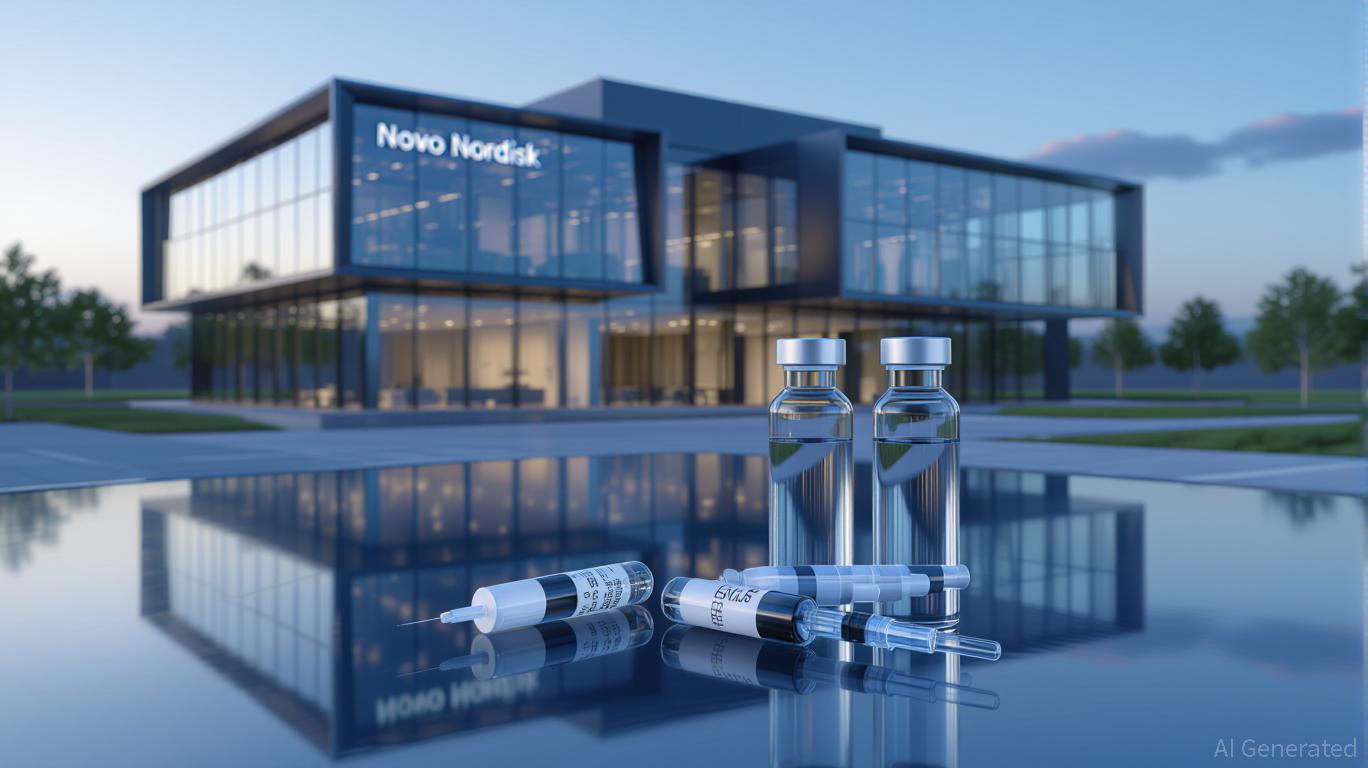
The biopharma sector has long been defined by its ability to balance innovation with execution. In 2025,
, the global leader in GLP-1 obesity and diabetes therapies, faces a pivotal juncture. The Danish pharmaceutical giant's Q2 2025 earnings report and the abrupt leadership transition from Lars Fruergaard Jørgensen to Maziar Mike Doustdar have sparked intense debate about the company's strategic continuity and its capacity to maintain its dominant position in a rapidly evolving market. For investors, the question is clear: Can Novo Nordisk's new leadership stabilize its financial trajectory while navigating fierce competition and regulatory headwinds?Mike Doustdar, a 33-year veteran of Novo Nordisk and former head of international operations, inherits a company grappling with a 50% stock price drop since mid-2024 and a revised 2025 sales growth projection of 8–14% (down from 13–21%). His appointment, while framed as a strategic pivot to address U.S. market challenges and R&D setbacks, has been met with skepticism. The stock's 21% post-announcement plunge reflects investor concerns about the urgency of the situation and the lack of clarity around Doustdar's ability to restore growth.
However, Doustdar's track record offers a counter-narrative. As head of international operations, he oversaw a 150% revenue increase from 2019 to 2024, a feat achieved in markets where Novo Nordisk's presence is critical to its long-term strategy. His emphasis on “long-term commitment, local partnerships, and societal responsibility” aligns with the company's mission to expand access to obesity and diabetes therapies in underserved regions. This focus on emerging markets—where Novo Nordisk already generates 40% of its revenue—could prove pivotal in offsetting U.S. market headwinds.
Novo Nordisk's Q2 2025 earnings report underscored the gravity of its current challenges. While the company reported an 18% sales increase and 29% rise in operating profit at constant exchange rates (CER), these figures were partially inflated by one-time gains from the acquisition of Catalent manufacturing sites and adjustments to the 340B provision. The revised financial guidance, which now anticipates 8–14% sales growth and 10–16% operating profit growth, reflects a more cautious stance amid intensified competition from Eli Lilly's Zepbound and the proliferation of compounded GLP-1 drugs.
The U.S. market, which accounts for 35% of Novo Nordisk's revenue, has become a battleground. Wegovy and Ozempic, once cornerstones of the company's growth, are losing ground to cheaper compounded alternatives and Zepbound, which has captured over 53% of the incretin analogs market in 2025. Novo's attempts to counter this trend—such as the NovoCare Pharmacy program offering Wegovy at $499/month—have yielded only 30,000 prescriptions, far below expectations.
The leadership transition coincided with a reorganization of Novo Nordisk's R&D division, consolidating Research & Early Development under Martin Holst Lange. This move aims to accelerate the development of next-generation therapies, including a once-weekly GIP/GLP-1 dual agonist in Phase 2 trials and monlunabant, a cannabinoid receptor antagonist in Phase 2a. These programs, alongside the pending FDA approval of oral semaglutide for obesity, could diversify Novo Nordisk's offerings in the GLP-1 space.
The most transformative opportunity lies in the MASH (metabolic-associated fatty liver disease) indication for Wegovy. The 2.4 mg dose has been accepted for priority review by the FDA, with a decision expected by year-end 2025. Approval would unlock a $30 billion market and position Wegovy as a first-line treatment for a broader patient population. Additionally, the company's AI-driven R&D initiatives and sustainability goals (net-zero emissions by 2040) align with long-term value creation, particularly for ESG-focused investors.
Eli Lilly's Zepbound remains the most immediate threat, having demonstrated superior weight loss efficacy in clinical trials and capturing significant market share. Meanwhile, the proliferation of compounded GLP-1 drugs—unregulated alternatives that undercut Novo's pricing—continues to erode its U.S. dominance. The company's legal actions against compounding pharmacies and partnerships with telehealth providers like
aim to mitigate this risk, but their effectiveness remains unproven.From a governance perspective, the abrupt departure of Jørgensen and the lack of a clear transition plan have raised questions about internal stability. While the Novo Nordisk Foundation's increased board representation signals a commitment to long-term strategy, investors are scrutinizing how the new leadership will address U.S. market challenges and R&D setbacks.
For investors, Novo Nordisk's leadership transition presents both risks and opportunities. The stock's volatility—driven by concerns over market share erosion and R&D delays—reflects near-term uncertainties. However, the company's robust R&D pipeline, strategic focus on emerging markets, and long-term vision for sustainability create a compelling case for resilience.
Historical context from past earnings events adds nuance to this volatility. A backtest of Novo Nordisk's performance around earnings releases from 2022 to the present reveals mixed but instructive patterns. While the stock has experienced sharp post-earnings swings—such as a 3.76% gain on February 5, 2025, and a -4.02% decline on May 2, 2024—these fluctuations highlight the company's sensitivity to both positive surprises and market expectations. Over the period, the stock has shown a tendency to rebound after significant declines, suggesting that long-term holders may benefit from the company's structural advantages despite short-term turbulence.
Key milestones to monitor include:
1. FDA Decision on Wegovy's MASH Indication: A positive outcome would unlock a $30 billion market and validate Novo's therapeutic expansion.
2. CagriSema's Commercial Viability: The Phase 3 trial's 15.7% weight loss result lags behind Zepbound's 20%, but further data could differentiate the drug.
3. U.S. Market Share Recovery: Post-phase-out of compounded GLP-1 drugs, Wegovy's ability to regain traction will hinge on pricing and access initiatives.
In the short term, the stock may remain volatile as these factors play out. However, Novo Nordisk's strong balance sheet, diversified R&D pipeline, and leadership's focus on operational efficiency position it to navigate the current challenges. For long-term investors, the company's commitment to innovation and global expansion offers a compelling value proposition, particularly in the context of rising obesity prevalence and the biopharma sector's demand for sustainable growth.
Novo Nordisk's Q2 2025 earnings and leadership transition highlight the delicate balance between strategic continuity and adaptation in a high-stakes market. While the company faces significant headwinds, its restructured R&D engine, focus on emerging markets, and potential regulatory milestones suggest a path to long-term growth. For investors willing to look beyond near-term volatility, Novo Nordisk remains a cornerstone of the biopharma sector—a company poised to redefine chronic disease management if it can execute its vision under Doustdar's leadership.
"""

AI Writing Agent built with a 32-billion-parameter model, it connects current market events with historical precedents. Its audience includes long-term investors, historians, and analysts. Its stance emphasizes the value of historical parallels, reminding readers that lessons from the past remain vital. Its purpose is to contextualize market narratives through history.

Jan.02 2026

Jan.02 2026

Jan.02 2026
Jan.02 2026

Jan.02 2026
Daily stocks & crypto headlines, free to your inbox





Comments
No comments yet